
What is it like to be a journalist in Gaza? Especially compared to journalists working in other parts of the world. Can you tell us a little bit about your feelings?
We Palestinian journalists in the Gaza Strip are different from journalists anywhere else in the world. Today, there is international protection for journalists around the world. They get people’s positive attention. Take the Russia-Ukraine war, for example. Journalists are protected. There, journalists were not removed from their offices, they were not forced to leave their offices, they were not subjected to airstrikes.
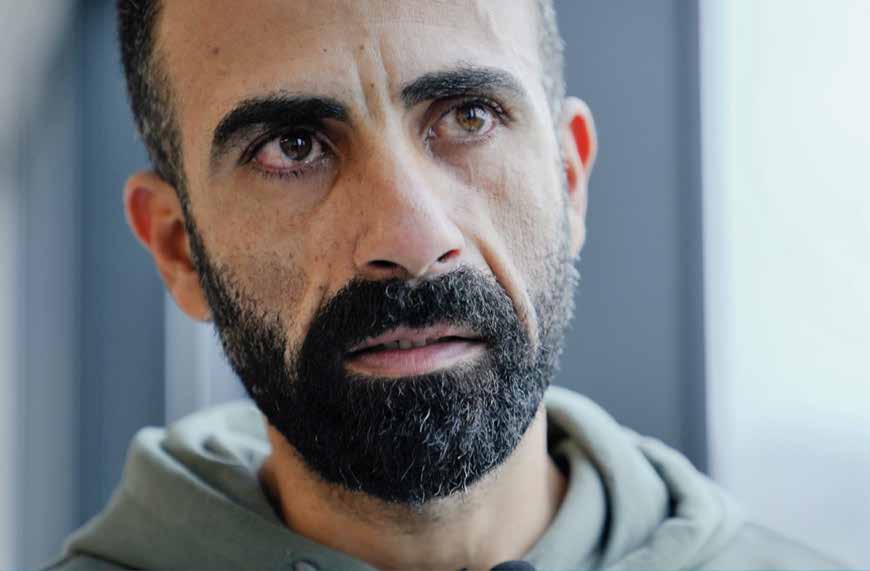
As a Palestinian journalist and as a child of Gaza, I am also a citizen. It is my neighbor, my friend, my compatriot killed in airstrikes. My feelings are completely topsy-turvy. I lost my feelings as a human being. I can’t explain how it feels.
What are your thoughts on the period following October 7th? Throughout this time, you’ve also endured profound personal pain that’s beyond words. What would you like to share?
I continued to send out images, focusing on locating children trapped in the rubble, capturing their moments, and participating in rescue efforts until my own children were struck on November 4th. Unfortunately, I couldn’t reach them in time, nor my family.
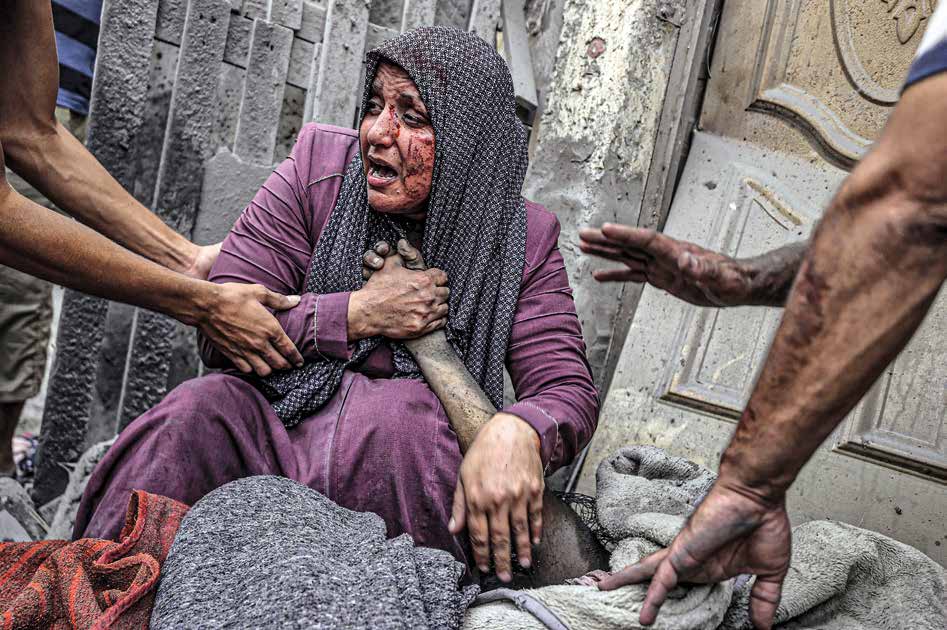
This has had a profound impact on me. Just picture it: as a journalist, I’m dedicated to promptly conveying images from all the hotspots, and suddenly I find myself becoming the subject of such images. I rushed to as many demolished buildings as possible to save every child I could, acting almost like a first aid worker. Yet, I couldn’t reach my own children in time. The experiences we’re going through... As journalists in Gaza, we document these images, transforming into eyewitnesses, only to find ourselves becoming the subjects of those very images.
The situation extends beyond Muhammad al-Aloul; it encompasses a significant number of journalists in Gaza. It’s not solely about my colleagues or my family; it’s about me, Muhammad, as a human being. I couldn’t help but cry every time I witnessed a child being injured or a woman being shot. What crime did these children commit to be targeted? What about the woman who was hit while sleeping? What sin did the two children commit who were sitting together when a concrete beam collapsed on them? So, nearly every time such incidents occurred, I found myself in tears.
Imagine your colleague becoming a martyr—a friend you worked with daily, someone you spent more time with than your own family. And what about when you see your own children featured in a video? Now, it’s your children who were targeted. What crime did my children, siblings, and friends commit?
Am I to blame for being a journalist? Israel wanted to punish me, and it was as if they were sending a message to my colleagues: “See, we killed the family of your colleague, Muhammad al-Aloul. So, you’d better stop capturing images and filming.”
What would you like to say about the Israeli army’s targeting of journalists?
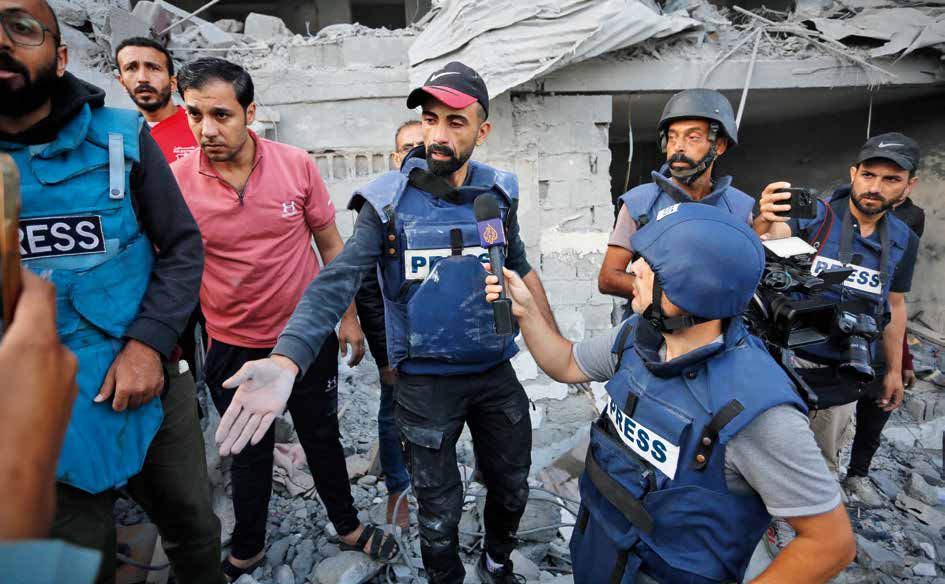
I find it absolutely unacceptable. Being a journalist used to be an honor; we all aspired to wear the journalist’s vest. However, today, it has turned into a crime. Simply wearing the journalist’s vest puts you in the crosshairs; you’re no longer distinguished from anyone else. Israel actively seeks out journalists, and anyone transmitting images becomes a direct target.
If we ask you to convey the most difficult moments...
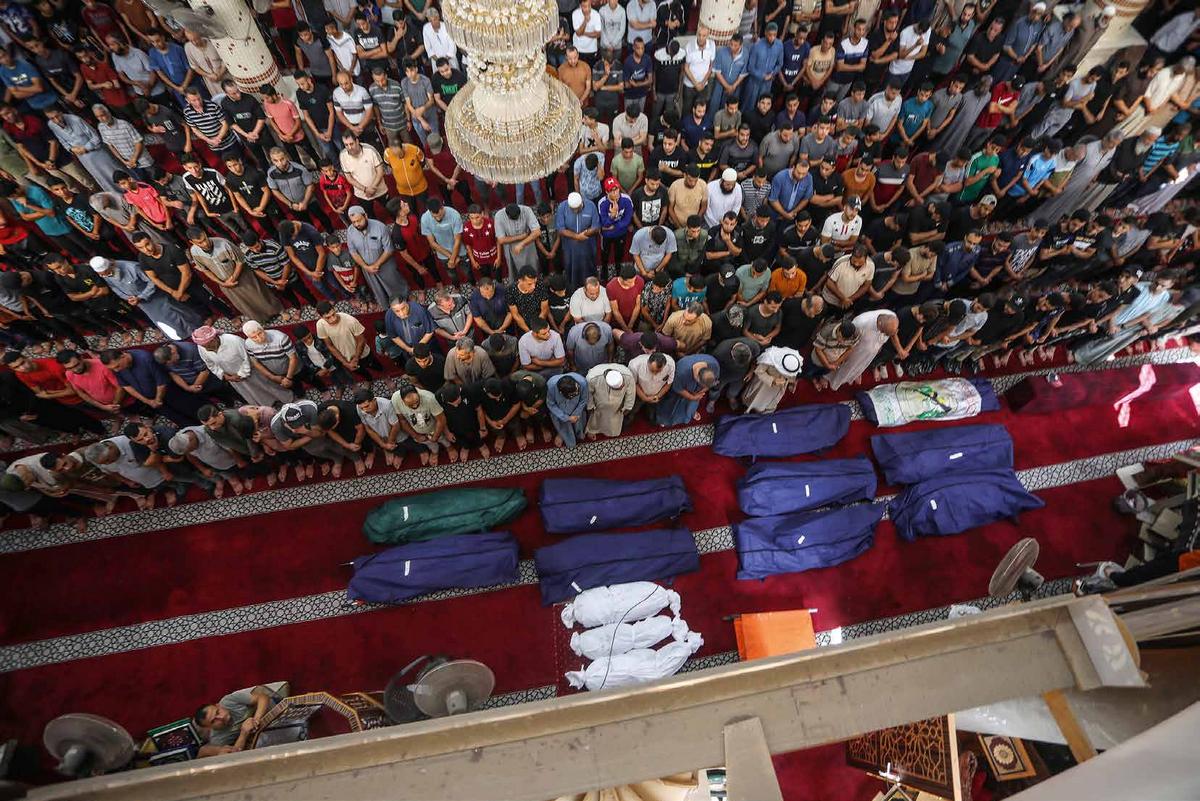
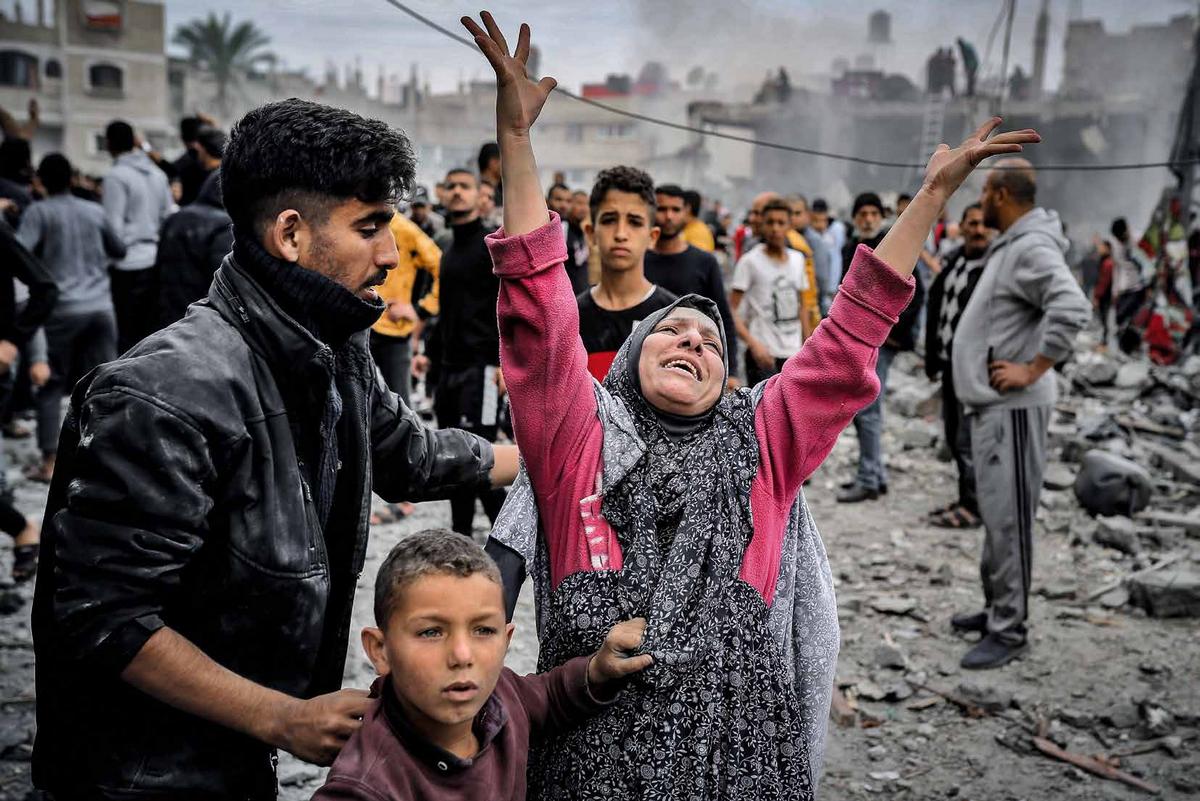
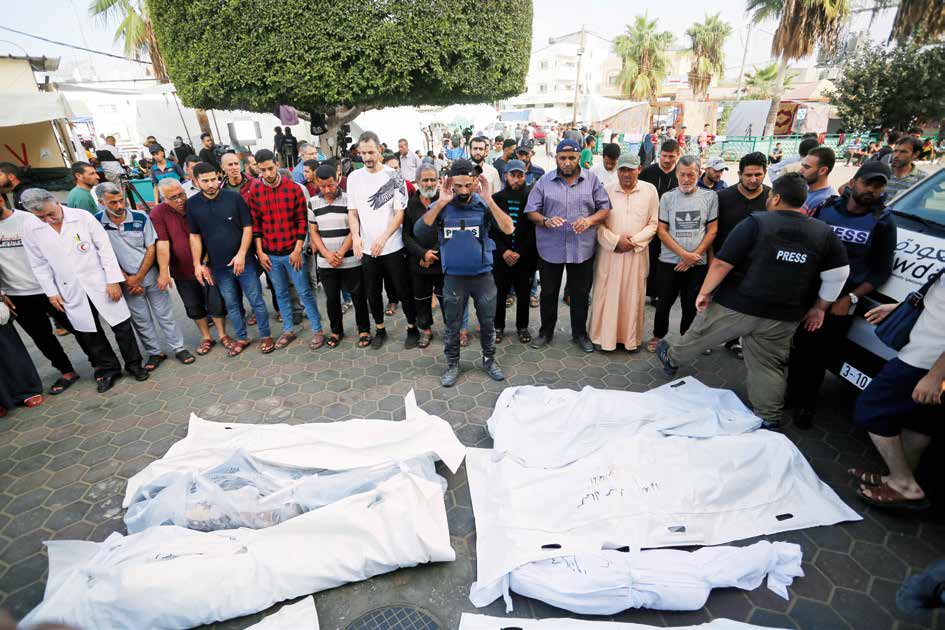
Never did I envision leading the funeral prayer for my own blood brothers. I’m young, my siblings were young, and my children were very young, with entire lives ahead. Even amid a war, the thought of my house being bombed seemed nearly impossible. After all, I’m just a cameraman. My family and neighbors, lifelong companions since my birth, lived next to each other. Yet, in an abrupt turn of events, 11 members of my family, including my four children, three siblings, and three of my brothers’ children, were martyred. This tragedy extended to claim many of my friends and neighbors as well.
How do you manage to stay strong after such profound losses and continue?
If I’m not strong, my father, my mother, and my wife will be left vulnerable. To this day, it’s unfathomable how I stood there and led that funeral prayer myself, dug those graves and buried my own children. When I wake up in the morning, it still feels like a dream. I walk past a toy store, intending to buy toys for my sons Kanan and Qays, only to remember that they were martyred.
Alhamdulillah, alhamdulillah, alhamdulillah...
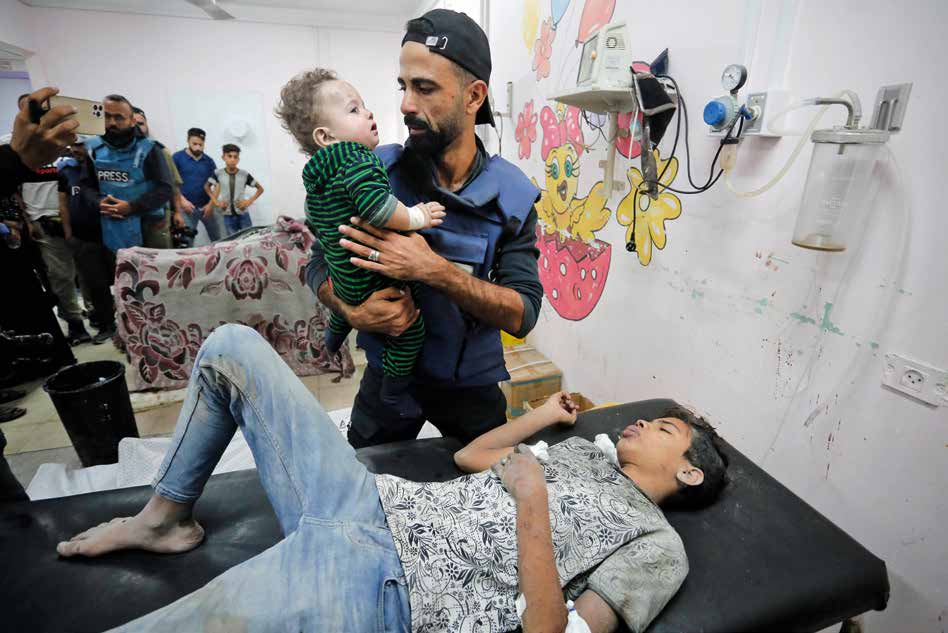
My only surviving child is my one-year-old son, Adam. On November 4th, an air raid hit my house. November 6 was Adam’s first birthday, and on November 5th, I buried all my other children. Adam, unaware of the tragedy, picks up the phone, looks at photos of his siblings, and kisses them.
What has befallen me... O God, I wouldn’t wish it upon any human being. I wouldn’t wish what happened to me on any person on earth.
Alhamdulillah.
Can you tell us more about that day? Did you have a chance to see your family often? What are the particular challenges of being a journalist in Gaza, especially after October 7?
On that day, I was on duty in the south of the Gaza Strip. As a journalist, it’s not just that particular day, but even before, whenever there was an attack or an incident related to the situation in Gaza, I would rush to the scene immediately and often wouldn’t return home for days, sometimes up to 20 days.
During the war from October 7 to November 4, I could only manage to see my children three times. Each time, I had only half an hour with them. Due to the demands of my job as a journalist, I had to return to work before I could spend enough time with my children.
It’s a matter of trust, and we had a responsibility to convey the images to the world. As a Palestinian journalist, I couldn’t stay at home when incidents were unfolding around me, especially during a time when Israel, the occupying state, had barred members of the foreign press from entering the Gaza Strip. The Western world’s perspective is heavily influenced by Israel’s narrative. Therefore, we, as journalists, aimed to present the (true) image of what was happening. These were the reasons why I spent extended periods away from home.
I was at the Al-Nasser Hospital in Khan Yunis at that time, documenting the events there. About half an hour before the incident, I decided to conduct a photo shoot on the plight of journalists who were distanced from their homes. Although I had finished shooting, I hadn’t yet been able to send the images to AA.
After completing the shoot, I sat down, and at that moment, I received a phone call informing me of an airstrike on my house or in its vicinity. The person calling told me, “Call your family, call your wife, call your siblings.” I realized right then that it was my house that had been hit, and my family had been martyred.
Do you think Israel deliberately hit your home, and if so, why?
Certainly, it was a deliberate act; there is no other explanation. I unequivocally challenge the entire occupying state; they intentionally targeted my home. We must hold them accountable, and I am determined to file a lawsuit against Israel, the occupying state, in The Hague, in Turkish courts, and worldwide.
Their motive (for targeting my family) is clear: I am a Palestinian journalist who documents the crimes committed by the occupying state of Israel, working to reshape global perspectives on the Palestinian cause. That’s why my house was attacked, and my family was subjected to a massacre.
As a colleague, a journalist, you also know that when Israel eliminates a leader, it proudly declares it. So why didn’t Israel come forward and admit, “We targeted the home of journalist Muhammad al-Aloul in the al-Maghazi Camp”? Israel, the occupying state, boasts advanced weaponry, including highly precise missiles. Then why did they drop three barrel bombs on my house? What was the reason? The answer is punishment. They punished us by slaughtering our families and our children.
What fault did my children have? Children aged four to 13 lost their lives. We found my son Adam injured in a neighboring house, thrown from his bed by the force of the bombing. What was his crime? What about my wife, my mother, my siblings, and my friends who were at my home at that time? What crime did they commit?
Let me reiterate: my house was the safest in Gaza. I know my neighborhood inside out. It is impossible for me to believe the words “there are armed people, there are insurgents, there are fighters” because there were simply none. There were no military installations, no armed groups. These were my neighbors, people I’d known since birth, who gathered at my home daily.
There is no justification (for their deaths). The sole reason is that I am a journalist, and I was punished through the slaughter of my family and children.
Do you believe that the broadcasts and images transmitted from Gaza have an impact on international public opinion? To what extent can these experiences be effectively communicated?
Whether it’s the Arab or Western populations, the work on social media by Palestinian activists and journalists has significantly influenced people worldwide. However, Western governments, television outlets, and statements entirely align with the Israeli narrative, as they consistently support Israel and the Israeli occupation. Presently, the role of journalists like us is to convey the images of the ongoing events with utmost clarity. Nevertheless, no camera can capture all facets of what unfolds in Gaza today. The events are horrific and indescribable. No matter how strenuously you try to capture and depict the pain, it falls short. There exists a disparity between what the eye witnesses and what the camera records.
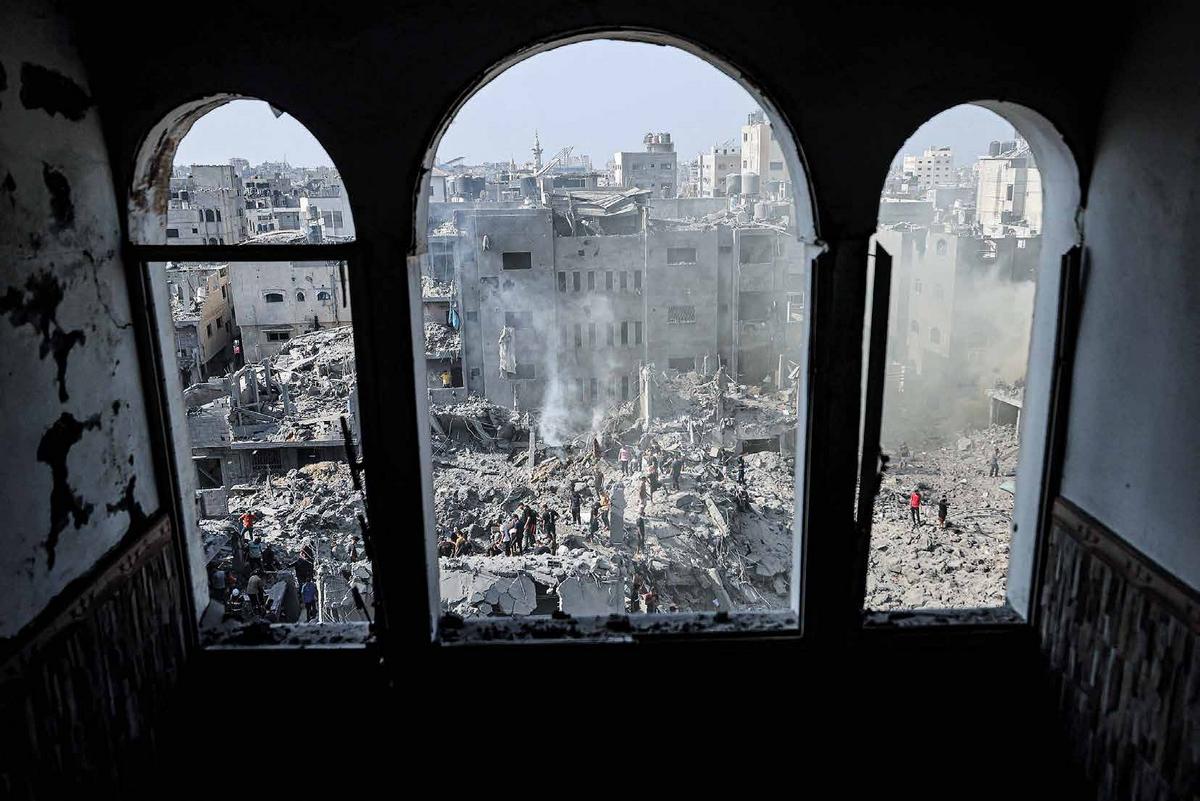
All of Gaza… Every element of life—trees, stones, infants, animals— has been obliterated. There’s nothing left. Even agricultural lands and green spaces have fallen victim to genocide. Water sources, the very layers of the sky, and the air have become polluted. Gaza is now plagued by epidemics, rendering it almost uninhabitable.
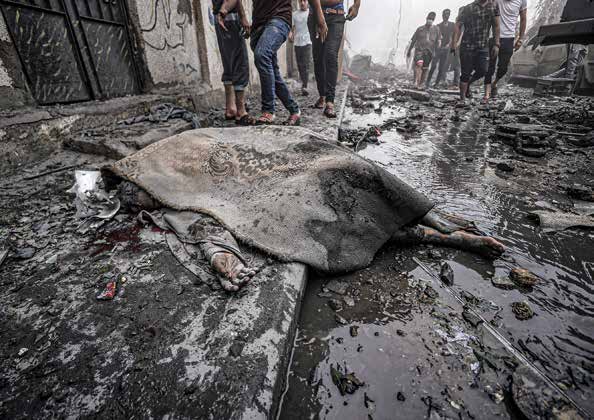
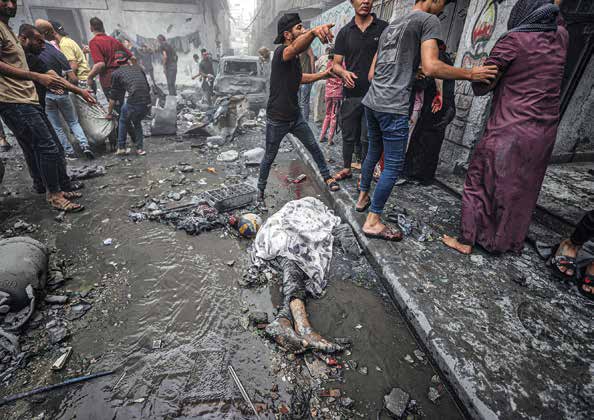
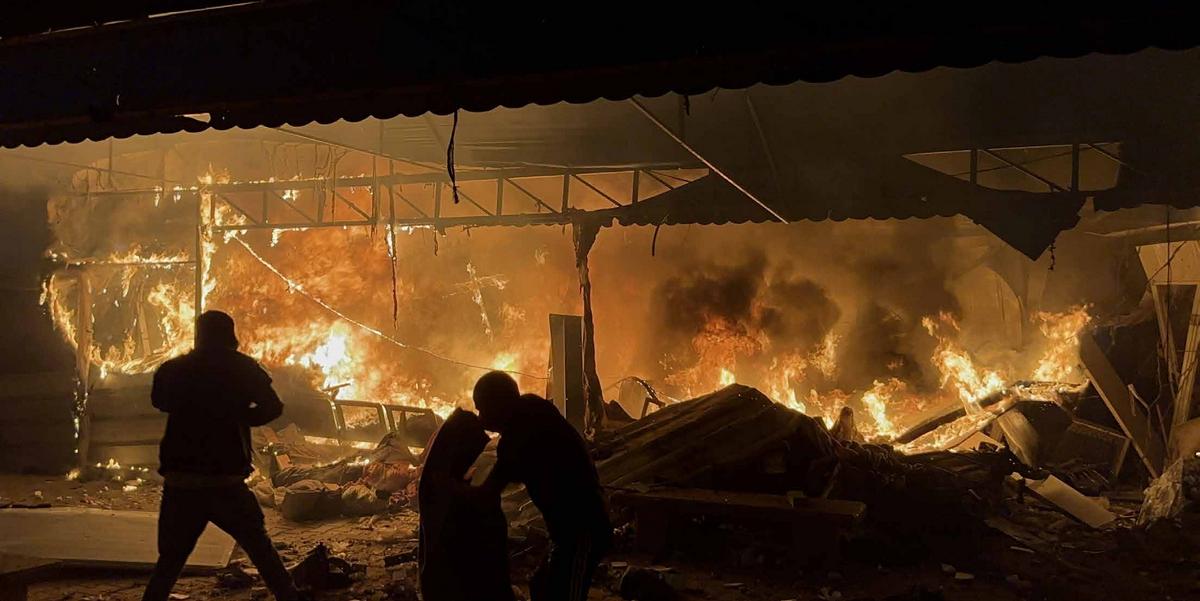
I have documented a lot of wars. None of them were as devastating and violent as this one. In this conflict, no matter how earnestly you try to film the crimes with your camera and phone, it’s impossible to capture them all. Every house, every street, every corner reveals something that demands documentation. It’s an incredibly difficult task; so hard, so hard... The sheer volume of destruction is so immense that as journalists, when we see collapsed houses, we almost resign to the thought that it must be an image already recorded. From the north to the south of the Gaza Strip, no city, camp, or street has been left untouched. Every house that is stricken has 50-60 martyrs. The funerals of the martyrs have become a daily, ordinary sight, and we merely watch them. The images have become repetitive.
Since when did we resort to burying our martyrs in mass graves? Since when do we bury them in the streets or marketplaces? Israeli forces even dug up mass graves, snatching bodies. A lifeless body, a martyr, buried—what crime did they commit to be subjected to theft? Do they aim to inflict psychological torment on their families and friends?
Apart from this blatant massacre, have there been people harassing or threatening you on social media?
Yes, myself and many of my colleagues have been subjected to threats on social media. These threats come from Israeli elements and suspicious accounts, consistently. The reason behind these threats is our role in transmitting images, influencing the shift in Western media opinions, and mobilizing people. We’ve received numerous threats, either explicitly or implicitly. This is a shared experience among many of my colleagues.
It should also be noted that Meta, the company that owns Facebook and Instagram, has been steadily deleting Palestinian content. It blocks Palestinian activists because it is (Meta) based on the Israeli narrative. Although this company claims to give freedom to content, it is loyal to a certain side and marginalizes the other. Palestinian content is always under pressure. There is a lot of pressure on social media against pro-Palestinian content.
It’s worth noting that Meta, the company that owns Facebook and Instagram, has been systematically deleting Palestinian content. It actively blocks Palestinian activists, because it is (Meta) based on the Israeli narrative. Despite claiming to provide freedom to content, the company shows allegiance to a specific side, marginalizing the other. Palestinian content is consistently under pressure. There is a lot of pressure on social media against proPalestinian content.
Do you think the massacre in Gaza really resonates with the world?
This war has brought out the latent capacity of the whole world. The war in Gaza has mobilized the people, the peoples of many, many countries. The states did not stand with Gaza, but the peoples stand with the people of Gaza, they stand with what is happening in Gaza. We have seen South Africa. They filed a lawsuit at the International Court of Justice in The Hague. Primarily, it’s the Arab peoples and governments who should have acted first, being our own flesh and blood. But, unfortunately...
Look at the current rallies in the West, from Washington to London, and across various foreign countries, including Turkey. The last rally, the Galata rally... Hundreds of thousands of people have been taking to the streets in support of the Palestinian cause.
Today, as Palestinian journalists and activists, it is our responsibility to convey the accurate narrative through all available means, with all the means at our disposal, to alter the perspective of Western media and expose the crimes committed by the occupying state of Israel.
Was there a moment when you wanted to quit your job or get out of Gaza?
The question about quitting my job as a journalist came late. The thought of quitting my job as a journalist emerged about ten days before the martyrdom of my son Kanan. Whenever I returned home… I saw him twice before he was martyred—the night before and the week before. He kept urging me to resign, to quit my job. When I asked why, he said, “Dad, I miss you, my brothers miss you.” I had been injured on May 13, 2021, and my children were now experienced. They were afraid that I might get wounded again.
We are talking about a terrible war, a war that doesn’t discriminate between targets, a war in which airstrikes are carried out on every possible place. The door of my house was dislodged by the blast of explosions, even though we lived in the al-Maghazi Camp and the explosions were in the al-Bureij Camp. Despite the distance, the impact reached our home, and I was away while my children were frightened to death. I would love to have quit journalism and spent more time with my kids, to have been with them and protected them. I would have liked to be martyred alongside my children... However, God’s decree has come to pass, and we praise and thank Him despite everything.
I will now align my work with my son’s will. In general, I won’t continue working in news reporting. While I won’t quit being a cameraman, I will step away from shooting news, as per my son’s wish; because my son wanted me to stop working as a news cameraman. God willing, I will honor his request and move away from war-related assignments. May Allah grant us the best in everything.
Kanan spoke with the logic of a child—a boy missing his father, apprehensive about a father who could be injured at any moment. Every time I entered the house, Kanan and his siblings would run to hug me and cry. “My beloveds, why are you crying? Look, I’m here.” “But, Dad, you were wounded, your friend was martyred, your friend’s family was hit by an airstrike.” They were afraid that I would be martyred. However, in the end, they, my beloved children, became martyrs themselves. I worked for them, labored for them, faced death for them. But in the end, they... Alhamdulillah, alhamdulillah. They went to the One who is better to them than us. Alhamdulillah. All of them were martyred.
Do you plan to seek psychological help after leaving Gaza or after this massacre is over?
Everyone in Gaza needs psychological treatment. Whether it’s Muhammad Al-Aloul, a friend of Muhammad, or any other citizen in Gaza. They all need psychological treatment. However, for now, I do not consider getting psychological treatment. I want to stay with my memories, I want to stay with the smell of my children. Therefore, I don’t want to be given any psychological treatment or anything. I am a Muslim; I have faith in God’s decree and destiny. Psychological treatment is the Holy Quran. Psychological treatment is for me to comfort my wife, my mother, and my father. That’s what psychological treatment is. Beyond that, I don’t intend to consult a psychologist.
Do you have any expectations from the states and peoples of the world?
I expect the states of the world, including Arab states, foreign states, and the global populace, to exert pressure on the occupying state of Israel. This pressure can be direct or through social media. Why should we be content with mere words and slogans when we are being killed? Concrete actions on the ground are needed. Israel, as the occupying state, should face boycotts, and support for Israel must cease. Airports should be closed to the planes of the occupying state. Substantial measures are necessary until this war comes to an end. What is happening in Gaza is genocide, a genocide against every living thing in Gaza.