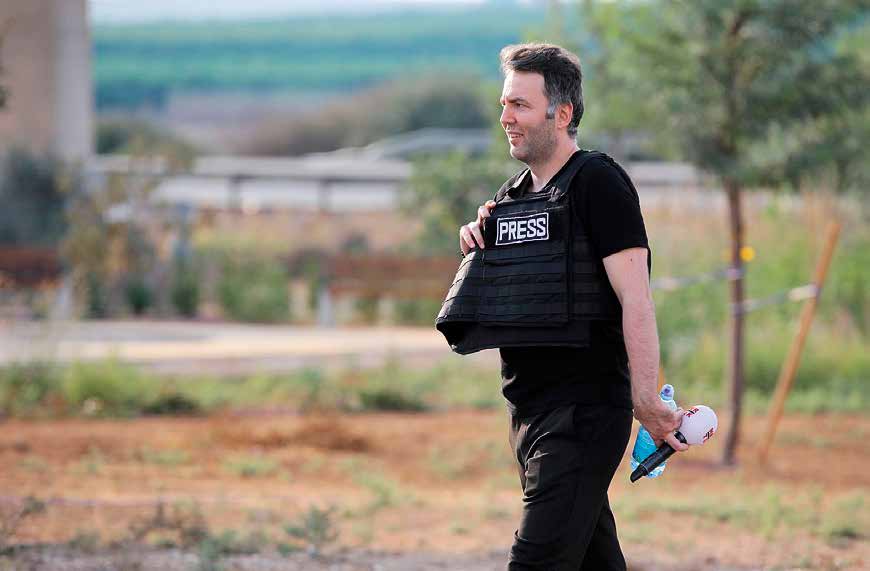

You were one of the first to go to the region after October 7th. You’ve been there before; you have reported the events there. But this time, the violence has escalated to a whole different level. How does it make you feel as a journalist to have to report Israel’s atrocities from Israeli territories?
It’s a meaningless feeling. Previously, our objective in going to the region was clear: I was in Gaza itself during the war, as our job is to be where the bomb falls, not where it is shot from. Here’s how we cover Gaza from Israel: I mean, in the end, over 1,500 journalists were accredited. Israel gave permits to all of them. Throughout this process, it has tried to send a message to the world that “I’m not safe; Missiles are fired into my territory. I’m not safe.” With 1,500 reporters in Israel, even the smallest incident gains global attention. Think about it; a very small event in a place with 1,500 reporters can be perceived worldwide as a major incident. As a matter of fact, this is precisely what is happening: Israel attempts to justify its actions or divert attention from its Gaza massacres with the slogan: “I’m not safe.”
As a journalist who has worked in Israel numerous times, when I went there this time, I expressed my concern, saying, “I think we are not safe in Israel; we will not be safe this time.” It was the first time I felt that Israel might not be safe. I don’t know what you anticipated before you traveled. While in Israel, no incident occurred that made me feel insecure. However, upon our return, everyone in Türkiye made remarks along the lines of, “Phew! You’ve left it all behind now.” They considered our work in Israel as being in a very dangerous zone. “You’ve worked very hard,” they said. No, that was not the case.
We observed the bombardment of Gaza from a distance. To illustrate, consider a road accident happening there, right in front of that gate, 100 meters from here. We are currently here, quite far from that spot. Thus, there would be no difference between the account we would give of the incident from 100 meters away and those told by someone living in Esenler [an Istanbul district] or Ankara. None of us actually witnessed the event. We are telling our account from here, 100 meters away. We are not witnesses. Therefore, there is no distinction between talking about Gaza from the border or any other place in Israel, like Tel Aviv, etc.
Now, I’m saying this in the context of rapidly evolving conflicts. There are more “composed” diplomatic affairs, so to speak, such as a meeting of the Arab League, and you travel to Cairo to cover it. The Arab League Headquarters is very close to Tahrir Square in Cairo. You provide information about that meeting, having experienced the atmosphere there, so to speak. It’s one thing. However, it’s only up to your imagination to cover an ongoing conflict without witnessing any of the occurrences, far from the place where people are dying or being killed, where homes are being bombed. In this case, reporting the incidents from Ankara, Istanbul, Tel Aviv, or Jerusalem doesn’t change anything because you’re not where the story is unfolding. You don’t come into contact with people, you can’t talk to the man in Gaza whose house was bombed, or see him. Therefore, it is not possible for you to convey that feeling. As a journalist in that case, the most you can do is merely to repeat what you see on TV or on social media. But you could do that from Istanbul or Ankara all the same. So, the truth of the matter is that Israel did not allow us to engage in real journalism in Gaza during this war. This was a very strategic move by Israel.
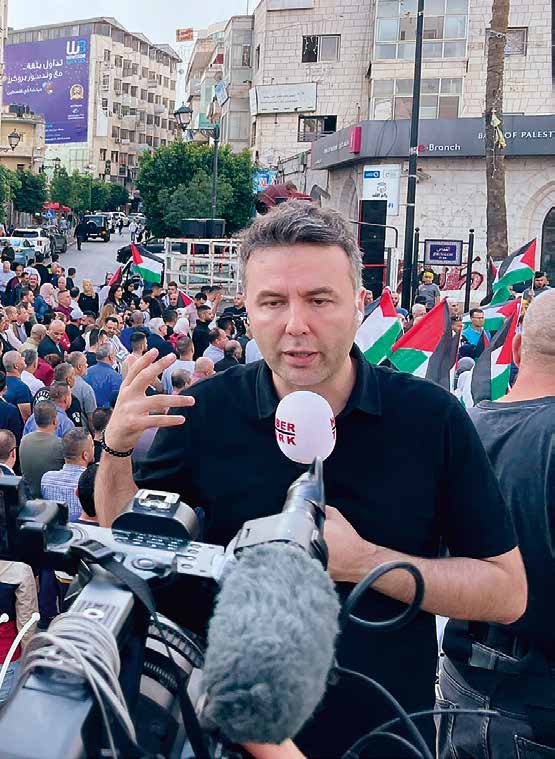
You said, “I was in the place where the bombs fell in the previous war.” This time, you were not allowed to enter that zone. A(n Israeli) member of parliament told us, “This shows that the Israeli government wants to hide something from the world.”
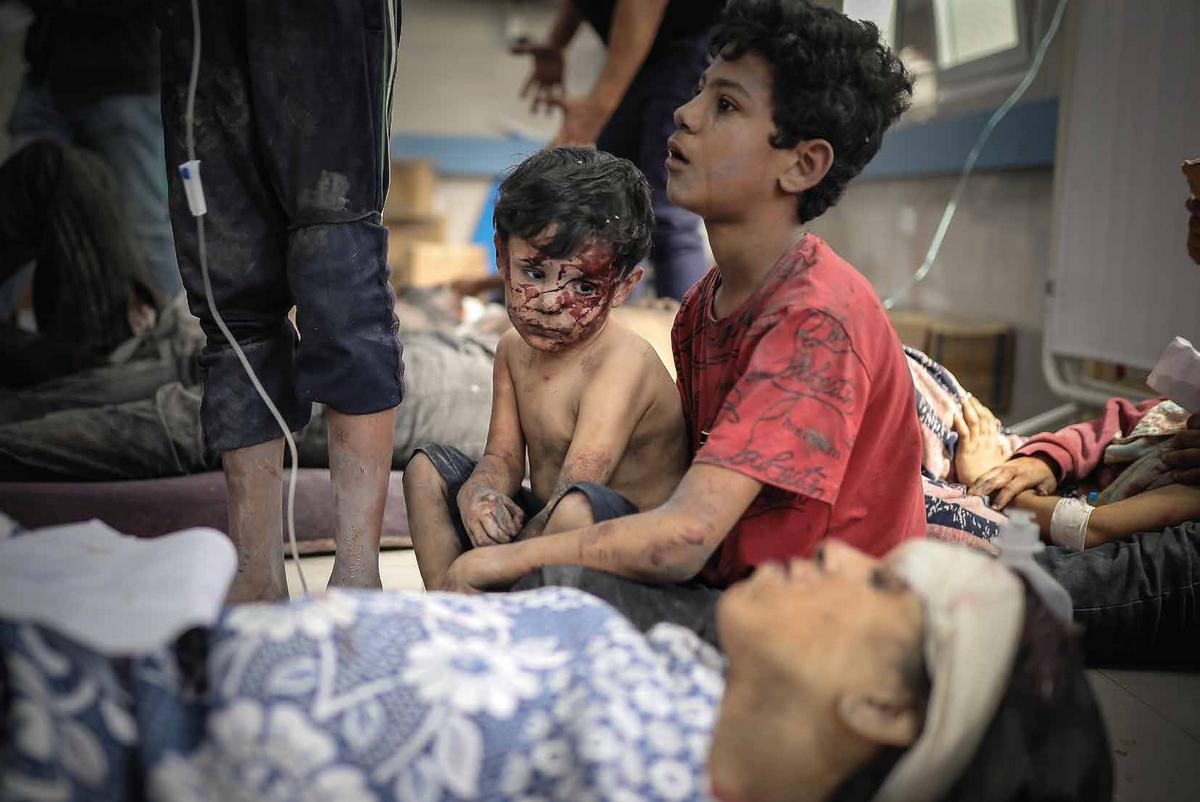
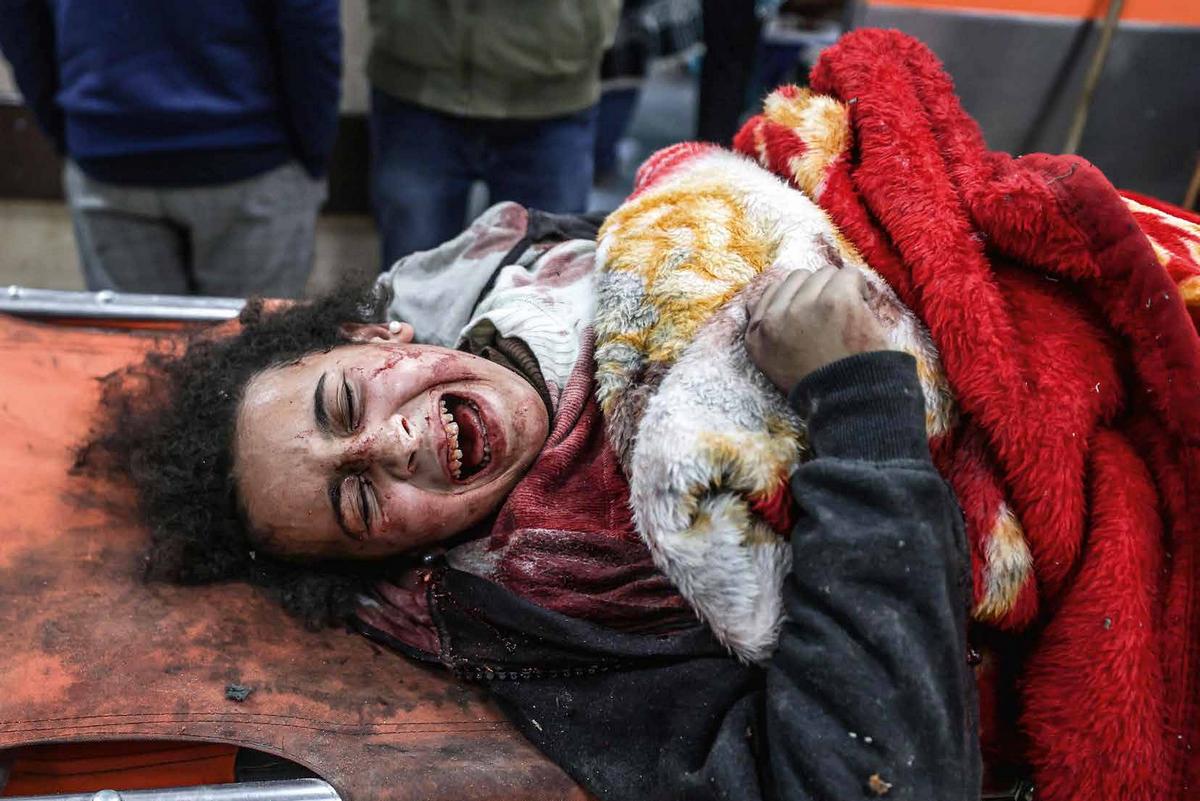
The Israeli government has already killed more than a hundred journalists. In Gaza, they used to make you sign some papers. Israel (even in Sderot) has “embedded” some TV personalities, Israeli TV channels, and Western TV personalities with us. Even there, they do not leave you alone. But let me also say this: Israel has no concerns. That is, it may want to hide something, and it can do that. But keep in mind that this is also an information war. No country in the world, not even the United States of America, which is the world’s superpower, can kill so many children and get away with it. There is no other country in the world that can do this, except Israel. And Israel has this peculiar self-confidence about it all. I mean, when the first 100 children or the first 10 children die, and then you say, “Oh, the children are dying”... Then it’s up to three children, a thousand children, ten thousand children... It comes to a point where the killing of children is no longer an issue, and as of now, it has become “only natural”, as it were, for Israel to kill children.
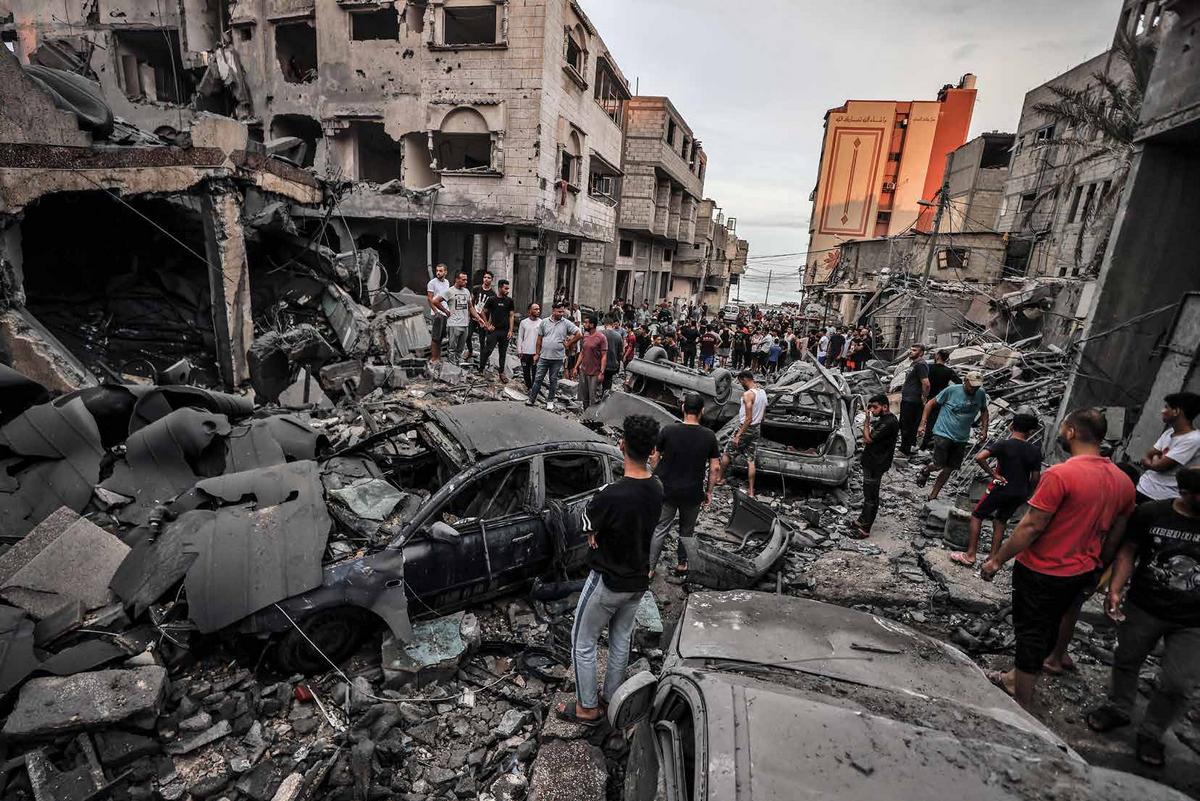
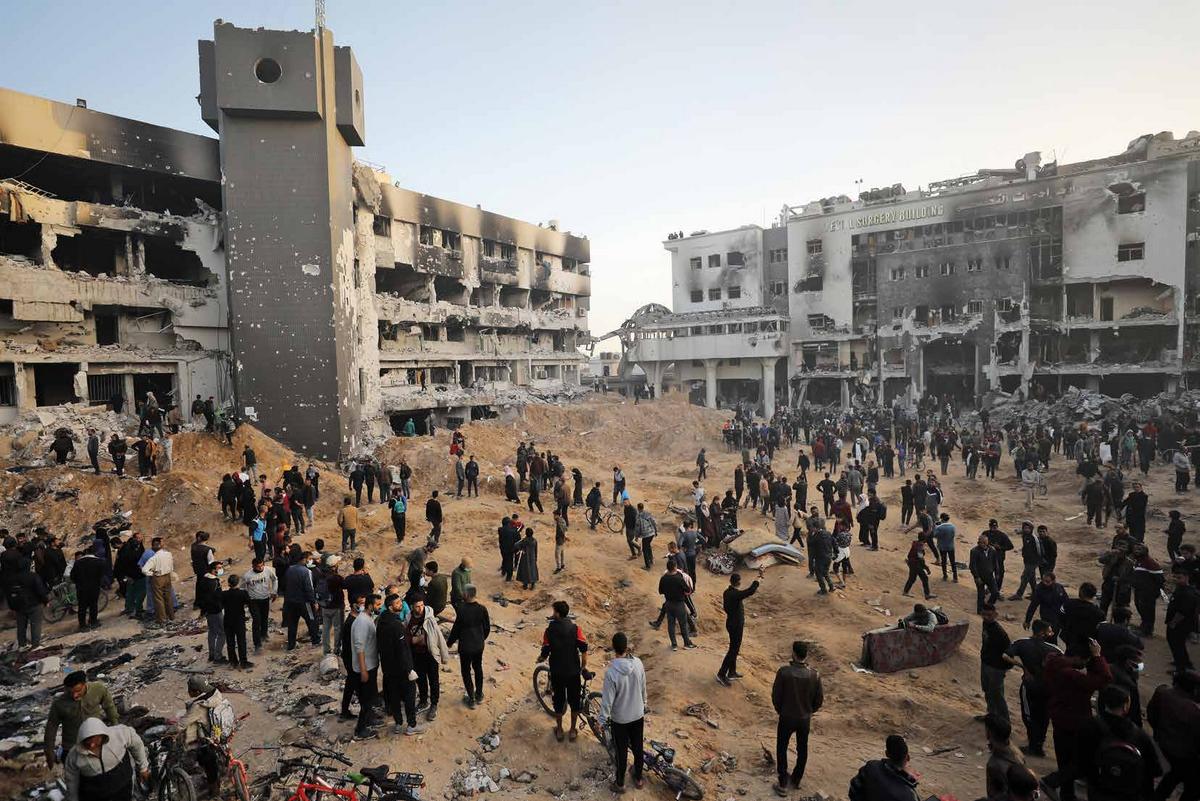
They hit and destroyed public buildings and schools. For the first time, they targeted doctors and health workers working for the United Nations. These fellows make us passively witness widespread violations of international law as if it were something perfectly normal. When we first reported on TV about the many civilians and children who lost their lives, there were reactions like, “Oh my God, how could such a thing happen?” Remember when the first hospital, the Al-Ahli [Arab Baptist] hospital, was hit; Israel said, “It was not us who hit it.” Do you recall those statements? Initially, they [Israel] were defensive. Then, they systematically bombed all the hospitals one by one, and this time, they didn’t even issue a statement. They simply didn’t. We have all become so desensitized to it. We say, “Israel is hitting hospitals as well. But hey, that’s normal.” We say, “It’s Israel; it does it, it doesn’t care whether it’s hospitals or anything else; it just hits.” On a global level, nothing Israel is doing right now surprises anyone. No one is saying, “It’s too unusual and needs to be stopped.” All in all, the Israeli administration has managed to perpetrate some of the most horrible things in the world and normalize them all.
Is there an event that you experienced during your time in Israel that you can’t forget?
During my time in Israel, there is one experience that stands out. As members of the media, we tend to follow each other. What do I mean by that? For instance, in Istanbul, there are HGS (Fast Passage System) toll booths. Let’s say there are ten toll booths, and all of them are open, but there is a queue in front of only two of them. Observing lines forming only in front of two booths, all incoming cars join those lines, assuming the others are closed. Alternatively, when you want to buy something and there are two stores selling the same products side by side, one crowded and the other empty, you might think, “If that one is packed with customers, there must be a reason for it, right?” and thus, you are influenced to choose the crowded one.
On one occasion, a journalist colleague went to Jerusalem, although we knew perfectly well that there would be no incidents there. Nothing would happen. But one journalist went. Another journalist, upon hearing about it, said, “If he’s gone, why don’t I go too?” So, he went as well. Then, yet another, upon hearing about the two, also left for Jerusalem. I said, “There’s not going to be any incidents there.” This time, they told me, “Everyone has gone, so you must go too.” And I did. We all broadcasted from Jerusalem. Meanwhile, in Gaza, a hundred more people were killed in three hours, and other significant events unfolded. But at that time, the focus of all journalists was on events that never took place in Jerusalem. All they got to cover in Jerusalem was the security measures and this and that. We knew exactly what would happen in Jerusalem; everything that would happen there had been memorized by those familiar with the place, the journalists. “Right now, this is going to happen, and then after a while, suchand-such is going to happen. And that’s how it’s going to end.” In fact, unless there is an extraordinary situation, there is not much tension or anything there. But what did we do? We tried to cover Israel’s atrocities and crimes from Israel itself. This is strategically problematic.
There’s also this: It is a source of shame for the Muslim world that we had to cover the incidents from Israel. For example, we cannot do any coverage from Egypt. Egypt does not allow it. We can’t do that in Rafah. Even if it could be done, and if possible, it should have been done. But there is also such an aspect to it. These observations are significant in terms of portraying the extent of the larger siege of the Muslim world. When you are under siege in every way, this is what happens. What the Turkish journalists were able to directly cover was parts of a rocket destroyed by the Iron Dome, which fell on the ground where they had been waiting for hours. If I had been there at that point, I would have only been able to do the same broadcast. This is a very normal thing. All of our colleagues there did this broadcast.
As I said, this is what Israel is trying to say: “We’re not safe.” Israel would love to see at least one journalist killed there by a Hamas missile. Israel would make such a big deal out of it, turning it into a major story. But there’s nothing wrong with them killing over 100 journalists. A journalist can die every single day. But if a single journalist were killed by a Hamas rocket, there would be a global outcry.
One last question. You are someone who knows the region very well. October 7 is called a turning point. Some Palestinians see this as a hopeful moment, as it shatters the illusion of Israel’s invincibility. This war will certainly end one day. What kind of Palestine or Gaza do you dream of after this war?
I have been following this issue for a long time. That’s how my dad raised me at home. I also took my own child there, guiding him through the tunnels in Gaza. I was in Gaza during the two previous wars as well. I have visited Gaza and Palestine many times, attending conferences, meetings, and reading articles on the Palestine issue.
[With all this experience and knowledge, I can say that] the Islamic world has lost ground every year. While the issue of Palestine was initially a problem between the Islamic world and Israel, it evolved into an issue between the Arab world and Israel, then narrowed down to only certain Arab countries and Israel, and eventually focused solely on Palestine and Israel. Most recently, it has been reduced to a conflict between Gaza and Israel, and even further, to a problem between Hamas and the Israelis. Muslims—the Islamic world—have continually ceded ground on the Palestine issue over the years.
I wrote a book on Gaza. During the writing process, I made a solemn declaration: “I’m not writing this book to be read casually. If one day Gaza ceases to exist, what events transpired here? What stories led to this outcome? I am writing to leave a mark in history.”
Unfortunately, the current trajectory seems to lead us to a point where we will lose even more ground unless an extraordinary change occurs. Israel, for instance, currently occupies Gaza and continues its operations against Hamas. But the question arises: Is it only Israel that wants Hamas gone? If there are other states that desire Hamas’ demise, like Egypt or Saudi Arabia - I mean, if there really are such states - and if they are not bothered by this [Israeli desire to destory Hamas]... If Palestinian President Mahmoud Abbas, as another example, remains unfazed by this, either...
Here lies the crux: The Palestinian cause has become increasingly divided and fragmented over time, with Palestinians competing and bickering among themselves. On the global stage, Palestine remains a crucial trump card wielded by certain actors with their own calculations.
Israel’s peace of mind lies there; the entire issue was reduced to Gaza because Israel says “I’m fighting Hamas,” and then it was reduced to Hamas, as I said, because when it’s about all Palestinians there, the whole Islamic world is up in arms. But now Israel says: “No, no, I have no problem with the Palestinians.” All those it kills are Palestinians, by the way. I mean, we don’t know who is a Hamasist, who is an Islamic Jihadist, who is a Fatahist, who is a social democrat, who is a liberal. We don’t know who is a Baathist. Israel just keeps striking and striking in the meantime. It kills hundreds of Palestinians. But here’s the story it tells: “I’m dealing with Hamas” because there are buyers of this narrative on some Arab streets. There is a buyer for this discourse. So, this is progressing towards the point where some actors end up ignoring everything, saying, “If you’re dealing with Hamas, alright; everything can continue the way they have been, because we also see Hamas as a bit problematic.”