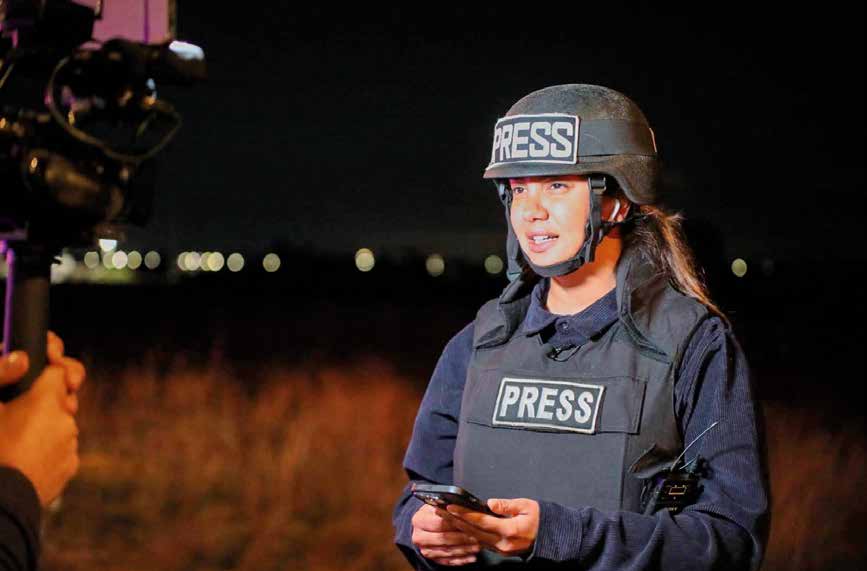

You were among the first journalists to venture into the region after October 7. I’d like to start by asking how it felt to report on what was happening to Muslims from within Israel
Certainly, it was an immensely challenging experience, given that the unfolding events were centered in Gaza—marked by tragedy, pain, and drama. However, gaining direct access to Gaza was impossible. Attempting to convey the situation from the Gaza border presented its own set of difficulties, with frequent harassment from both Israeli forces and civilians. While I’ve covered numerous challenging locations, none made me feel as uneasy as Israel did. I was constantly on edge, especially during live broadcasts, pondering whether someone might disrupt our reporting, given the abundance of armed civilians. They frequently barged into our broadcasts, interfering and brandishing their weapons. Verbal harassment and attempts to monitor our broadcasts were commonplace. For instance, my cameraman often had to abandon his equipment on the tripod to evade interference or harassment. I distinctly remember having to raise my voice while speaking to drown out potential disruptions, as it was impossible to discern if the harassers were uttering offensive language. There were people saying things in Hebrew. Therefore, it was much more difficult to cover the events from inside Israel.
On the hand, we witnessed the missiles and bombs unleashed by Israel, while people suffered right before our eyes. However, access to exact locations was blocked off entirely. Although Israel permitted broadcasting in specific locations, civilians often infiltrated these areas, making our work more challenging. I can honestly say I don’t recall a single broadcast that was calm and uninterrupted during our time in Israel. Perhaps the audience didn’t realize this; occasionally, they sensed something amiss—voices interrupting our coverage or live interventions. My cameraman consistently tried to shield me from harassers, urging them to step back or stop, allowing me to continue reporting. Despite my desire to stay and cover events comprehensively, circumstances compelled me to return on the 10th day. I always aim to follow through on the events I cover. I love that follow-up, because I don’t see this as an obligatory duty. I am a journalist. I don’t have categorically delineated time frames for work. For instance, I spent three and a half months in southeast Türkiye after the earthquake. In Israel, my initial goal was to enter Gaza, and I intended to stay as long as the situation demanded. Unfortunately, I was compelled to return on the 10th day.
What prompted your decision to return?
What prompted my decision to return? What I know is this: I began receiving calls from unfamiliar numbers in Israel. Initially, this was a topic of discussion among us. However, my phones started ringing with codes like twenty, twenty-two, or different numbers, all in a four-digit format, at odd hours—two or three in the morning, five in the morning, and sometimes at ten at night. It was perplexing. Notably, the phones and the line were not registered in my name.
When I answered these calls, the person on the other end knew who I was, indicating that it wasn’t a random scam call. The caller would say disconcerting things like, “How are you? Are you okay today?” The nature of these calls was particularly disturbing, especially when they occurred at unusual hours. It felt like I was being contacted through a computer, with a distant voice saying things like, “Are you okay today? Are you worried? Be very careful. You’re taking good care of yourself, right?” If it were a scam… I mean, the callers knew that I didn’t understand Hebrew. Therefore, they spoke English on the phone.
As these calls became more frequent, the intensity of the harassment and constant phone disruptions in the area grew unbearable, leading to my decision to return. On the day of my return, an incident occurred at the hotel where I was staying that evening. A journalist colleague from TRT World reached out to inform me that an Israeli man had visited the hotel, inquiring about my whereabouts. All the journalists stayed in the same hotel. My colleague said, “Fulya, an Israeli man came to the hotel and asked for you. And he showed an envelope. ‘I will give this envelope to Fulya. Where’s she?’ he asked. We said, she’s not here, and he left.”
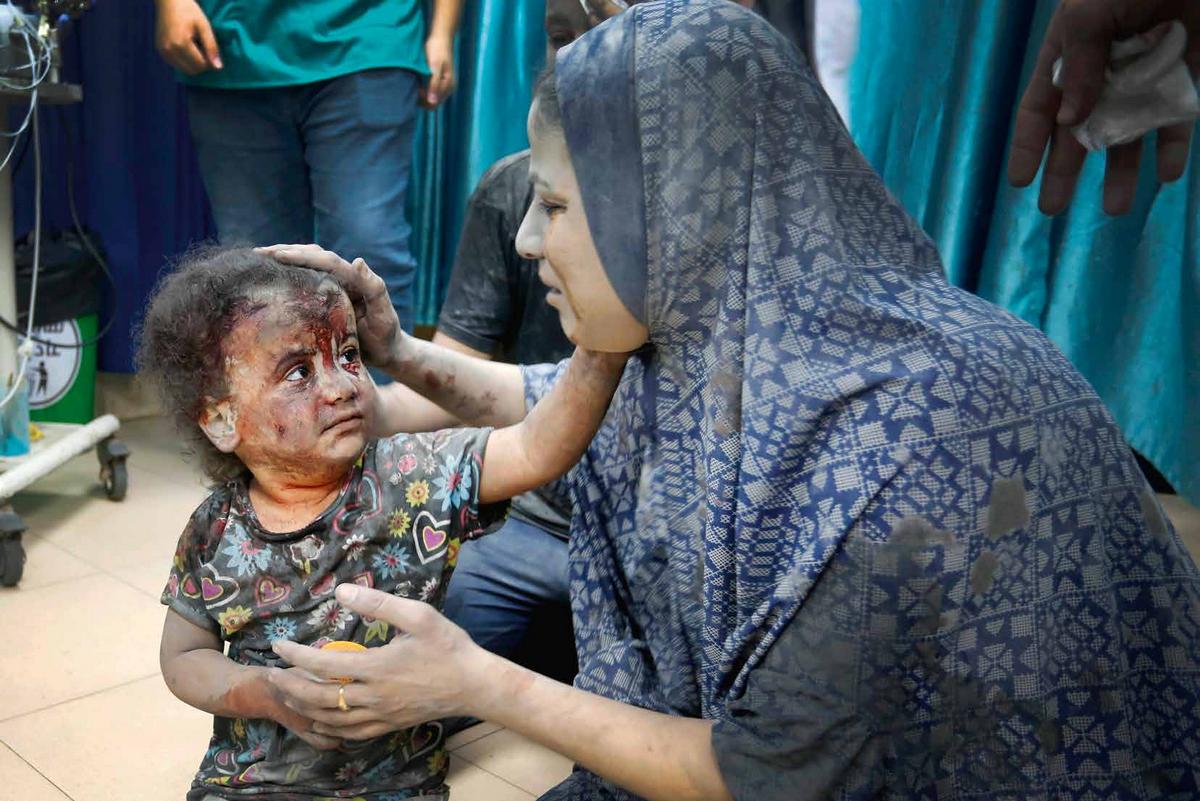
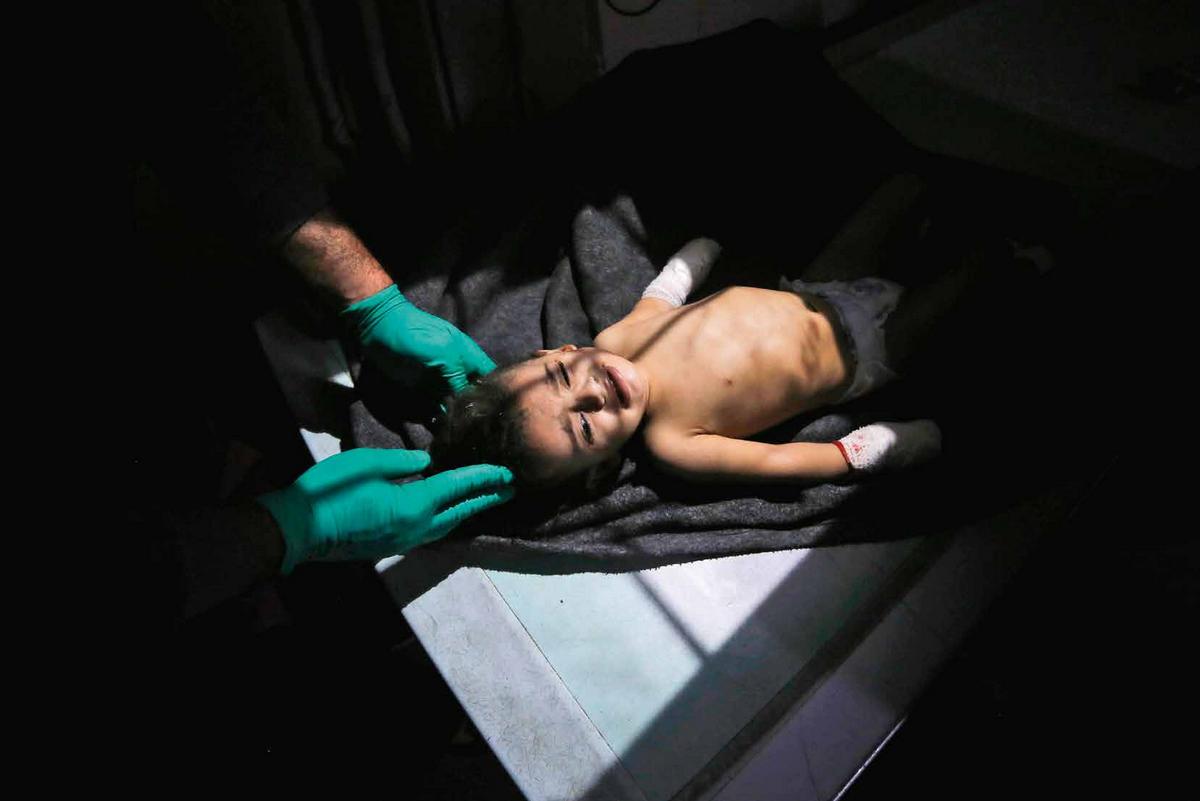
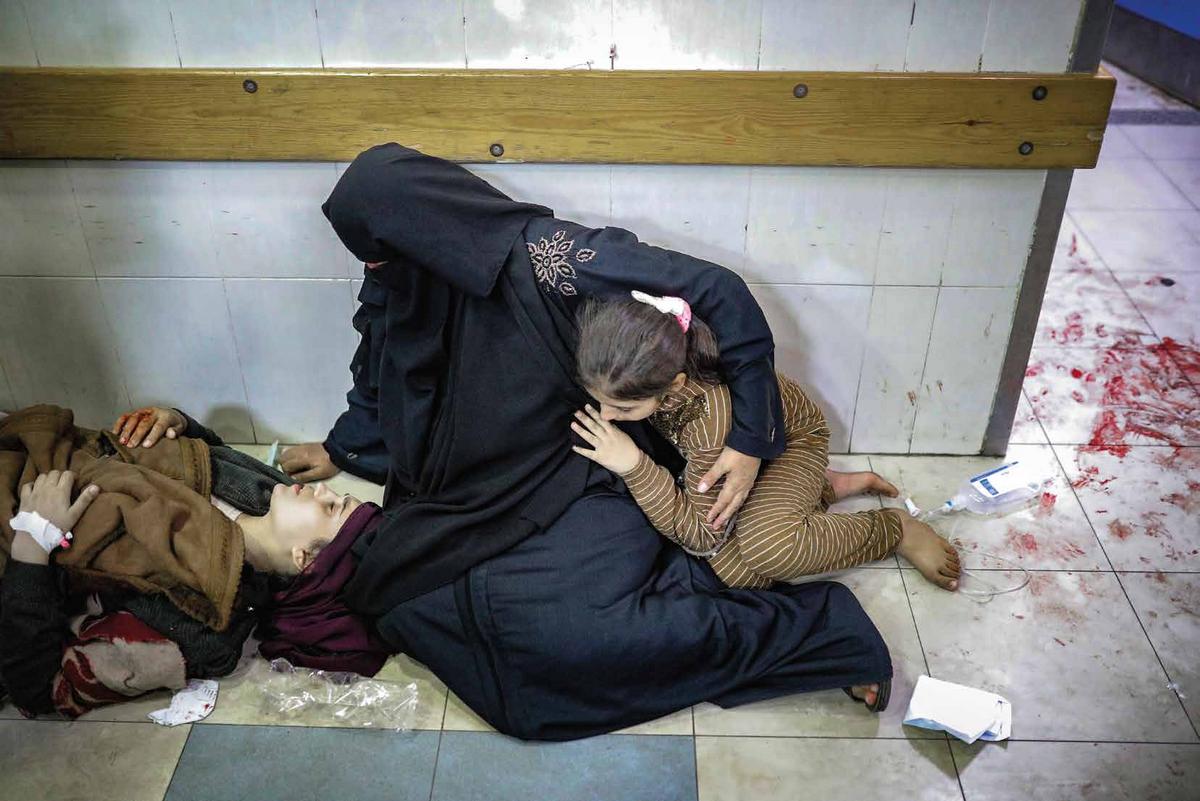
When Fatih shared this information with me, I inquired if he had opened the envelope and read its contents. However, he explained that the man hadn’t handed it over, persistently asking for me and insisting on delivering the envelope personally. These incidents were deeply unsettling, particularly for members of the press, especially those affiliated with Turkish and Arab media. Actually, it is not right to talk about what we experienced. But this is a country’s administration that treats us with such unsettling and disturbing attitudes. The same administration was killing babies and children without blinking an eye in Gaza, merely a few kilometers from our location.
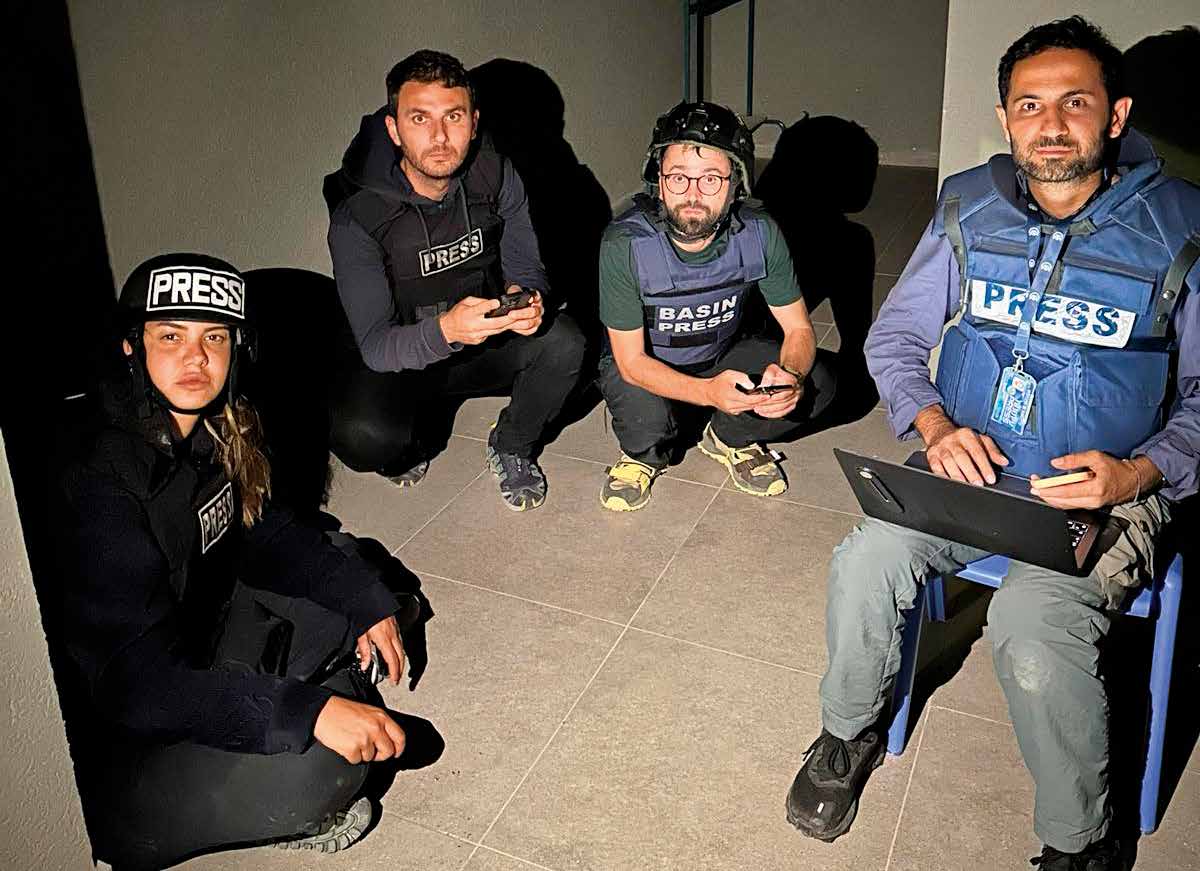
How did it feel to witness it?
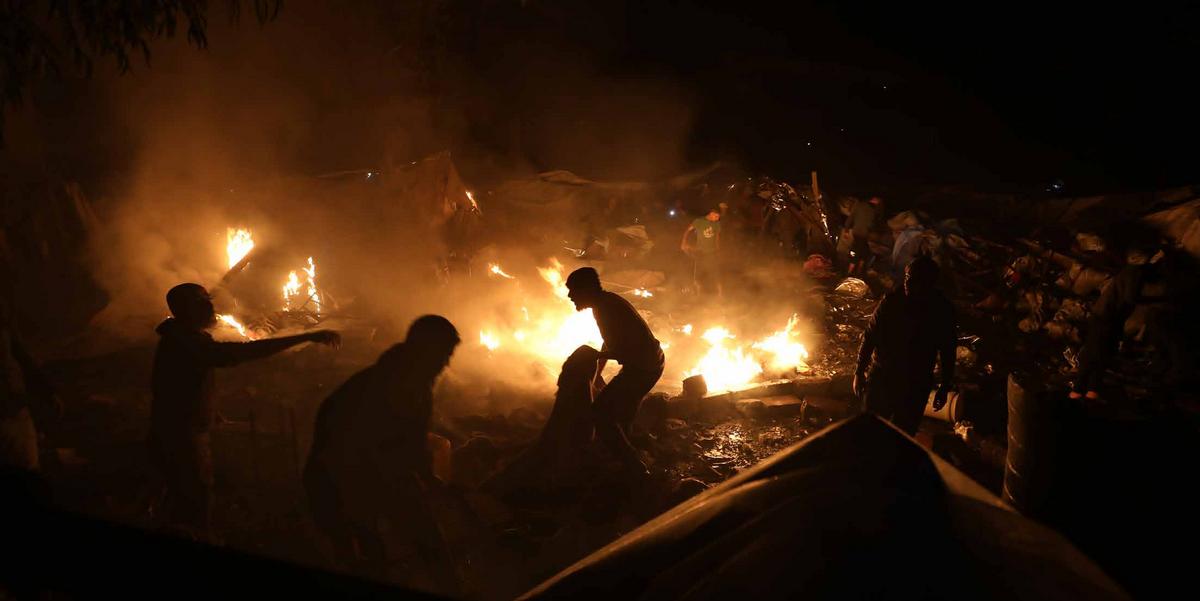
It was an incredibly harrowing experience. We were there, witnessing events unfold right before our eyes and capturing them on camera. The heron UAVs, the sound of fighter jets, and the recording of bombs being dropped many times by my cameraman friend—all of it was happening in real-time. Seeing the bombs fall, knowing that hundreds of people were losing their lives, was profoundly painful. I’ve often mentioned during broadcasts how challenging it was to cover such events from within Israel. Reporting on Israel’s massacre from the very place it was occurring was a surreal and emotionally taxing experience. The news was there, but we couldn’t physically go to Gaza.
Of course, Hamas responded to these attacks. On the other hand, we were also witnessing rockets launched by Hamas. But those rockets didn’t fall most of the time anyway. The Iron Dome was destroying them. We filmed them too. We were not worried about the bombs or rockets Hamas fired, because the Iron Dome intercepted them anyway. What truly unsettled us were the constant harassments, intimidation tactics, and efforts to silence and disrupt our reporting. It felt like they were telling us, “Leave, don’t witness, don’t report on Gaza. I’m going to bomb this place, and I don’t want the world to know.” This was the message Israel actually gave us. And I wasn’t the only one who experienced this. Many of our friends experienced the same threats and harassments. They suffered the same troubles. Some returned, some stayed on. But it was much more difficult to report on Gaza from within Israel.
An Israeli MP says, “If the Israeli government doesn’t let journalists in there”—criticizing his own country—”it means they want to hide something from the world.” What are your thoughts on this statement?
Absolutely, I completely agree with that statement. Dissenting voices have indeed started to emerge from within Israel. Not everyone in the country fully supported Netanyahu; there were protests led by the families of prisoners, and a segment of Israeli society opposed the war crimes and crimes against humanity committed by Netanyahu. While their percentage might not be high, there were people who took a stand, and the MP who made this statement even faced suspension from the parliament as far as I know.
Now, the reality is that the Netanyahu government allowed some journalists to enter Gaza, particularly those selected by them. These journalists were taken on guided tours, showcasing specific locations, and then brought back. However, for me, filming in places where Israel permits doesn’t mean anything. I’ve watched the stories and images produced by US journalists who went inside. What did they say? What did they show? Despite the widespread death and devastation, their stories portrayed not a single trace of blood, whereas Gaza was drenched in human blood—a tiny piece of land saturated with blood.
Without depicting any of the military operations, including soldiers and tanks, they simply showcased what they claimed to be “Aha, here is a tunnel in the hospital.” However, the actual events in the footage remained unclear. If there truly was a tunnel in the Al-Shifa Hospital, proper coverage could involve stating, “I’m in front of the Al-Shifa Hospital, and now I will walk there step by step to show you the tunnel.” While this can be said more quickly, it’s crucial to provide visual evidence. Even the American media broadcasted disjointed and seemingly irrelevant footage. But what happened next?
If you’ve been paying attention, months have passed, and Western media has begun to cover the facts. Truth cannot remain hidden, whether it takes one day or 100 days for them to surface. The surprising development was the emergence of rallies in the West. I never anticipated such protests in Western countries. These rallies were so massive that they surpassed anything seen even in Turkey. Some countries had public squares overflowing with people, and these protests occurred in places I couldn’t have expected or foreseen. The awakening in the West was significant, and the mounting pressure...
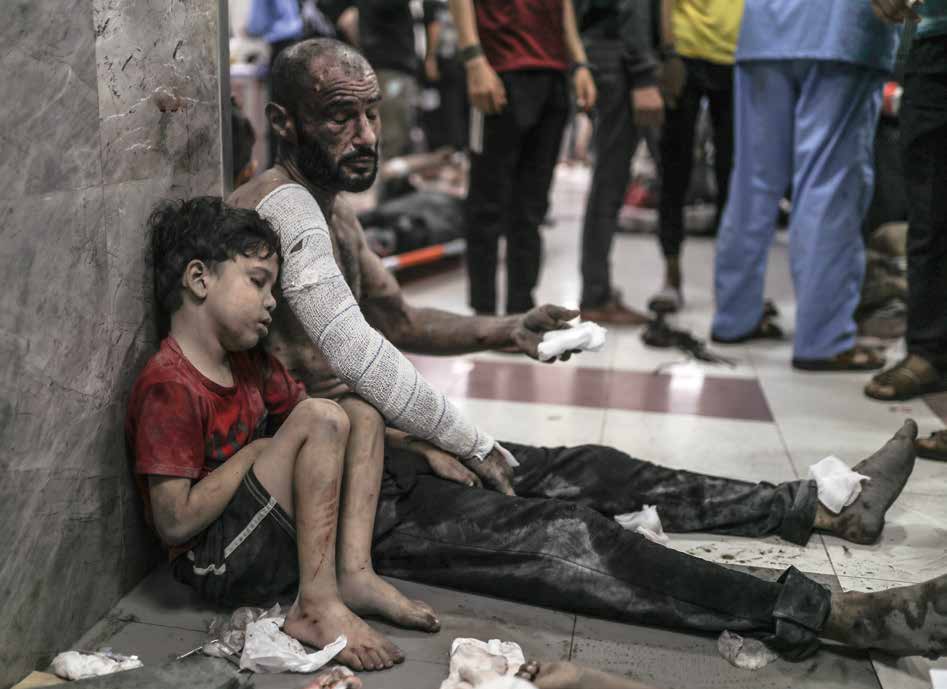
You served in Jerusalem in that short period of 10 days. Actually, it is a different geography. A geography where both Jews and Muslims live together. There was great oppression against the Muslims there. Especially, you were the first journalist to enter there on the first Friday. What happened that day?
It was the first Friday after October 7th. And a call was made by Hamas. A call was made: “Show your anger after the Friday prayer.” And we thought that thousands of Muslims would come to pray in the Al-Aqsa Mosque, both from the West Bank and in Jerusalem, and then there would be protests.
But even during the night, roads began to close—specifically, the night bridging Thursday and Friday. Israeli police erected barriers, effectively shutting down many streets around the Al-Aqsa Mosque in East Jerusalem. Entrances from the West Bank were also sealed off to prevent people from entering. Police presence was ubiquitous. As we crossed the border from Sderot toward East Jerusalem that Thursday night, we encountered police everywhere, and every road was blocked. I remember thinking, “They probably won’t allow anyone here tomorrow.” And indeed, when morning arrived—Friday morning—the entire area remained cordoned off with police barriers. Hundreds, perhaps thousands, of police officers stood watch.
It was time for the Friday prayer. Masjid al-Aqsa, a holy place where nearly a hundred thousand people typically gather to pray, saw only around two thousand worshippers that day. Our broadcast began at 10:00 in the morning. Initially, we focused our cameras on a disturbing scene: discriminatory practices unfolding right before our eyes. The Israeli police exercised selective control over who could enter Masjid al-Aqsa. It was a case of “You come, you go, you come, you go.” We documented this discrimination as it played out. While those over the age of sixty—whom we might refer to as the older generation—were allowed inside, young people were turned away. Residents of East Jerusalem faced barriers preventing their entry.
People have reached a breaking point due to years of discrimination, oppression, and relentless pressure. I witnessed the weariness etched on the faces and bodies of the Muslims in Jerusalem, their energy drained. The Israeli police repeatedly ordered, “Get out, you can’t enter.” My heart sank as I observed young Muslim individuals returning, heads bowed in defeat. I was broadcasting live at that moment, and very few were granted entry. Then some of the young people decided, “If we can’t enter, let’s lay out our prayer rugs on the streets surrounding Al-Aqsa Mosque. We’ll pray in the spiritual atmosphere of this sacred place.” Approximately 50 to 100 young worshippers spread their prayer rugs near the Lions’ Gate of Masjid al-Aqsa. The prayer had just begun when, shockingly, the police exchanged tear gas canisters right before our eyes. Tear gas bombs were distributed like hand grenades. The prayer began. They had just started to pray, and the Israeli police began throwing dozens of tear gas bombs at the Muslims praying. The sudden explosions echoed— thump, boom, boom—as we remained on live broadcast.
I witnessed them passing tear gas bombs to each other. My cameraman friend, Halil, also captured those harrowing images. The bombs were hurled suddenly, creating an atmosphere so intense and frightening that breathing became difficult. The explosion echoed, and the acrid smell of the gas bomb seared the back of your throat. Visibility vanished. Before anyone could comprehend the situation, mounted police charged from behind. Another officer appeared, firing a rubber bullet at a man. Blood streamed from his head. Amidst the chaos, prayer rugs lay on the ground. Naturally, young people sought to escape this persecution. The mounted police bore down on the crowd with relentless force.
That wasn’t the end of it. They introduced another element: a chemical liquid sprayed into the air. That unbearable stench… a sewage-like odor that clung to you, refusing to dissipate even after a week. Tear gas bombs, rubber bullets, mounted police charging, and the water they sprayed smelled like sewage. All of this unfolded within minutes. We wondered, what had these men done? You had instructed them not to enter, and indeed, they hadn’t entered Masjid al-Aqsa. Their intention was simple: to pray in that sacred atmosphere and then depart. What really surprised us was that they carried no banners, chanted no slogans.
They often say, “Israeli police intervened.” But when I was on air, I felt compelled to correct that narrative. I turned to my colleagues and said, “This is not an intervention; it’s an attack. Let’s call it what it truly is.” An “intervention” because of what? Because these people were merely praying So it is your most natural right. Whatever religion you belong to, it is your right to worship. How can this be taken away from people? We broadcasted those attacks live, but this wasn’t the first time. No, people have endured this oppression for years—the same treatment, year after year.
Our coverage on that Friday garnered significant attention. Our images circulated widely, reaching audiences in Turkey, the Arab world, and Western media. During those hours of continuous broadcasting, I etched into my memory the smell, the treatment, and the profound experiences. And remember, the tragedy extended beyond Gaza—it reverberated painfully in both the West Bank and Jerusalem.
Israel’s desire to enter Gaza is often framed as a cartographic maneuver, but this ongoing conflict will eventually conclude, much like its predecessors. What kind of Gaza do you envision? How do you imagine the future Gaza, Palestine?
Every place has been razed; Gaza has completely turned into rubble. Those beautiful living spaces have been destroyed. I think I will probably encounter a very heavy picture with the smell of corpses everywhere. There will be images that are very hard to stomach. Perhaps you recall: a medical team and a CNN International reporter managed to enter to a certain extent. I believe it was only around Rafah, without even seeing the places where the destruction occurred. They stayed inside for about half an hour. I distinctly remember the sadness in the eyes of that reporter during the broadcast they made after leaving Rafah.
What lies ahead in the future? These people are currently being forcibly displaced from their (ancestral) lands. Their fundamental right to live on their own soil is being stripped away, unfolding before the eyes of the world. A prolonged massacre has plagued this region for days and weeks. People in the West have risen in protest, but the authorities must intervene to halt this (tragedy).
What comes next? Believe me, in a world where human beings can exhibit such malevolence, making predictions becomes an impossible task. Will there be an even greater massacre? Could Gaza be entirely erased from the map? Or will this issue really be concluded with a two-state solution? I cannot say. We have witnessed humanity at its darkest, and it has left me feeling ashamed of being a human. So, can you make a prediction?