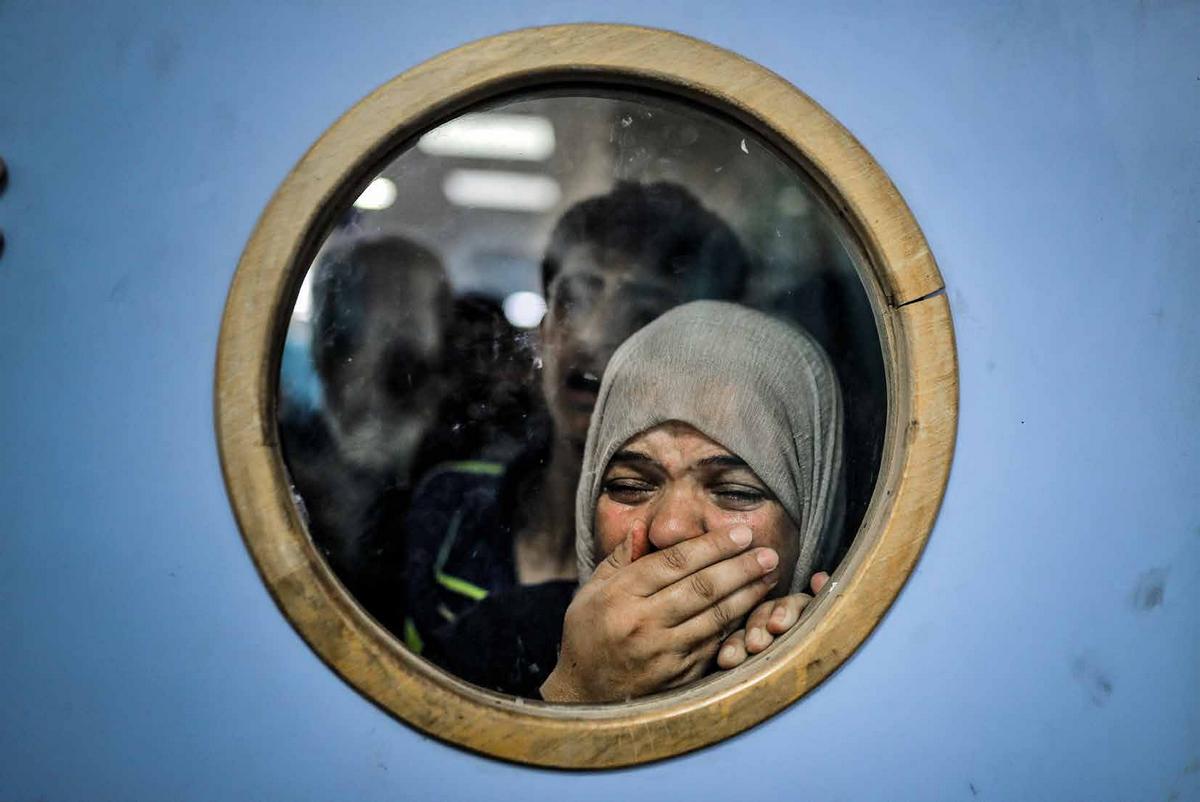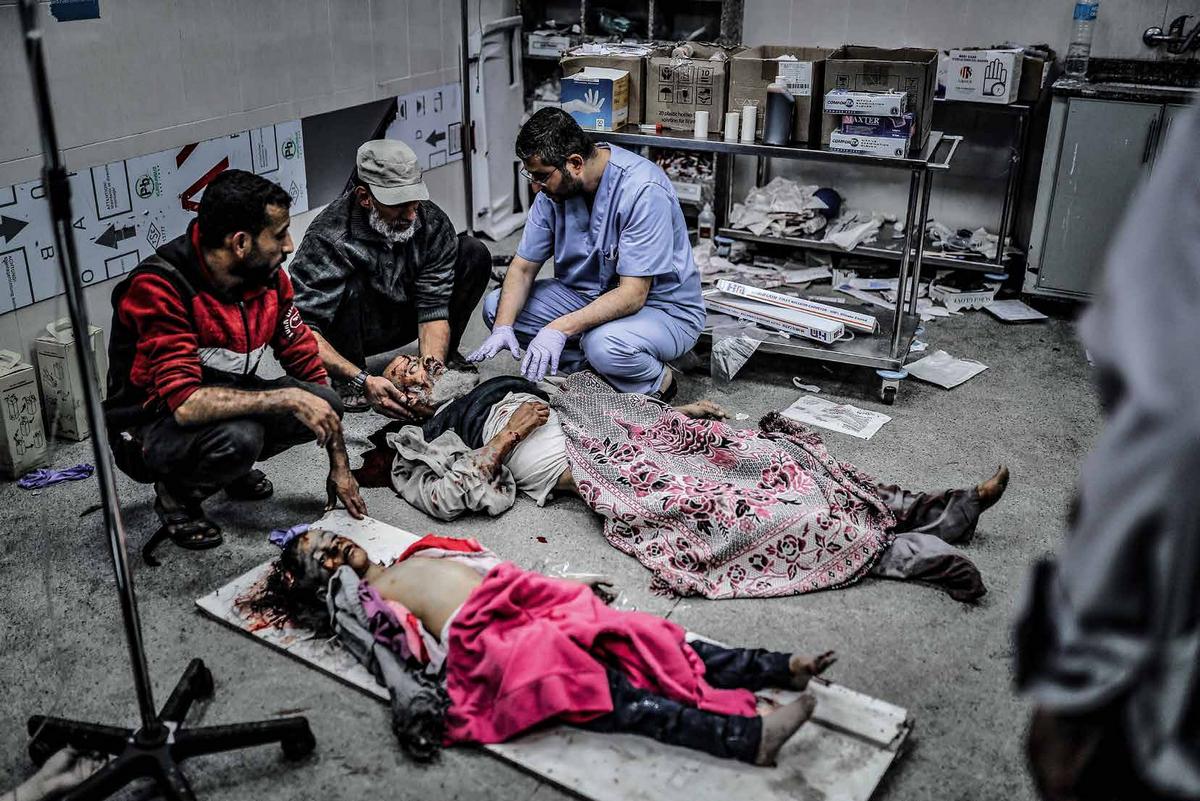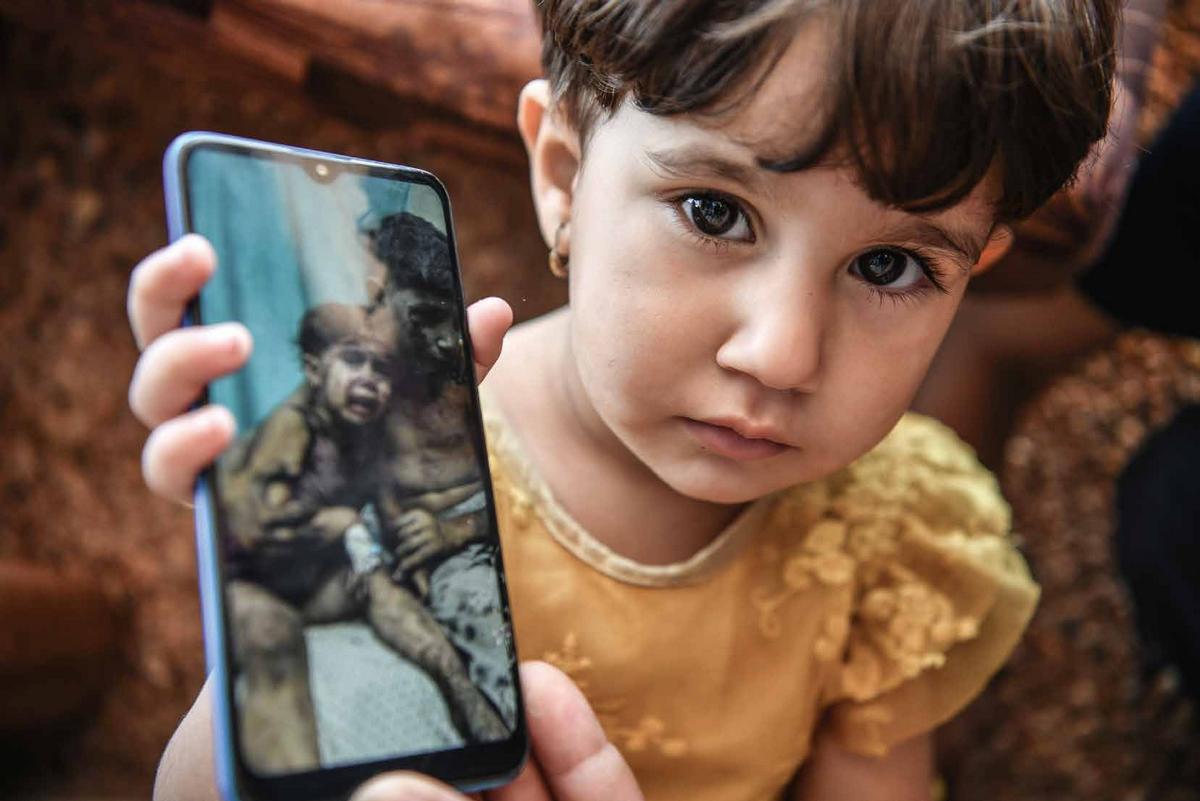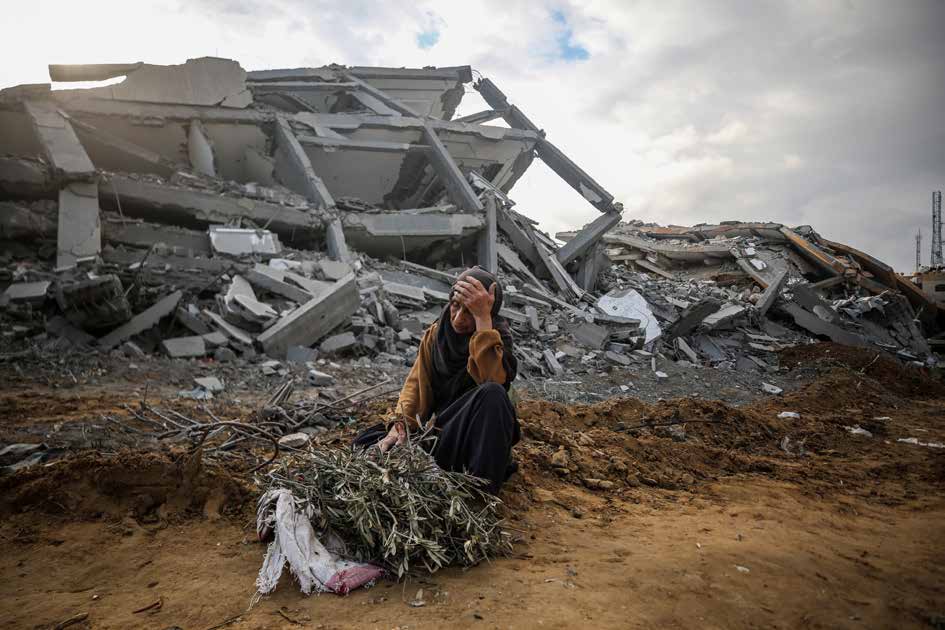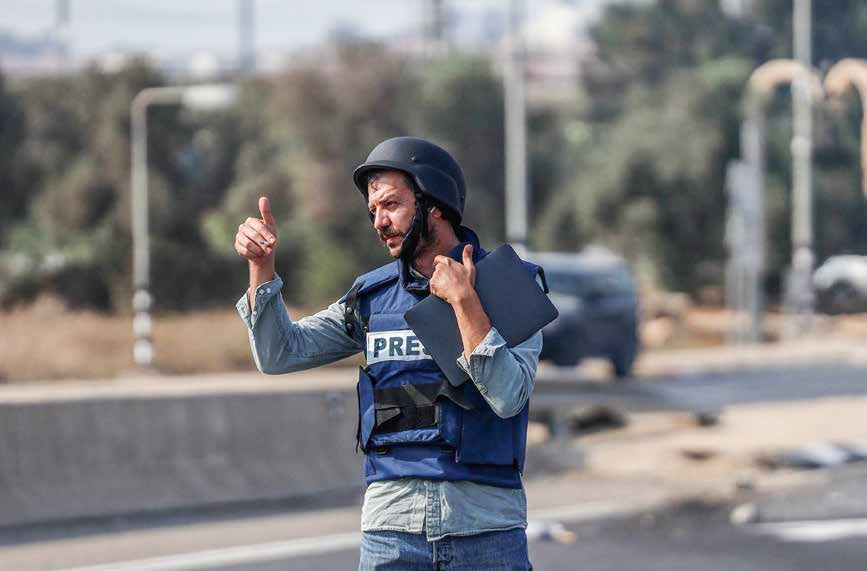

As journalists, in every event we are tasked to cover, we personally experience the situations above all. We become witnesses. It’s in this act of witnessing that we live through the events. As such, we occasionally accompany the Israeli police, observing how they engage with people during their interventions. In the Palestinian context, we frequently align ourselves with the Palestinians. In doing so, we act as both witnesses and sometimes become victims of the excessive force employed by the Israeli police against them.
This is roughly the scenario that unfolds most of the time. While navigating through this, for instance, in East Jerusalem - the occupied East Jerusalem - as you stroll through a historic gate in the Old City, you witness Israeli police pressing a young boy against a wall, conducting a search. Simultaneously, you document this, capturing it on your phone. Expectantly, the Israeli police might confront you. In this process, you not only experience but also document the event. Similarly, when Israeli police forcefully push an elderly woman, causing her to fall, you become a witness to such distressing scenes. However, in the face of these injustices, the only course of action available is to document them and share them with the world. Yet, as you continually bear witness to such events, they leave certain wounds in you, and you have to carry the weight of these experiences.
Do you plan to seek psychological support once this assignment concludes?
Certainly. It’s recommended for every journalist, much like after any humanitarian disaster. Those involved in search and rescue teams, the medics here, or the law enforcement officers working in such environments all grapple with trauma due to the scenes they witness. It’s not an easy experience. Therefore, the most crucial approach that we journalists have adopted is to share our burdens with fellow journalists, those who have encountered similar events, and to reveal the internal wounds we carry. Externally, you “thicken your skin,” so to speak. You must be resilient. Without letting these experiences infiltrate your daily life, you need to approach each new day afresh and continue your work. However, the wounds beneath your thickened skin can be addressed by confiding in those who share similar experiences and helping one another heal.
October 7 is described as a turning point in the region after decades. We might be witnessing unprecedented events. While you’re not in Gaza, tensions are running high in Jerusalem as well. Is there an incident that stands out in your mind as particularly difficult to forget?
The day my photojournalist friend Mustafa was assaulted was an incredibly painful day for us. It was truly distressing. We noticed Mustafa on the ground, restrained by police officers, but we were unaware that he was being physically attacked at the same time. Another colleague, Faiz, came rushing towards us. Initially, I thought it was Faiz who had been assaulted. However, when Faiz informed us, “They are beating Mustafa,” we couldn’t immediately get to Mustafa, and our attempts to do so were thwarted. It was a profoundly heartbreaking incident.
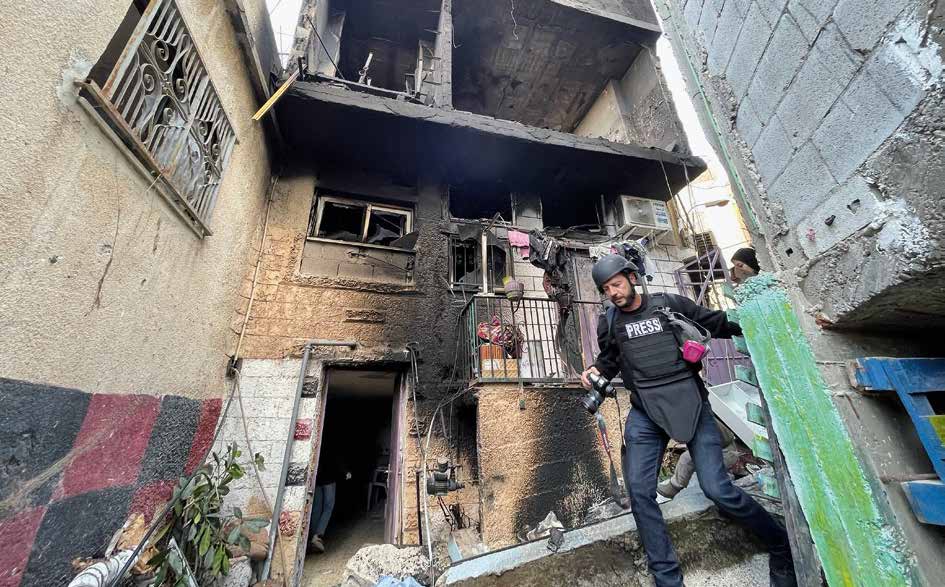
Similarly, in the occupied West Bank, when Israeli soldiers conduct raids on refugee camps in the north, the scenes you encounter upon entering these camps after the raids are extremely distressing. Instances where people’s homes are demolished while their children are still inside, the sorrow and devastation that individuals experience in the aftermath of the disaster that befalls them - that is, if they are fortunate enough to be outside home during such moments. These are events that etch indelible marks on one’s psyche.
You conducted a broadcast that garnered significant public attention. While many journalists observed the police approaching and sought refuge in the building, you persisted with your broadcast, continuing to pose questions and provide explanations. Perhaps your cameraman was signaling you, but what were your feelings at that moment, and how did the situation unfold? Why didn’t you “run away” like other journalists?
Here’s the scenario. We gain insights into the profession, particularly journalistic activities in this conflict zone, from our Palestinian colleagues, who possess extensive real-world experience. We are like their students. That’s how you can see it.
In a way, the owners of those lands also serve as instructors
Absolutely, they do guide us in our work. We are “representatives of a privileged group” with a different passport because we are not Palestinians. We don’t begin life as Palestinians. Being born a Palestinian is a profoundly distinct experience, particularly in the occupied territories. On that day, my cameraman friend, who typically works as a photojournalist, was assisting me in making an announcement. He was filming with his mobile phone. We were situated in an annex of the state hospital in Jenin, where there is a designated “protected area.” However, there was a door allowing ambulances to enter what we referred to as the protected area and there were some other exposed spots. But we were positioned behind a wall.
For me and my cameraman, this situation is a constant reality: Whether working behind or in front of the camera, if you’re the one holding the camera, you serve as the eyes on my back. Conversely, if I’m looking at you, if my focus is on the camera, I become the eyes behind you. We are positioned to guide each other’s actions. While I was delivering my announcement, tear gas was deployed. Subsequently, Israeli soldiers began firing towards the Palestinians on the road beyond the area where we were. Despite the chaos, I continued the announcement because, simultaneously, my cameraman friend kept the camera focused on me as if nothing was unfolding around us. Observing him slowly moving toward the wall, I followed suit, inching toward the wall to complete the announcement while taking whatever security measures we could.
We have witnessed numerous instances of journalists being beaten, shot, and even killed. You, in particular, have witnessed it more times. Has it ever crossed your mind that you could also be hit?
Certainly. We often engage in intense debates with some of our colleagues in the field. I mean, should we enter the refugee camp now or not? Where are the soldiers? How should we proceed? Occasionally, some of our friends may act with a bit too much enthusiasm, carried away by the excitement of the profession. They may be more eager to take risks. We always adhere to a motto here: “It takes one bullet to kill you.” Just one bullet. We consistently remind ourselves of this, and when someone seems inclined to take excessive risks, we try to discourage them by emphasizing this reality. Moreover, in challenging situations, you have a mantra that you repeat to yourself: “Not here, not in this way, not now.”
Well articulated. You have witnessed numerous conflicts in the region as someone who lives and works there. The process that commenced on October 7 is starting to be considered a turning point and a source of hope in Palestine. It is also seen by Israel as a significant turning point. How do you anticipate this war playing out? What kind of Palestine, what kind of Gaza do you envision?
It’s too early to discuss such matters at this point. I believe we are examining the elephant from too close a perspective at the moment. We have encountered a historical event, a major tectonic shift, and what kind of landforms, so to speak, will emerge in the aftermath remains uncertain. What lies ahead? I think it’s premature to speculate. As you mentioned, it’s a historical rupture. Nothing will be the same as it was before October 7; that much is certain. The divergence and gap between the parties have widened significantly. However, can a stream of water flow from this opened rift, creating a basin of peace? Or will it draw more people into this abyss, evolving into a deeper conflict in the region? It’s too early to tell.
Have you experienced any incident in the region after October 7 that caused you to say “Enough is enough. I’m dropping my pen!”?
There were indeed moments when I found it extremely challenging. Losing our colleagues, like Montaser al-Sawwaf, a freelance reporter for Anadolu Ajansı, was particularly painful for me. I had spoken to him on the phone just a few days before his passing. It was during a humanitarian truce that was still in effect, but it was evident that it wouldn’t last much longer. The message from Israeli officials was clear: “The war is not over; we will continue until we achieve our goals.” Montaser, who was in the most perilous area in the north of Gaza, asked me if there was any hope. I mentioned that Blinken would come the next day, hoping he might be able to restrain Israel. Montaser then inquired about the exact time of Biden’s expected arrival. I responded, “He will come tomorrow, but I have no idea what will come out of his visit.” During this period, amid the humanitarian ceasefire, we witnessed the emotional reunions of Palestinian prisoners released from Israeli prisons with their families.
As I mentioned, we don’t just follow the news; we live the events, feel those moments, and experience them. I encountered many emotional moments, instances where emotions soared above the clouds only to rain down as floods of tears. After this truce, the bombardments resumed, and there was a descent from those clouds not to the earth, but to the bottom of the abyss. Montaser lost his life on the first day of renewed attacks. In the morning, I contacted our office manager, Mustafa Habush, urging him to ensure Montaser’s safety. “Where is Montaser? What is he doing? Don’t let him go anywhere. We don’t need any new footage. Just his presence there is enough for us. This, in itself, is a great journalistic achievement.” Unfortunately, the tragic news arrived in the afternoon.
Subsequently, I found it incredibly challenging to keep up with the ongoing events. It remains a formidable task, but I currently have no intention of leaving the profession. Particularly when considering our colleagues still in Gaza, alongside whom we continue to work, contemplating departure feels like an indulgent act for someone privileged like me, a citizen of another country with a foreign passport. However, I’ve heard from numerous journalist friends who have worked for many years in other press organizations, meeting international standards, that they were contemplating or intending to quit the profession after this war. I don’t believe they are wrong in their considerations. It’s not my place to judge them. Personally, I want to witness where this process is heading, at least as a debt of loyalty to my friends and colleagues in Gaza.
Montaser asked you if anything would come out of Blinken’s visit, is that correct?
“Blinken will come,” I said, but I couldn’t predict what would result from it. One couldn’t make a definite statement because it was evident [that nothing substantial would come out of it]. I mean, examining the dynamics of events, the messages from the Israelis, it’s inching closer and closer to a breaking point, approaching a bomb ready to explode. You can feel it. Everyone is on edge. If I recall correctly, December 1 was the day the humanitarian ceasefire ended. On December 1, hostilities resumed intensely. It all started very harshly. And it was on the very first day that we lost Montaser. As I mentioned, that day, I experienced a bit of a psychological blow.
Why couldn’t you tell him?
He asked if the ceasefire would continue... It did last for another day after Blinken arrived, but I expressed, “Regardless, the Israelis are seeing red, they’ve gone berserk... They’re going to, you know...” Montaser was also very selfless, hardworking, and incredibly brave. In these aspects, he was a highly valuable individual both personally and professionally. We collaborated for a day in Gaza, and I had the chance to get to know him better. He was a very gentle, soft-spoken, well-intentioned person with a youthful innocence to his character. Unfortunately, unfortunately...