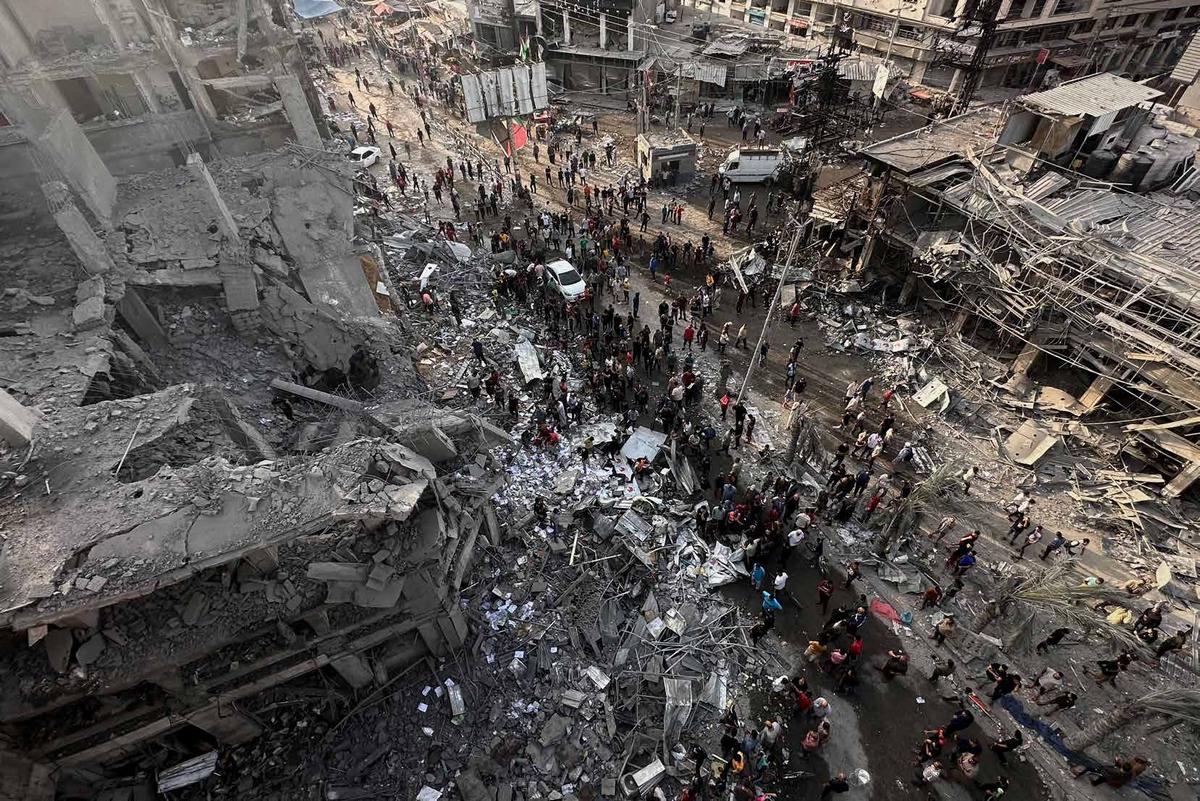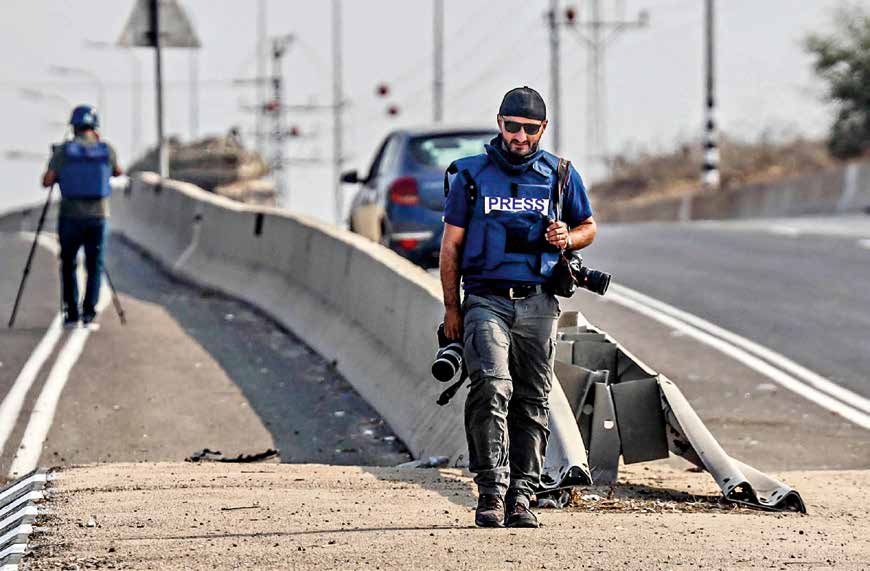

First of all, can you tell us the story of how you took those famous phosphorus bomb photos?
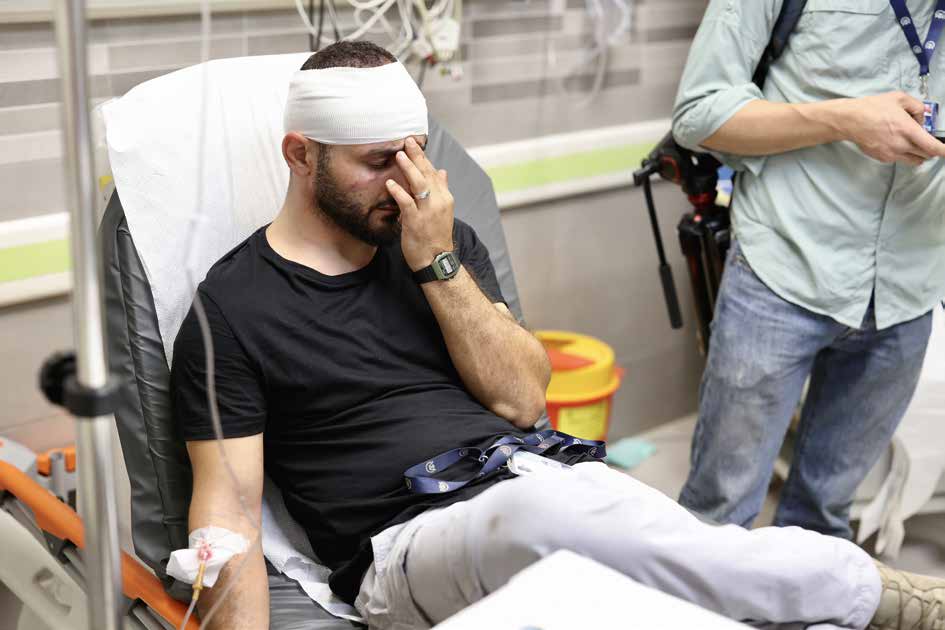
The story of the bomb photos I took in (Kiryat) Malachi near the city of Sderot on October 9 is as follows:
It was the third day of the Gaza war. We had been broadcasting and sending photos since the beginning of the war. I was concentrating on the south of the occupied territories parallel to Gaza. On October 7, it was difficult to get to the border areas. On October 8, it became easier to reach areas close to the border. At the same time, the Israeli army was preparing for a military move towards Gaza. On October 9, it seemed ready for battle. In other words, it had started a military operation towards Gaza. The only area we were able to reach at that time was Malachi. We could see the artillery there. As a group of photojournalists, including Israelis, we arrived in the area. Initially, we tried to enter the area. But the Israeli army blocked us. They said that the area was a closed military zone; in fact, that no one should be in the area. We met with the officer in charge of the area, and of course our entry was discussed, and of course it was Israeli journalists who spoke to them. And in the meantime, they allowed us in for a limited time and only for a few minutes.
They forbade the shooting of videos, as well as broadcasting. And so it was said, “Go in and just take pictures of those who are making entry.” We arrived at the artillery unit and they brought us to a tank. We were told, “You can only photograph this tank.” They also said, “You can only look at the other tanks from afar; you must ask us before you photograph anything else.”
If I’m somewhere as a photojournalist, what I have to do is to take as many photos as possible; it is only natural. I have to document the event in all its aspects, all angles and all areas, because I may not be able to enter this area next time.
Anyway, I photographed everything my eye could see. Of course, it was said that it was forbidden to take photographs of some things and some equipment in the area, such as special units. They forbade us to photograph them. That’s the story of the photo I took.
Are you glad that this phosphorus bomb photo of yours appeared in many publications? Was there a medium that particularly surprised or delighted you?
As journalists, we pay attention to where the photos we take are published. When I got on the internet the next day, I was surprised to see that a human rights organization had used this photo. Can I name it? Amnesty, right? Amnesty International, right?
The next day, as I was browsing the internet to see where my photos had been posted, I was shocked to discover that Amnesty International had chosen one of my photographs
How did the organization present it?
The organization wrote a comprehensive report about the bombs depicted in the photo. Amnesty International utilized these photographs as evidence to assert that Israel had used or was planning to use phosphorus bombs, a prohibited weapon against civilians.
How do you feel about this photo being chosen and featured by so many media outlets?
Now you’re asking about my feelings. There is no such thing as a sweet feeling here. I mean, we are at war now. We’re in the midst of war, and I am directly involved. These are bombs we’re discussing. We’re in a state of war. There are no positive feelings here. Can I possibly feel joy (about their publication)? No, I can’t, because these bombs will be used, maybe they will kill civilians, maybe they will kill children or women. Anyway.
Certainly, organizations can use my photos. When a journalist’s photograph is used, they become part of that specific report or research. They, too, become a part of history and may find some happiness in that. As for me, I don’t know; in times of war, people can’t always find happiness, even if a photojournalist’s photo serves as evidence or contributes to achieving something else.
While you were doing your duty in East Jerusalem, several Israeli soldiers attacked and beat you, and these images went viral as your other friends continued to film. If you don’t mind, can you tell us about those moments?
I’ll tell you, no problem.
As is always the case on Fridays, journalists and the public were restricted from entering Masjid al-Aqsa on Friday at the beginning of the war as well. So, we were documenting the (congregational) prayers outside Masjid al-Aqsa. As journalists, we knew that there could be some incidents in East Jerusalem. We were in the Wadi al-Joz neighborhood that day. The situation was stable, there was nothing. In other words, there were no events that we could characterize as major. Everything was very routine. On the eve of the war, it was much calmer than usual.
We’re taking pictures; no incidents seem to be unfolding. We performed the Friday prayer with a small congregation, and the prayer was over. So, we wanted to walk downhill to the north, to another area. Towards Sheikh Jarrah, roughly about 200 meters down the road. A group of soldiers was hanging out in that area. When we got there, they shouted at us, “Don’t pass by! Don’t you pass by! Where are you going!” We check out to see who was shouting.
We said, “We’re getting out of the area, we’re getting out completely.”
“Okay, then ask the officer in charge,” one of them told us.
We went to the officer in charge, and my colleague Faiz Abu Mira was with me. We went to talk to the officer. We went to say that we were going to leave the area. We talked.
“Are you really going to go? Or are you going to go down and wait?”
“I swear I don’t know. We’ll go down to the car, sit in the car, send our things off, and then we can leave. Maybe if something happens, we can come back, because we’re journalists.”
The officer said, “If that’s the case, you can’t go down, there’s no pass. Go back.” When we said, “How come we can’t pass,” he said, “Turn around.” There was a soldier with him. He attacked us. He started hitting me and Faiz. With his first blow, he kicked me and hit my hand.
We said to the soldier, “We are talking to the officer, why are you hitting us? You attacked us. You attacked us before we finished talking to the officer.” While I was saying this, he also attacked Faiz. I stepped aside.
Then the police attacked Faiz and then they attacked me. This time he focused on me. He was hitting me all this while. I kept saying, “Why are you hitting me? Why are you beating me? Why are you beating me?”
Even as we were talking to the officer, the other kept hitting us.
Then he let me go. I told him, “Okay, since you are doing this to us, we will meet you in the office of MAHASH,” which conducts investigations against police officers, and Mohammed said, “We will report you.”
He turned back and started hitting harder. The details in this case were very clear. I don’t remember; I was being beaten. I saw what happened in detail later in the video. He beat me even more. Then came a moment when I lost control and flew off the handle at the soldier and said to his face in Hebrew, “May God deal with you!”
He went mad and said I had sworn at him. He also claimed that I pulled a knife on him. He then took his gun and turned the barrel on me.
Now that I knew he wanted to shoot me, I turned my back and defiantly said, “Shoot me if you can! But don’t hit me.” However, he continued to strike. The blows kept coming relentlessly. “What wrong did I do to you, what law did I break?” No answer. “Then arrest me, but don’t hit me. You’re still hitting me, you’re still beating!” I had no idea why he was hitting me.
Suddenly, I heard a policeman say, “Arrest him!” The one who had been hitting me then arrested me and forcefully laid me on the ground. I didn’t resist the arrest; I surrendered completely. I didn’t utter a curse or say anything provocative.
When it was said, “Arrest him,” I said to the policeman beating me, “Arrest me; arrest me and stop hitting me.” Subsequently, I was arrested and forcefully placed on the ground. They pressed me down. I surrendered without resistance, refraining from any form of verbal aggression or defiance.
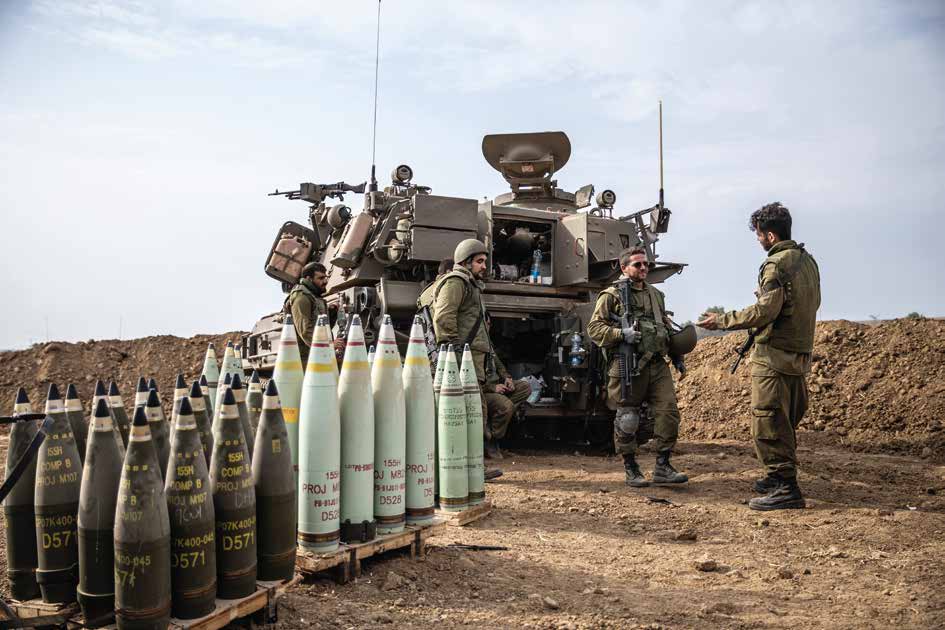
While I was engaged in conversation with the officer, the soldier who had been assaulting me continuously came and began hitting me on the head. Initially, I managed to protect my head when he started hitting. However, when they handcuffed me, he persisted in hitting me. That’s when I couldn’t shield my head and began yelling. Despite being handcuffed, the blows continued, and I started bleeding from my head.
Initially, the soldiers prevented journalists from offering first aid. Eventually, when there was a significant amount of blood on the ground, a soldier told the first aiders, “Come and look at him.” I, however, declined any assistance and exclaimed, “I don’t want first aid or anything,” and I said, “Don’t help me.” I told the first aiders to go away. “I don’t want your help! Let them take me away exactly in this bloodied state the police left me in,” I said.
I remained on the ground, and this time, he started hitting me with his rifle.
Suddenly, a voice echoed from a distance, “Let him go, let’s get to work.”
They released me. The soldier who had mocked and frightened me in Hebrew said, “Yallah! You have been released, rejoice.” They escorted me to the hospital, where I received treatment. That’s how it all happened.
Can you describe how you feel about what you experienced?
I mean, as a journalist, I don’t know how I feel.
Of course, a journalist is also a human being after all. This is the most fundamental issue we agree on. We, too, have emotions and feelings. Sometimes we try to remain composed when we are in the field. We don’t act on our emotions. We must be professionals in our practice. For example, I feel very sad when a woman is attacked. A woman is beaten by a soldier armed with weapons. What more could happen? I have to restrain myself and avoid intervening in the incident; my role is solely to document it. In essence, there is no human being who can endure all this, and you can’t find anyone who takes joy in the face of violence against another human being.
Sometimes, when I go to document violence, from house destruction to death, or even an arrest, we as journalists are also interrupted and prevented from working. In East Jerusalem we work like soldiers. However, in West Jerusalem, when we document an incident like this, they treat us differently. It’s not just because I’m Palestinian; after all, we have human feelings. There were instances when Israelis were attacked in West Jerusalem (by Israelis), and at the end of the day, we were not pleased that they were also targeted. These individuals came to show solidarity with us Palestinians. Regardless, we, as journalists, have feelings too. Emotions are always part of the equation.
Sometimes these feelings affect us, and they also impact our families. As we carry out this work, our families are affected by it. While performing our duties, we experience stress and pressure. We witness massacres, beatings, attacks, destruction, and people crying. That’s how it is.
Yet, even after a month, we journalists return home with haunting memories weighing on our hearts. This experience also affects our psychology within our homes. Journalists’ emotions are always challenging, and my emotions are consistently mixed.
Have you ever thought of quitting journalism in the midst of all these great troubles?
I’ve contemplated leaving this job a few times recently. I mean, I may not be able to give up taking photos as a photographer, but the role of a journalist is very painful and challenging. We often don’t reveal what we repress and store up.
As an individual, as Mustafa, not as the journalist Mustafa, I had the strength to endure everything. These (repressed) horrible memories in me generate negative energy. Normally, we witness negative events come and go, but this war, in particular, has had a profoundly adverse effect on me.
I mean, the events I experienced that day in East Jerusalem affected me very badly. Initially, I didn’t really think about it, but after about a week, I took some days off. While on leave, thoughts like “Can I really quit this job?” started to occupy my mind. I said to myself, “I won’t go back.” “Okay, I’m done. I’ll finish this leave and then I’m done with it.” I can’t definitively say I won’t do photojournalism, but I don’t want to. I can also make a living by taking pictures of other things.
What do you think about the future of Gaza?
When this war ends, another one will begin. Only when this war is over can we move to a stage where we can get rid of the idea of war. The war ends for a while, as it did in 2014. It ended in 2000, ended in 2019, it started in 2020, and yet again it started in 2021. The problem can only be solved by addressing it comprehensively.