
The world’s eyes are on Gaza, but life in the West Bank has never been normal, either. What are you experiencing there, and what are the conditions under which you are working?
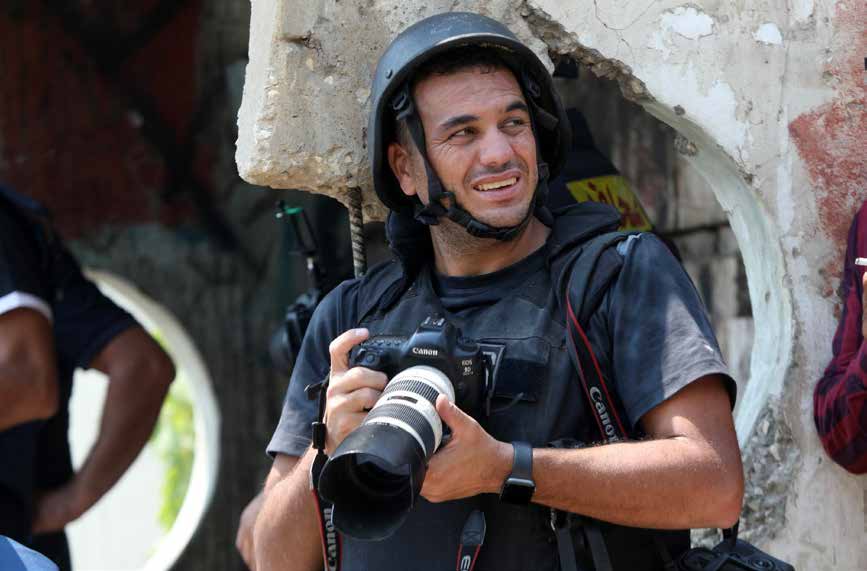
We are photojournalists. We work for Anadolu Agency (AA). Everything changed after October 7. Our freedom of movement, the kinds of assignments we can shoot, and even our commitment to the job itself have changed.
Hundreds of journalists have been killed. I, for one, was beaten and tortured by Israeli soldiers simply because I am Palestinian.
We were traveling to Nablus with the AA team — a Turkish photojournalist was with us. An Israeli soldier asked him, “Why do you have a Palestinian journalist with you?” So it’s not really about whether you are a journalist or not.
As the Ramallah team — myself, Hisham Abu Shakra, and Qays Abu Samra — we cover all the towns across the West Bank. But since October 7, there has been a sharp increase in military “operations” in Nablus, Tulkarm, and Jenin, especially around the refugee camps.
What kinds of pressure are you facing?
After October 7, Israeli forces placed iron fences and earth barriers at the entrances to towns and villages. That has made our work harder and restricted our movement. Where it used to take forty minutes to reach Nablus, it now takes two and a half hours. The same goes for Jenin. Searches at checkpoints have increased — they even detained journalists for up to two hours just to verify their identities.
In Jenin, journalists are targeted before anyone else. Trying to capture images in Jenin, Tulkarm, and Nablus is extremely dangerous. A few days ago, we were in Jenin — there were ten of us, and even though we were wearing press vests, they opened fire directly at us. We had to lie flat on the ground to protect ourselves.
There is a funeral today. Your colleagues are being killed. Aren’t you afraid while you work? What do you feel?
We lived through the height of fear after Shireen Abu Akleh was killed in Jenin. Abu Akleh was wearing a press vest and was deliberately shot despite that. Since October 7 we have seen how our colleagues are being targeted. As I said, hundreds of journalists have been killed. Israel does not want cameras to transmit what is happening on the ground — it is afraid of the truth.
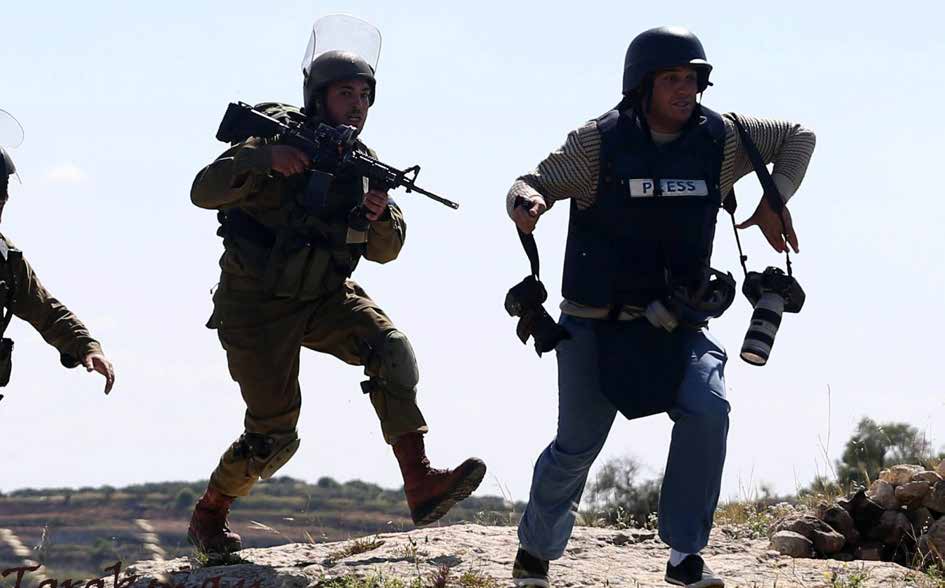
Has there been a moment you could not forget, when you wanted to say “enough” and put the camera down?
From the moment we picked up this camera, we were determined never to put it down. The camera is our weapon — the instrument with which we report my people’s condition. So we will not drop it even when journalists are targeted. On the contrary, these attacks strengthen our resolve: those who were killed place on us the responsibility to continue.
As a journalist and a Palestinian, what kind of future do you imagine?
As a Palestinian and as a journalist, I want Palestine to be free and the occupation to end. I want to enter Jerusalem, to capture images of Al-Aqsa Mosque, and to see the whole world come to Jerusalem. What I —and all Palestinians— long for is freedom, an end to occupation, and the chance to live in peace.