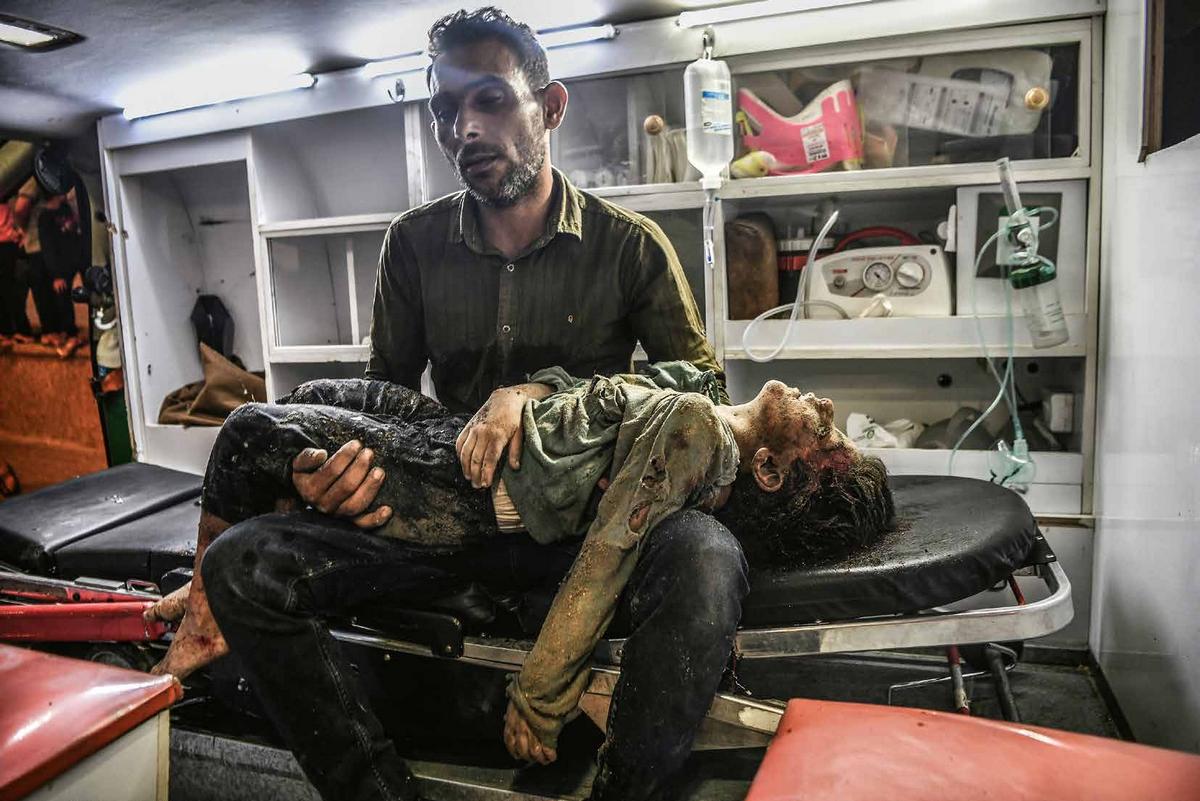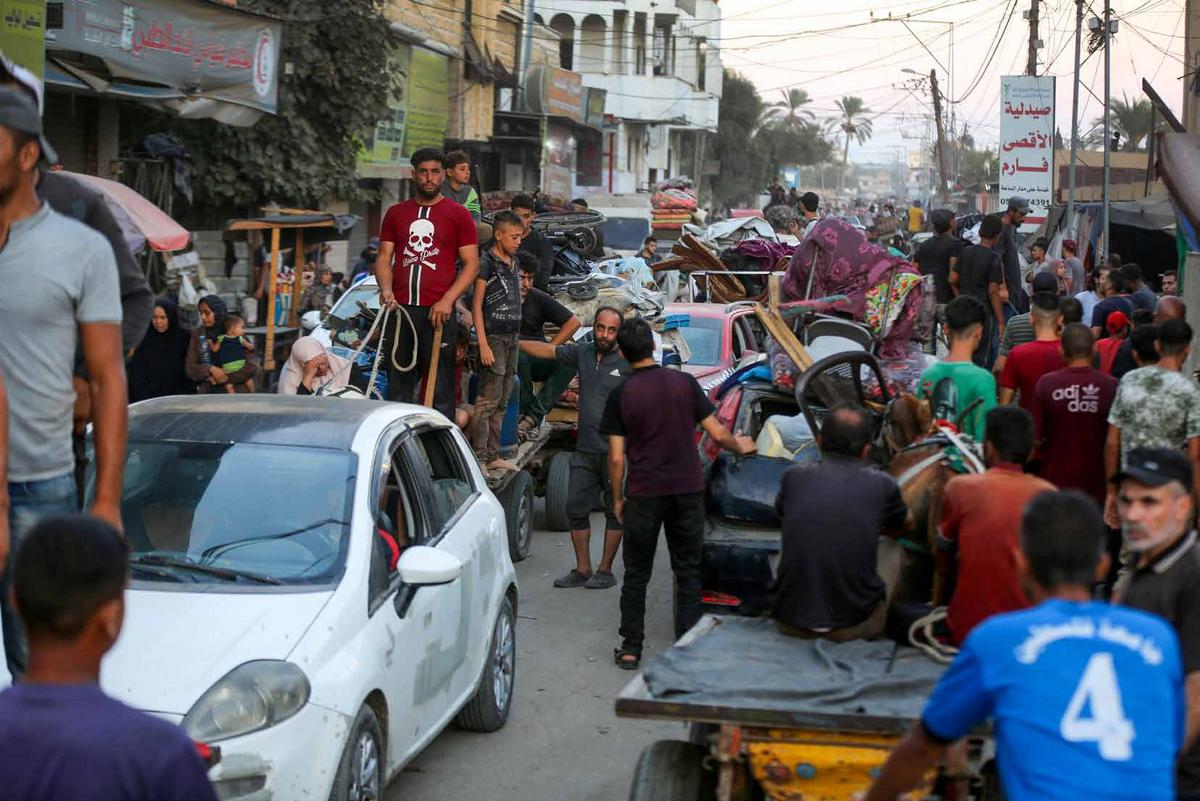

There has been a major rupture in the Middle East since October 7. The tension has been present for decades, but this time it has escalated into an all-out and unilateral war compared to previous conflicts on smaller scales, which also lasted for shorter periods. It seems that one side is attempting to almost destroy the other party, and there appears to be an effort to commit genocide. Turkish journalists have also been compelled to work in Israeli territory, or let’s put it this way, in the occupied Palestinian territories. What was it like to cover Israel’s atrocities from an Israeli-dominated territory?
I’ve had the opportunity to broadcast from different crisis regions around the world. In fact, we shared our experiences in the latest Russia-Ukraine war directly from the front on the Ukrainian side with our followers. Moreover, the area where we were located, where Turkish journalists were stationed, was also under fire.
However, reporting events from Israel and being a part of this injustice frankly upset me and our other Turkish journalist friends. Why? Because, for one, before entering Israel, you have to register with the Government Press Office (GPO) and provide all your information. If they approve, you can enter the country, but you can only broadcast from areas they allow. For instance, broadcasting was prohibited in many locations in Israel, but broadcasting from Sderot was allowed and still is today. Why? The reason is that it’s one of the locations where rockets may fall on journalists from time to time. According to official records, there are currently more than 800 journalists in Israel. Rockets land in that region occasionally. They want journalists to be injured or killed so that they can present it to the world as a case of “journalists being injured or killed by Hamas.” We were there with many of our journalist colleagues.
There is a particularly memorable fact for me. We didn’t witness the pain inflicted by the shelling from the Israeli border during the periods of mutual gunfire, with Israeli howitzers pounding Gaza, including the south, causing devastation. All we saw and filmed were the flames of howitzers and their frightening sounds, but unfortunately, we could not capture the destruction they caused, the children and mothers who perished.
I can say this clearly and assertively. I don’t think there’s anything wrong with it being recorded. When we were in the region, if any Turkish journalist had been told, “We can take you into Gaza tonight. You can enter Gaza,” all my journalist colleagues would have entered without the slightest hesitation. This is a very valuable thing because the purpose behind being there was to let the world in on the tragedy in Gaza. But, in the end, all we could report to the world were the flames created by Israeli artillery, howitzer fire, or aircraft. This is what we were able to do. I wish we could have done more.
An Israeli member of parliament told us: “If Israel doesn’t want the international press to go in there, it has something to hide.”
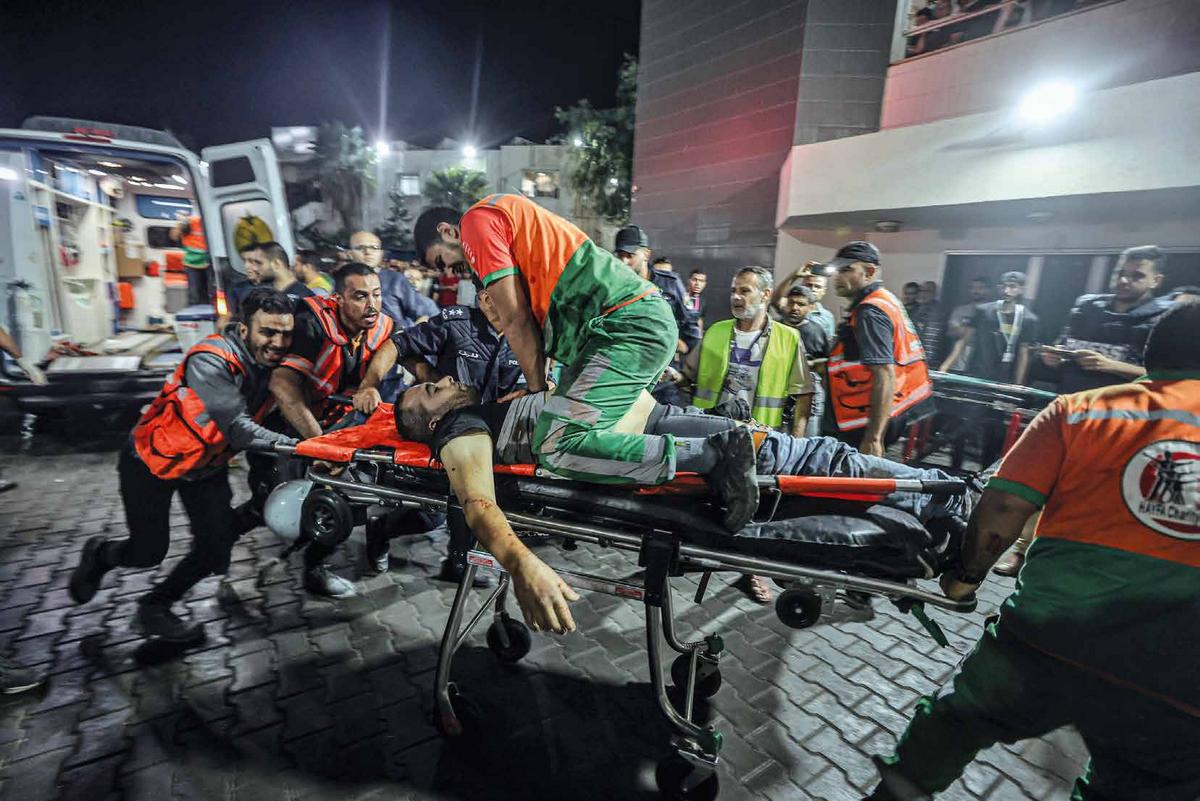
I wholeheartedly agree with that statement. During our time there, we witnessed a multitude of events. As one of the first journalists on the scene, I experienced it firsthand. Some of the rockets launched by Hamas toward Israel were intercepted by the Iron Dome, and fragments fell perilously close to us. By evening, we were among the few journalists remaining in the area. It was during that night when the hospital was struck—almost simultaneously with our presence there. Baseless claims circulated, questioning whether “Hamas’ own rockets hit the hospital.” Let me be unequivocal: that night, we faced a blazing Gaza. Israel conducted an intense airstrike, and despite the mere kilometers separating us, the bomb blasts echoed so violently that the ground trembled beneath our feet. We felt the tremor under our feet.
In my opinion, Anadolu Ajansı exhibited a very exemplary piece of journalism to the world in this regard. Anadolu Ajansı was the first to deliver the images of phosphorus bombs to the world, and these were images that we thought would be recorded in the pages of history, years from now, centuries from now, as a page of shame in the name of Israel. It was very important that these were also recorded.
All we witnessed were those phosphorus bombs. Yet, I suspect they experimented with other weapons. While Hamas forces were fighting in the tunnels, they (Israel) deployed various methods— perhaps even poisonous gases or similar agents.
Now, there are many journalists there, both from official institutions and from private corporations. During our observations there, we saw that there were also many armed civilians. Did you feel any direct pressure on you in this regard?
Well, let me state this very frankly. It’s essential for the record. Having traveled to numerous countries—nearly 70, to be precise—I embarked on my journey to Israel. Before departing, a seasoned journalist and respected elder in my field reached out and said, “Âdem, please take care of yourself in Israel. Israel is unlike any other country in the world. There’s a mindset there that can disregard you in every way. You’re merely a living thing there. Your feelings, family, country, religion, language, race carry no weight at all. If you tick them off and eventually incur their hate, even slightly, they can kill you without a second thought.” I previously thought that such statements were exaggerations. On our second day in Israel, while I was in the field with our journalist colleague Mehmet Akif Ersoy, some people violently accosted his cameraman, shouting things like “you will turn off the camera!”, while resorting to vulgar hand gestures. I attempted to defuse the situation a bit there. Mehmet Akif Ersoy first sought to understand the situation fully. Then he and other journalists managed to do a little filming in that location. He said things like, “Why don’t you let us film here?” and we left the area.
Then, unfortunately, we witnessed that many of our colleagues were attacked and beaten; one of them was senior brother Ata from A Haber (A News). They also attempted to detain me. Additionally, Çetiner Çetin from Habertürk and Sema from TRT witnessed those moments firsthand, along with cameraman Hakan Öztürk. I was about to go live for a broadcast, and my phone was focused solely on my face. I was doing nothing else when an Israeli policeman accosted me and aggressively grabbed my hands. He started yelling at me in a loud tone, confiscated my phone, checked the videos and the gallery, looked at the photos, and attempted to detain me. Then I managed to contact an Israeli policewoman there and explained that my goal was to objectively convey what was happening to the media in Turkey and the international media, emphasizing that their actions were unjust. We engaged in a heated argument for 15-20 minutes.
One day in Tel Aviv, specifically during the first night of the war, possibly on the evening of October 7, 8, or 9, the front of Tel Aviv City Hall was adorned with American flags on LED screens. Fifteen United States flags were displayed, followed by fifteen Israeli flags. That’s where I was livestreaming and shooting videos. Fulya Öztürk and Halil Kahraman were with me that night, also going live from there. Israeli citizens angrily confronted them, stating things like, “You are Muslims. Why are you filming here?” We experienced such harassment frequently. In other words, I don’t believe there is any journalist or colleague there who did not encounter such treatment.
Finally; previous small wars, medium-sized wars, such as the ones that took place in 2008 and 2014, all ended one day. This war too will end one day. But what kind of Gaza will be left? What kind of Gaza do you have in mind? As a journalist, what do you think you’ll find there when you first walk in there after all of this ends?
Three to four days after the earthquake that happened in February 2023, I called a veteran journalist. It was Cüneyt Özdemir, and I told him, “The scenes [of devastation] you describe online [without seeing everything for yourself] may not correspond to the realities on the ground. The destruction here may not really be felt from that online frame, and if you come to the area one of these days, you will get the picture much more clearly.” He then immediately came to the area. We met in one of the quake-hit areas, and the first thing he posted from the area was this. Those who watched his video will remember. “I have witnessed wars in different countries of the world. I’ve seen destroyed cities. I’ve seen bombed cities. But I’ve never seen a scene like this,” he remarked. He made that remark in front of the old parliament building in Hatay.
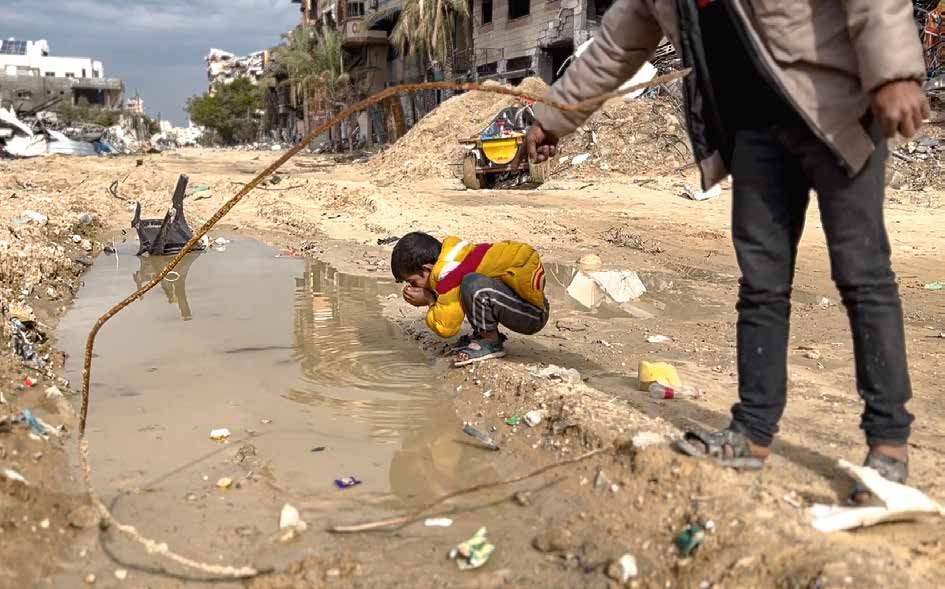
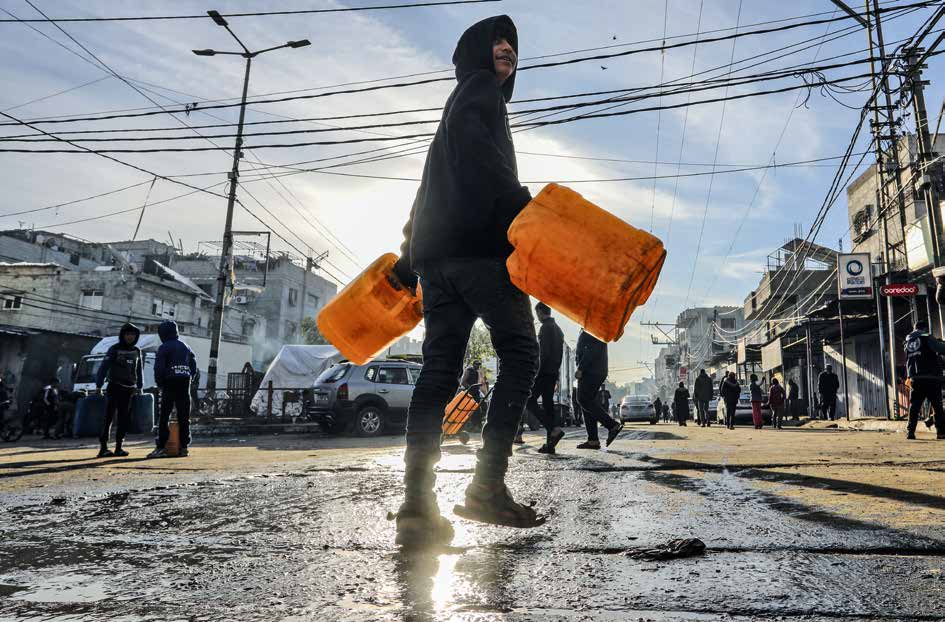
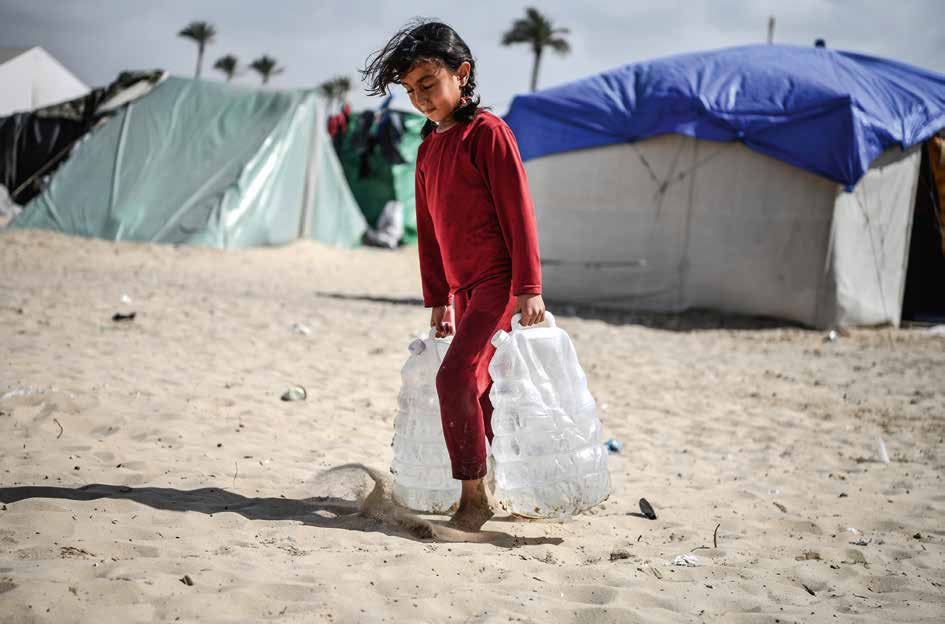
What I’m trying to say is this: If we ever get the opportunity to enter Gaza, what we will likely encounter will be scenes that are too harrowing to fade from the collective memory of human history for centuries. We have witnessed the fire, the smoke, the reverberating sounds of tons of bombs released by those planes. We have observed howitzers relentlessly firing at the same target. Buildings crumbled before our eyes. Therefore, regrettably, certain distressing images linger in our imagination. However, I am aware that the reality extends far beyond these glimpses.