Genocide is profitable for some, which means that profit is one reason why the genocide is still ongoing. So, who has been profiting from the genocide in Gaza, and military operations in the West Bank and Lebanon?
In theory, states have the duty to cooperate towards ending the Israeli occupation of the West Bank and Gaza in one year. Likewise, corporations have the duty to responsibly disengage from anything illegal that Israel does. Looking at how far Israel has gone in its violations of international law; the only logical way forward is disrupting the supply chain sustaining Israel’s war efforts. In other words, boycott, divestment and sanctions. Paradoxically, the interest of economically advanced states and big corporations is vested in maintaining Israel’s geopolitical dominance. Enacting such duties is preconditioned on speaking truth to profit. In this light, this short piece highlights different elements and interests along the supply chain feeding the Israeli war economy and facilitating the continuation of atrocities.
Israel is a settler colonial outpost with integral links to the heart of the global economic system. Its war economy is co-funded by the US. Its investors are leading actors in the bloodiest supply chains around the world, including military services, blood diamonds, spyware, cobalt, and weapons. It has been a leading actor in the destabilisation of the region for decades. In the process, it has been growing its own military economy and deepening it connections within global value chains - at the expense of the local Arab population.
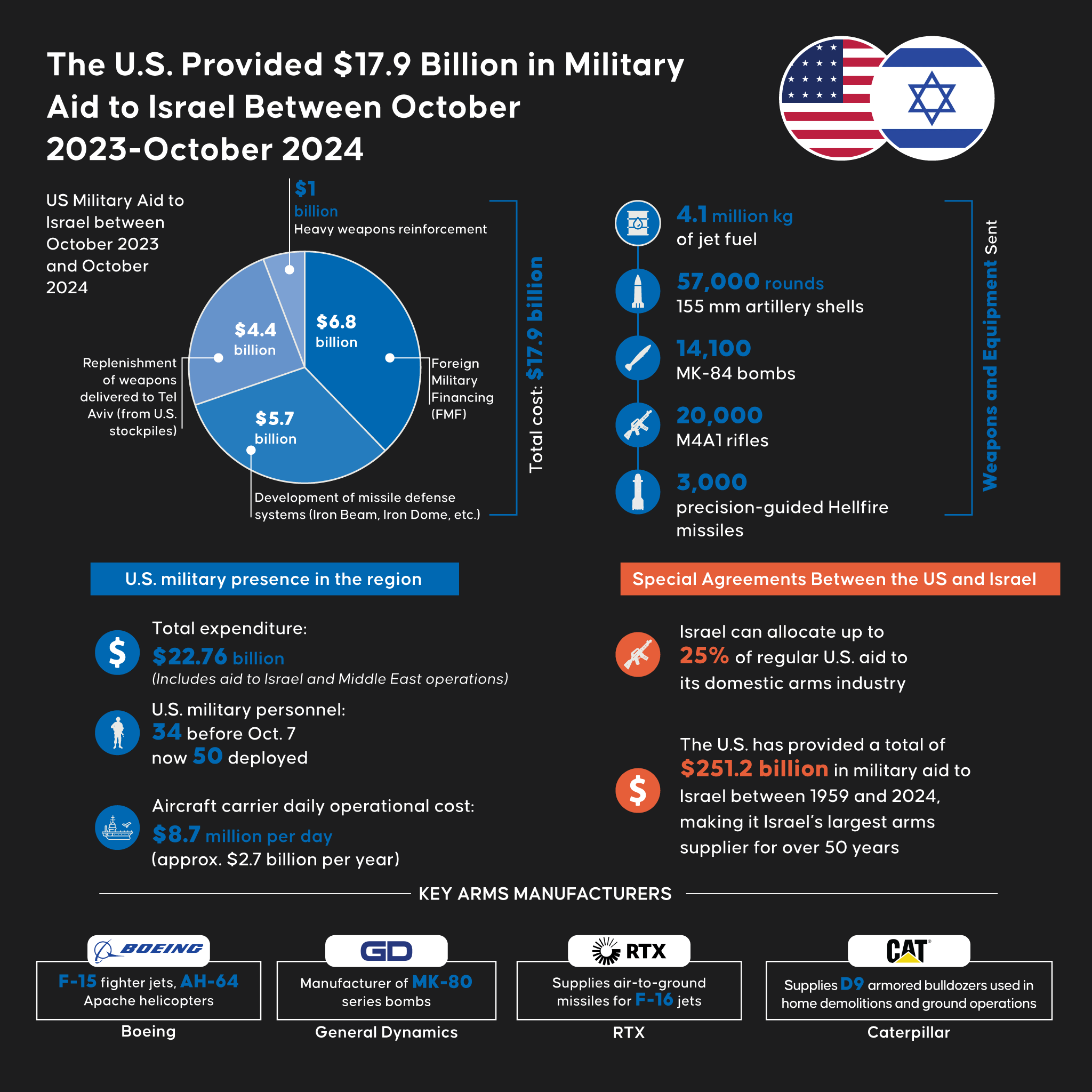
The military industry is the first to benefit from the escalation of hostilities. This industry has close ties to decision makers, a relationship otherwise known as the military industrial complex. The genocide in Gaza and the war in Ukraine have translated into historical profits for the industry worldwide. The main corporations supplying arms to Israel are based in the US, Germany, UK and France. These states are among the biggest arms exporting states in the world. By licensing the export of weapons to Israel, these states are in violation of their international legal duties.
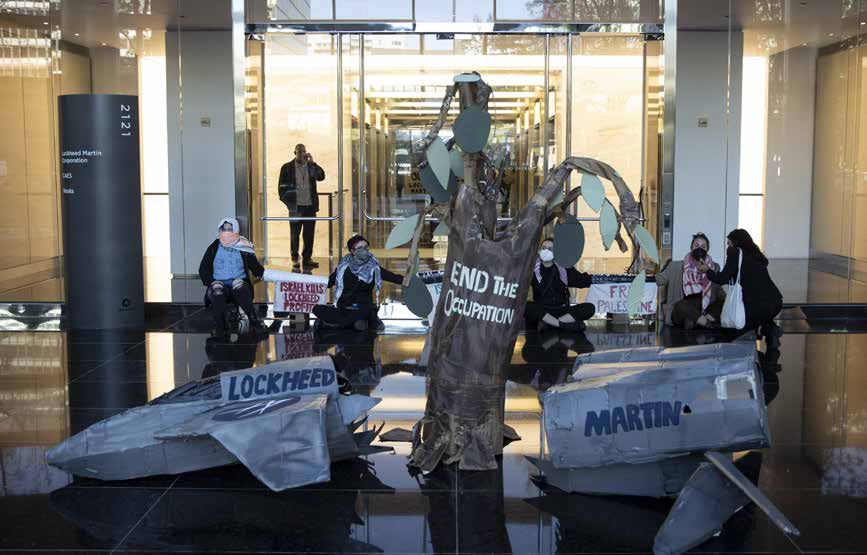
The exporting corporations include Boeing, General Dynamics, Leonardo, Lockheed Martin, RTX (formerly Raytheon), BAE Systems, Rheinmetall and Rolls-Royce. In many instances, there is evidence documenting how the products of these corporations were used in war crimes on the ground in Gaza and now in Lebanon. The operations of such corporations are financed by giant banks such as Barclays, Lloyds, Santander, Deutsche Bank and HSBC. Aside from rapid demand on rockets, bombs, and war planes - Israel has been repeatedly purchasing guns and rifles designated for use by settlers. The steady flow of weapons import is paralleled with a flow of weapons export. The genocide offered an apt marketing and testing opportunity for Israeli military corporations, such as Elbit Systems, which has benefited from increased exports.
Technologies which facilitate the collection and storage of data are powerful tools of control. Israel is a leading actor in the global surveillance and cyber security industry. It is notorious for its use of physical surveillance technologies and spyware to further entrench its control of the Palestinian people. Such technologies are further monetized in the global market, facilitating control by other repressive regimes. A popular product has been the Pegasus spyware, manufactured by the Israeli Corporation NSO and used globally to target human rights defenders.
As it obsessively collects endless amounts of data about Palestinians, Israel needs cloud storage. In 2021, Israel signed a deal with Amazon and Google in what is known as project Nimbus to provide cloud storage space. The deal was met with wide dissent sparking the No Tech for Apartheid movement. Similarly, Microsoft provides software services for Israel to facilitate its management of the Palestinian population. Israel’s assertion of control through the use of technology gained a new dimension during the ongoing genocide with the use of Artificial Intelligence (AI) for the creation of “kill lists” under the program Lavender. The US-based corporation Palantir has heavily profited from its supply of AI services to Israel. While discussion regarding the use of AI in warfare has been ongoing for years, this is one of the first cases where it has been used on such a mass scale - it is estimated that Lavender guided the murder of tens of thousands of Palestinians. Arial bombardment is a symbol of unequal battle grounds. Technologically advanced states can deploy weapons from the sky with minimal risk to their own personnel. A proportion of the war planes dropping bombs on Palestine and Lebanon are supplied and maintained through the NATO F-35 Program. The companies known for selling warplanes used in Israel include Lockheed Martin and Boeing. Activists have sought to challenge the role of the UK and the Netherlands in the supply of war plane components to Israel. These efforts were met with political reluctance where NATO obligations were prioritised over international legal obligations.
The jet fuel used to power these war planes is transported via a long supply chain where the American corporation Valero plays a significant role. The supply chain of crude oil that can be refined for this purpose spans across the US, Azerbaijan, Angola, Nigeria, and Brazil. Historically, energy embargoes were employed to pressure states in violation of international law. Seeds of an energy embargo are sprouting in Latin America where Colombia announced halting its export of coal to Israel.
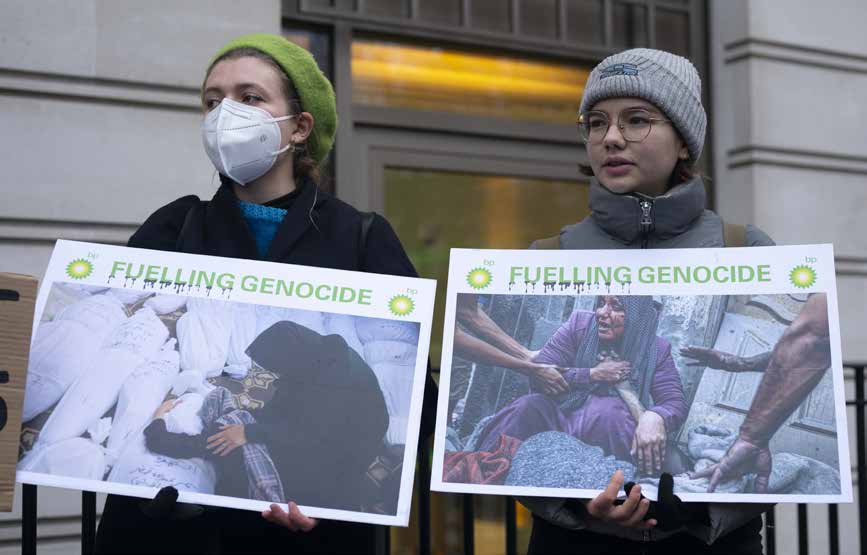
The energy industry has another role in the supply chain, and that is incentivising genocide. Gaza, the last Palestinian city by the sea, poses a threat and a limitation to Israel’s energy aspirations. Israel’s gas fields are not safe in a war zone. At the start of the genocide, Israel assured its prospective investors, including BP, Chevron and Eni, that they are in safe hands. In the meantime, seizure of Gaza would mean opening the potential of exploiting the untapped gas fields off its shores. It is notable that the Palestinian economy suffers immensely due to the limitations on oil and gas extraction imposed by Israel. In its decision on the illegality of the Israeli occupation of Palestine, the International Court of Justice stressed the destructive role of Israel’s lack of respect towards Palestinian sovereignty over natural resources.
Recently, the Boycott Divestment Sanctions (BDS) Campaign launched a campaign against Chevron for its involvement in gas extraction and exploration in Israel.
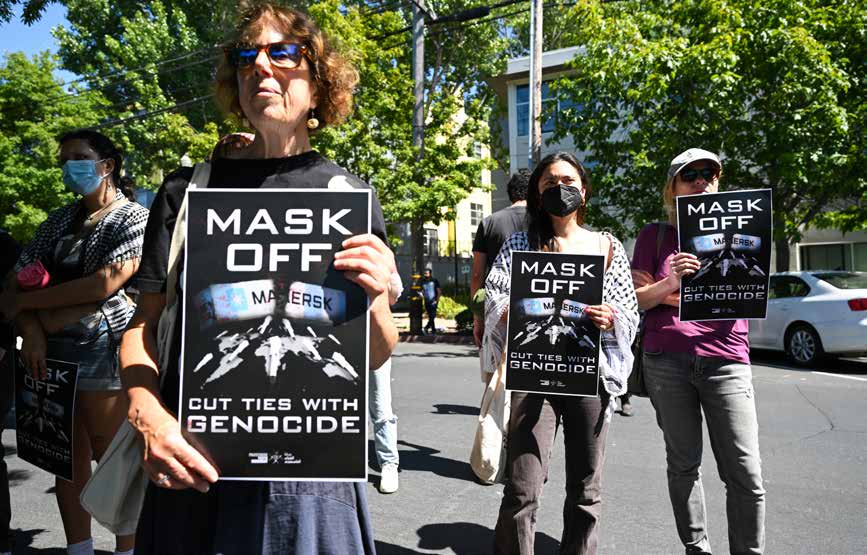
Energy and arms are transferred to Israel with the help of shipping companies like Maersk and Zim. Transit lines offer an apt opportunity for the disruption of the supply chain. There were some notable successes of social movements and unions that mobilised to disrupt the chain at ports in Spain and Italy. Similarly, the Houthis in Yemen have been successfully targeting transit and shipping lines in their military strategy responding to the ongoing genocide.
The genocide created opportunities for cargo and transit businesses in neighbouring countries. Notably, the corporation “Hala” reaped millions of dollars through fees imposed on Gazans seeking refuge through Egypt. Meanwhile, transit corporations in Jordan like Petra, Karim and Salam profited from the business opportunities created by the Houthi blockade by providing alternative transit route and import markets for Israel. By facilitating the operation of these businesses, both the state of Jordan and Egypt are in violation of their international legal duties.
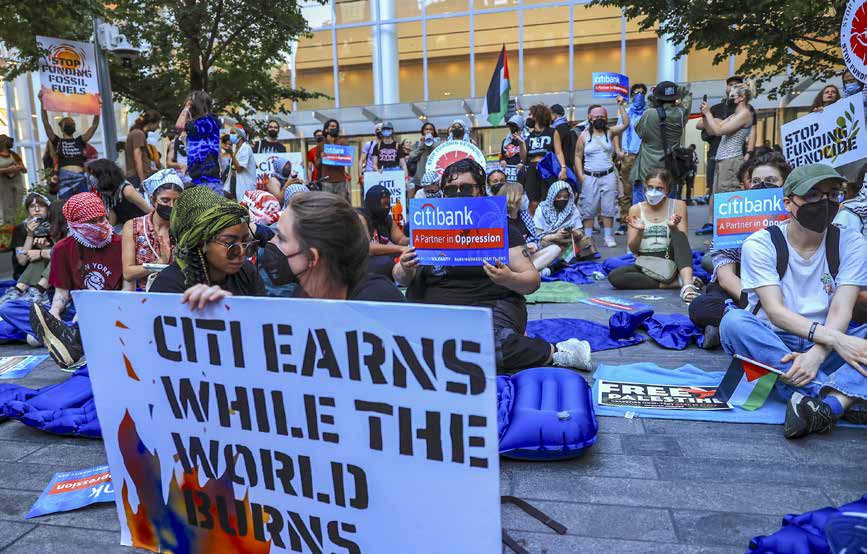
While it is true that the finance of Israel’s war economy is heavily reliant on the US, global banks also have a significant role. Notably, Citibank has played a major role in financing the Israeli war economy and arms corporations feeding into it.
Prior to the genocide, international attention was primarily focused on economic activities around the settlements. European banks have been funding businesses involved in illegal settlement building for years. Within the context of settlement activities, corporations like Ford, JCB and Caterpillar supply heavy machinery used for demolitions among other purposes. Such attention culminated in the UN Database on Corporations involved in the Settlements, which listed several Israel corporations that are integral to the colonial machine. Such corporations run water, electricity, road building, check points … etc. The database remains limited in scope, and there are calls to widen it to include a wide look into the supply chain.
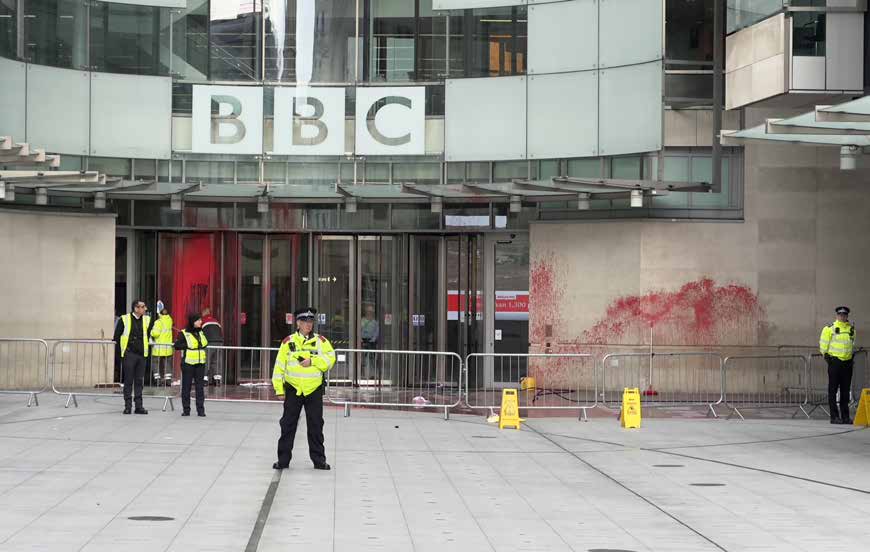
The role of economic interest in Israeli colonialisation is often overlooked by global media. To this end, global media corporations are themselves complicit in selling narratives which do not speak truth to profit. Corporations like the CNN, BBC, Sky News, and ABC, among others, have actively partaken in the act of manufacturing consent for genocide. In response, some activists have been contemplating future efforts to hold such corporations accountable for their role.
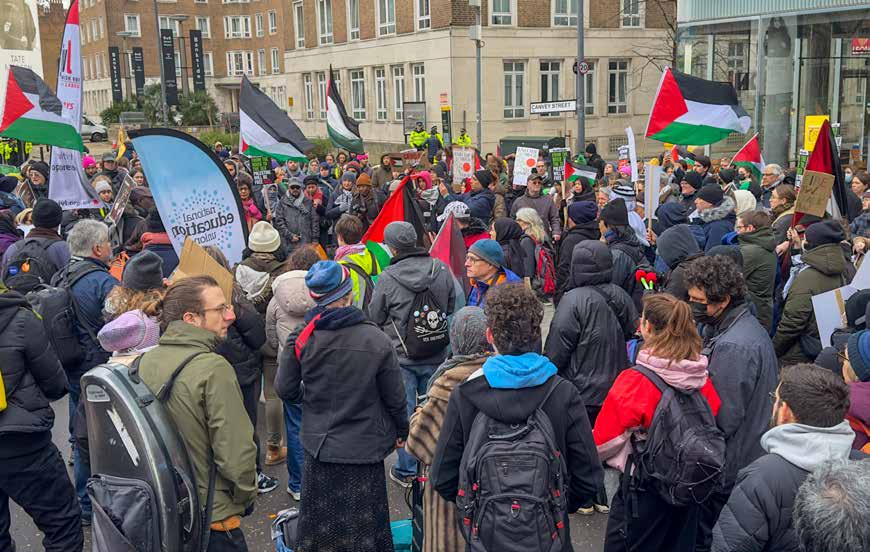
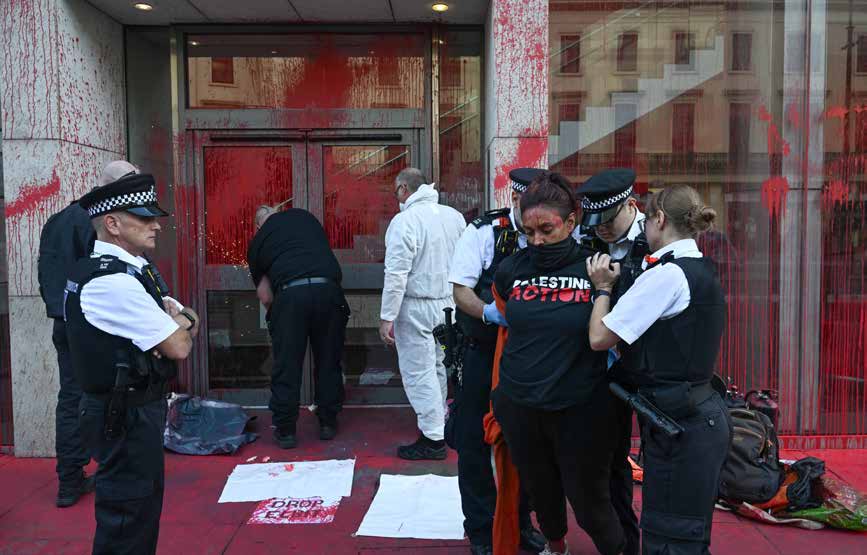
After more than one year of a genocide, and 57 years of a brutal occupation - Israel’s internal economy is stretched to its limits. Nevertheless, its integral position in the global economy, and leveraged position with the US government allow it to stay afloat. While the genocide is not ideal for the Israeli economy, it is a source of profit for some of the biggest businesses across the world. The long supply chain feeding the Israeli war economy offers activists seeking accountability both limitations and opportunities. On one end, corporations profiting off the war will lobby to sustain it. On the other end, the global reach of this supply chain offers opportunities of disruption to undermine Israel’s military capacity.
Acts to disrupt the supply chain are aligned with international legal obligations required to protect the Palestinian people.