The Western art and cultural sector continues its silence in the face of Israel’s violations in Palestinian territories and the loss of life in Gaza, despite the country standing trial in international courts for committing genocide.
Cultural institutions and festivals in the West not only work to legitimize Israel’s actions in Gaza but also turn their efforts to suppress solidarity with Palestine in the art world into a systematic mechanism of pressure.
While European cultural circles remain largely silent in the face of the genocide and humanitarian crisis in Gaza, artists who attempt to express support for Palestine are losing their jobs, facing censorship at festivals, and being subjected to various forms of reprisal.
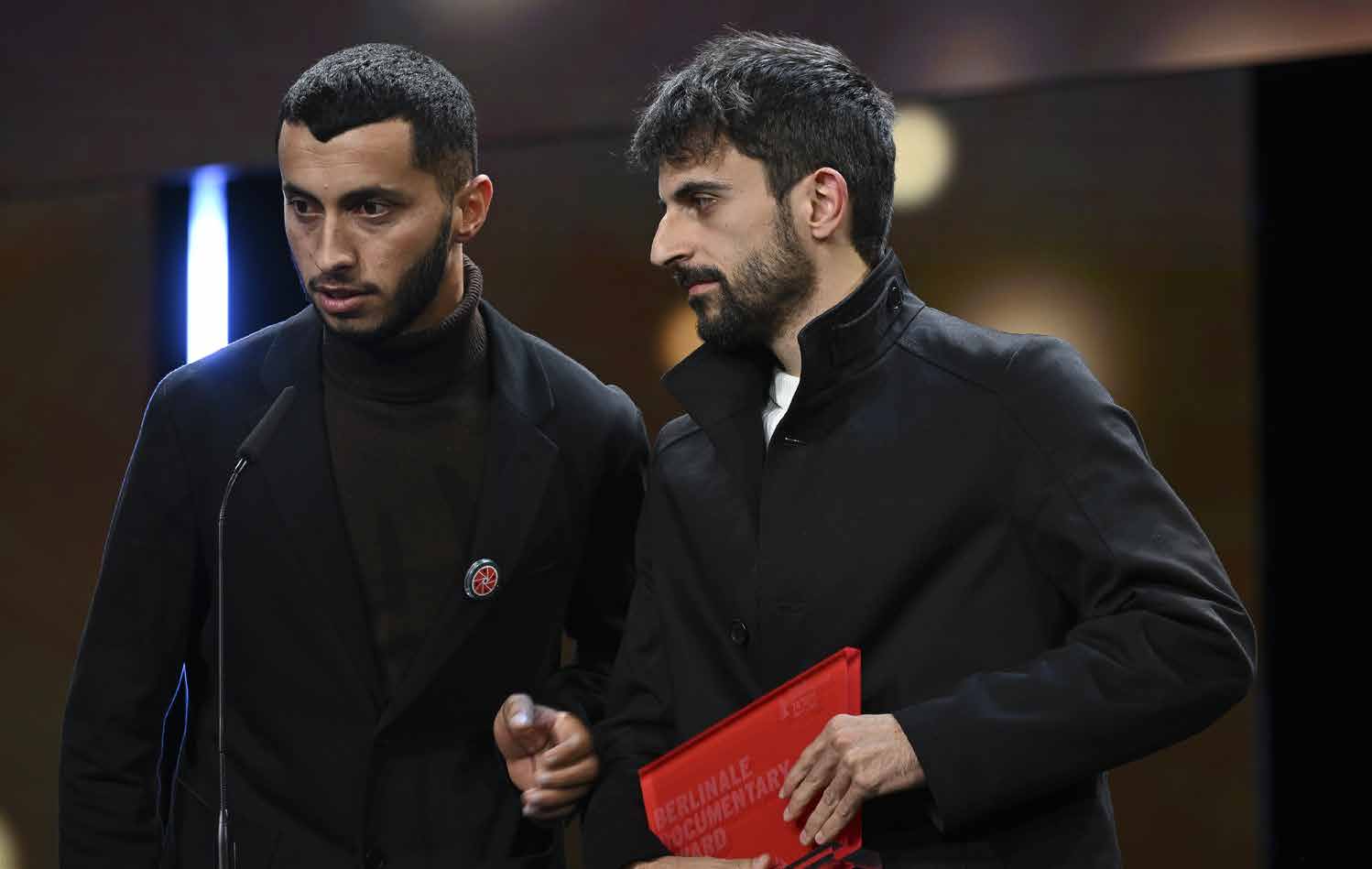
Palestinian solidarity crisis at the Berlin Film Festival
The expressions of solidarity with Palestine during the closing ceremony of the Berlin Film Festival drew strong reactions from German politicians. Culture Minister Claudia Roth described the speeches at the awards ceremony as “shockingly one-sided against Israel.”
As the festival administration faced threats of investigation, Berlin’s Cultural Senator Joe Chialo characterized the expressions of support for Palestine as “self-righteous anti-Israel propaganda that has no place on Berlin stages.”
Director Yuval Abraham, himself an Israeli, was accused of antisemitism by German officials following his statements at the festival. Reporting that he had received death threats, Abraham warned that such accusations “diminish the term antisemitism” and endanger Jewish lives.
Meanwhile, at least 21 documentary filmmakers withdrew from the International Documentary Film Festival Amsterdam (IDFA) after its administration condemned a pro-Palestinian protest.
In the UK, the Arnolfini Arts Centre in Bristol, where the Bristol Palestine Film Festival was taking place, canceled two events, one of which was the screening of Farha, a film by JordanianPalestinian director Darin J. Sallam, citing concerns that it could be construed as engaging in “political activism,” which might conflict with its status as a charitable organization.
Commenting on the cancellation, Sallam said, “Silence is complicity, and these actions of cowardice not only hide the truth, they make them part of the genocide that’s happening.”
The cancellations sparked significant backlash, including an open letter signed by over 1,500 individuals criticizing the decision. In response, the Arnolfini issued an apology in January 2024, acknowledging that the decision was wrong and expressing regret for not providing a platform for Palestinian voices.
Palestinian flag ban at Eurovision
During the Eurovision Song Contest held in Malmö, Sweden, from May 7 to 11, Palestinian flags were officially banned, prompting protests over Israel’s participation.
Michelle Roverelli, Head of Communications at the European Broadcasting Union (EBU), announced that all flags and symbols other than those of participating countries and the rainbow flag were prohibited. According to Swedish news agency TT, Palestinian flags and banners with political messages were confiscated at the entrance by security personnel.
Bambie Thug, Ireland’s first finalist in the competition, was reportedly pressured to alter body paint that read “ceasefire” and “freedom.” While the EBU had excluded Russia from the contest over its invasion of Ukraine, it defended Israel’s participation. Human rights organizations have criticized Eurovision’s claim of political neutrality as a clear double standard.
Pro-Palestinian artists in Hollywood face serious repercussions
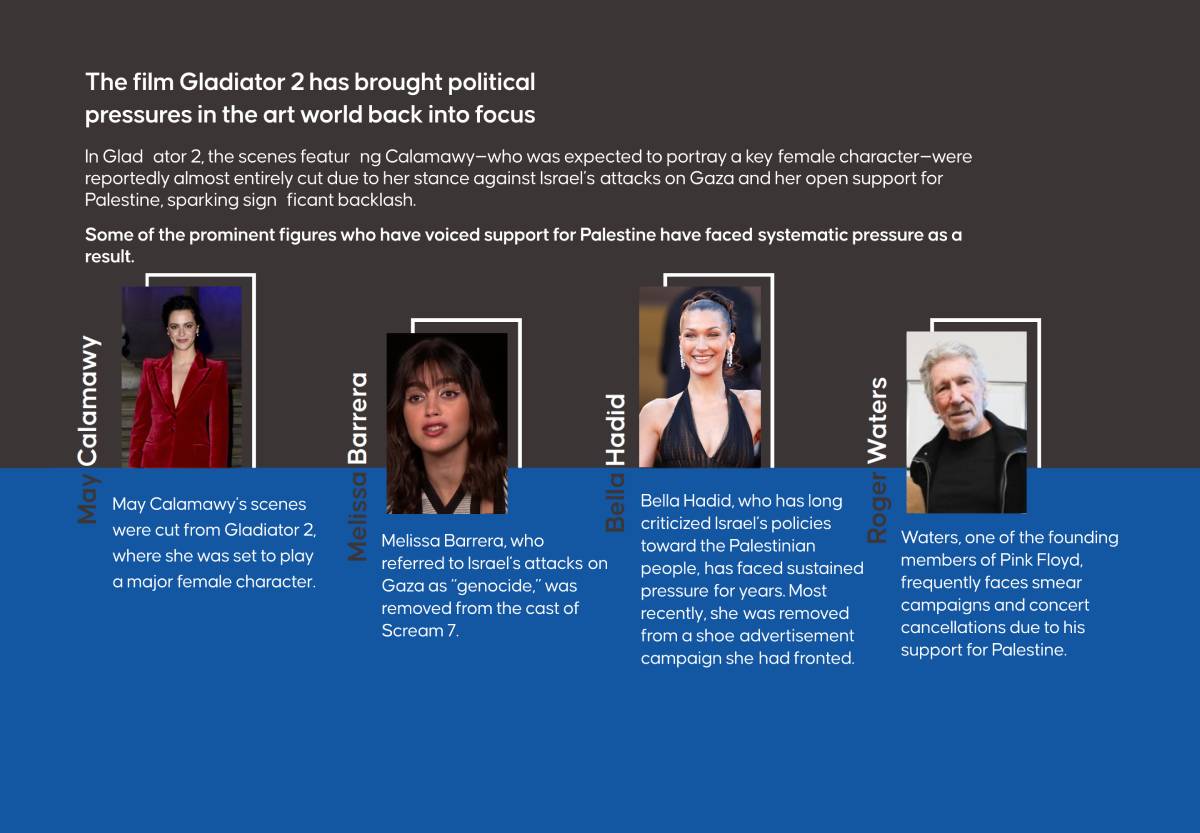
Oscar-winning actress Susan Sarandon was dropped by United Talent Agency (UTA) after speaking at a pro-Palestinian rally in New York in November 2023. Similarly, actress Melissa Barrera was removed from the cast of “Scream VII” by the production company Spyglass Media due to her social media posts describing Israel’s actions in Gaza as “genocide and ethnic cleansing”. Barrera responded by condemning both antisemitism and Islamophobia, stating her commitment to advocating for human rights.
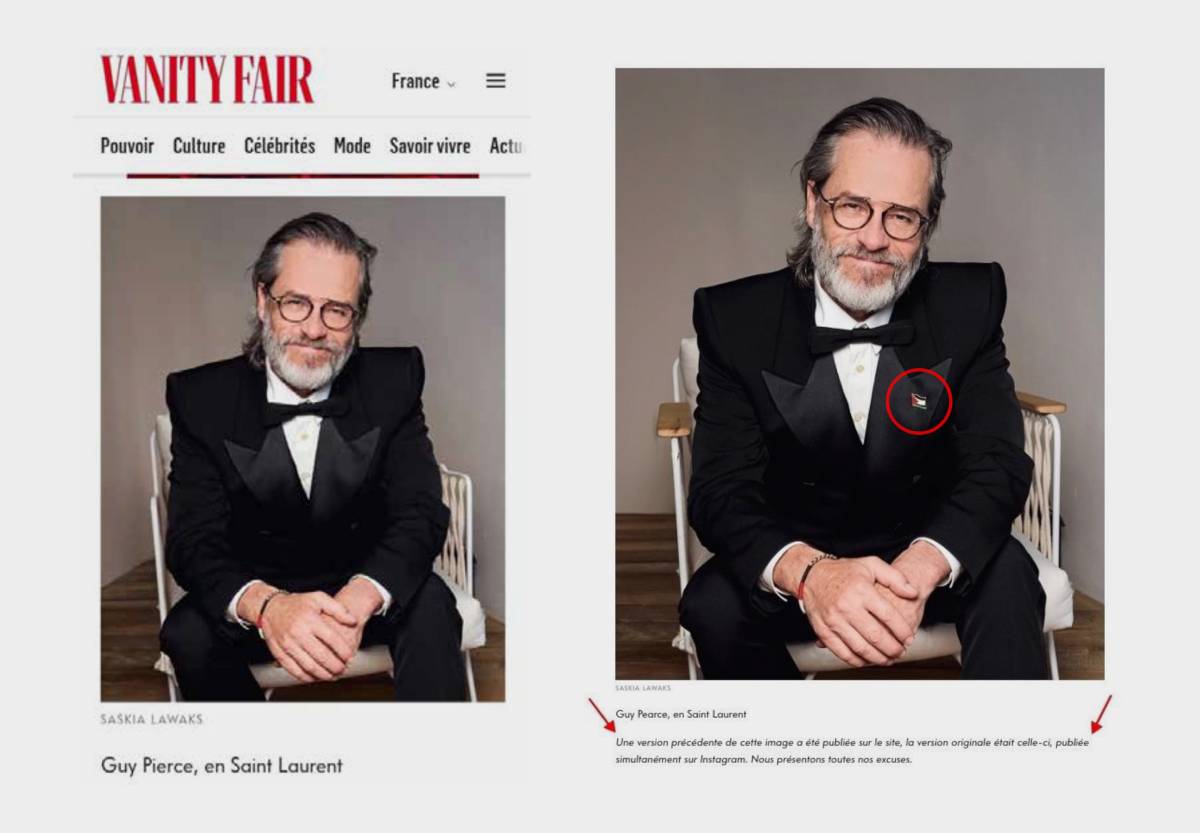
Australian actor Guy Pearce wore a Palestinian flag pin at the Cannes Film Festival, which was digitally removed by Vanity Fair France in a published photo, while Nicola Coughlan, star of “Bridgerton,” revealed she was warned that her support for Palestine could negatively impact her career.
In stark contrast, Israeli singer Ofer Levi publicly called for Palestinian prisoners to be burned alive and described acts of brutality he allegedly committed during Israel’s occupation of southern Lebanon (1982-2000). Yet these incendiary remarks have received almost no coverage in mainstream media.
Notably, the arts and culture community has largely remained silent on such overt calls for violence. While artists expressing even minimal support for Palestine face severe criticism, figures like Levi, who openly incite violence and genocide, often escape critical scrutiny. This selective sensitivity underscores the double standards within the cultural sphere and highlights inconsistencies in framing protests and expressions of solidarity.
Artists’ messages of resistance
Despite facing severe repercussions, a small number of artists continue to voice their support for Palestine.
World-renowned model Bella Hadid has reportedly faced backlash and lost brand deals due to her outspoken support for Palestine. She has emphasized her commitment to amplifying Palestinian voices, regardless of the consequences.
British musician Roger Waters has spoken about cancellations of his concerts in Germany over his pro-Palestinian stance, highlighting how supporting Palestine in the arts is often perceived as a serious risk to one’s career.
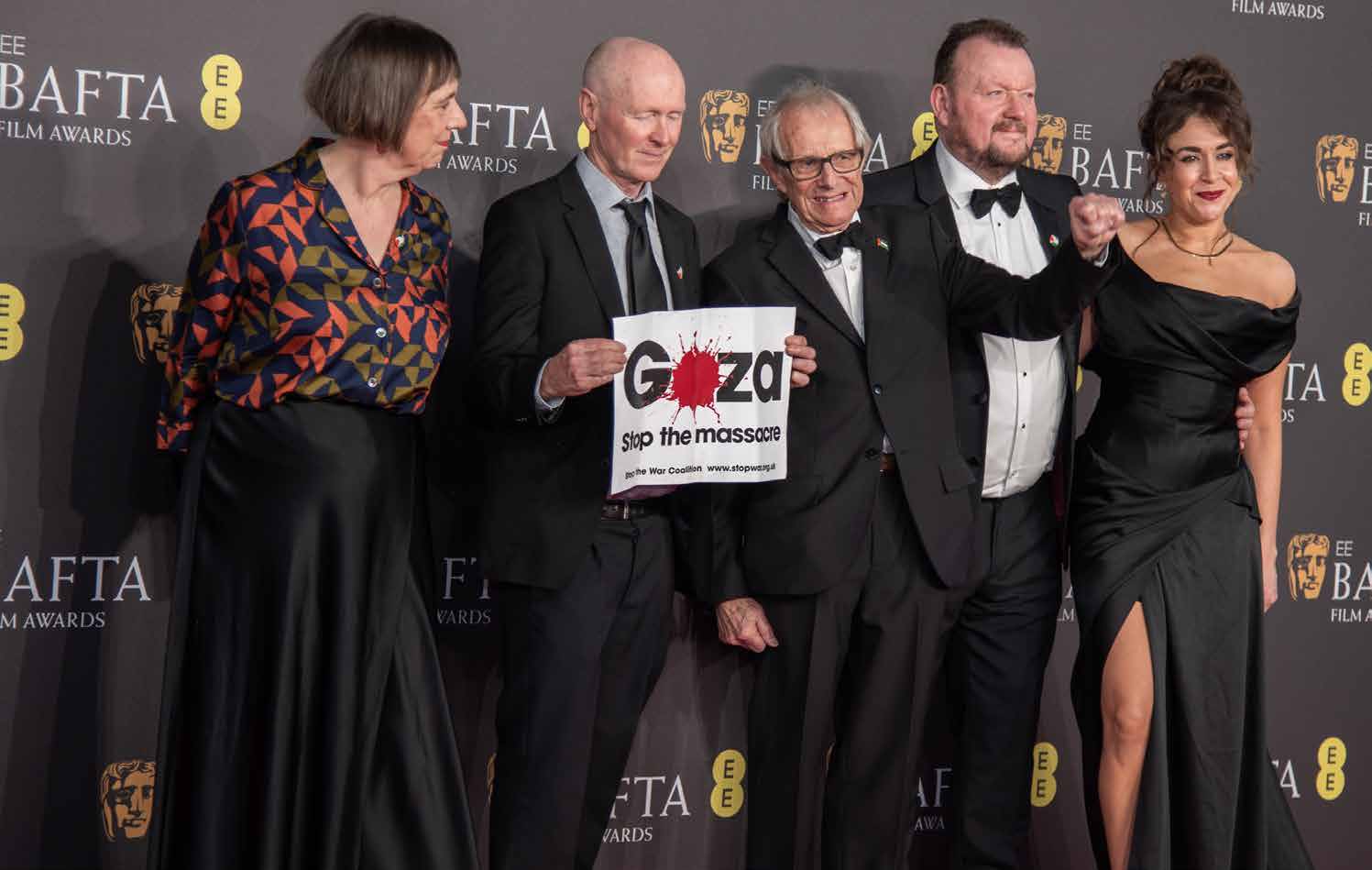
British director Ken Loach used the 2024 British Academy of Film and Television Arts (BAFTA) Awards to call for an end to Israel’s attacks on Palestine.
This atmosphere of silence and pressure in the cultural and artistic spheres has drawn concern from defenders of freedom of expression. A report by the European Writers’ Union points to growing censorship in Germany, noting how events featuring Palestinian authors have been canceled and critics of Israel face increasing threats, including potential deportation. The report highlights this as a clear indication of persistent pressure on intellectuals.
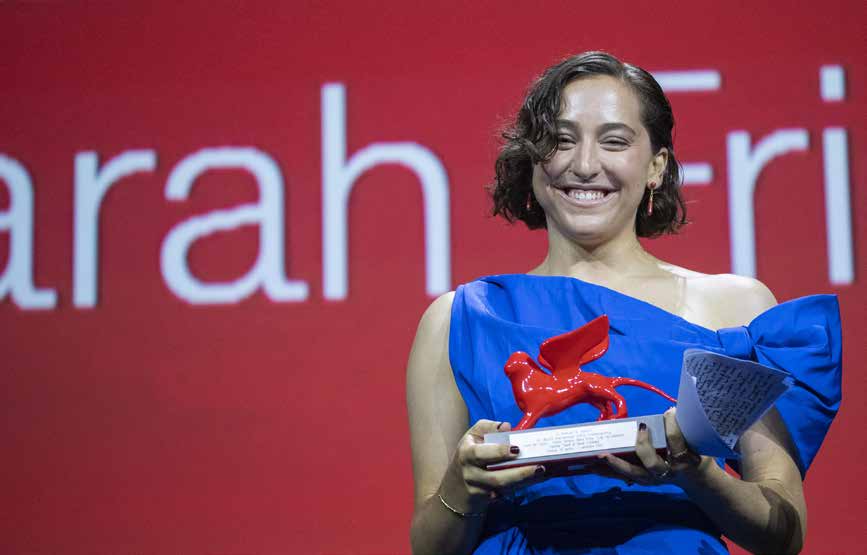
Palestinian solidarity at the Venice Film Festival revealed cracks in the film industry’s pro-Israel stance. The experiences of JapaneseAmerican director Neo Sora, who posed with a Palestinian keffiyeh and flag at the Venice Film Festival, vividly reflect this tension within the art world.
The post-October 7 period has led filmmakers to deeply question the meaning of art. Fundamental questions—such as the role of artistic production in the face of a live-streamed genocide and how to represent human values—have profoundly impacted the creative process.
Structural issues in festival organizations have become especially apparent in the context of the Israeli-Palestinian conflict. The Venice Film Festival’s attempt to categorize Israeli and Palestinian films under the same label has been criticized for creating an illusion of false parity. Nonetheless, the audience’s support for Palestinian solidarity signals a shift within the arts community.
The financing structure of the film industry plays a critical role in sustaining pro-Israel narratives. Connections between investors in the American film industry and Israel have led to the systematic exclusion of Palestinian projects. This highlights the economic barriers to artistic freedom of expression.
The lack of public awareness in Japan reflects broader issues in global perceptions of the Palestinian cause. A lack of public awareness underlines the importance of cultural consciousness, reinforcing the crucial role of art in fostering social awareness.
Israel’s attacks also target Palestine’s cultural heritage. The systematic destruction of archives, institutions, and museums threatens collective memory. This underscores the importance of cultural resistance, while also revealing the risks of artificial intelligence technologies being diverted to destructive, militaristic purposes—posing a threat to humanity’s creative potential.