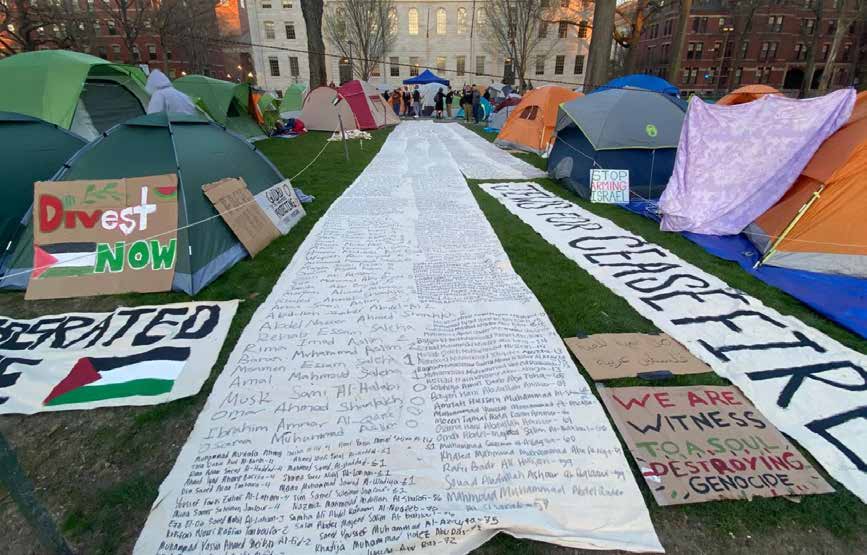
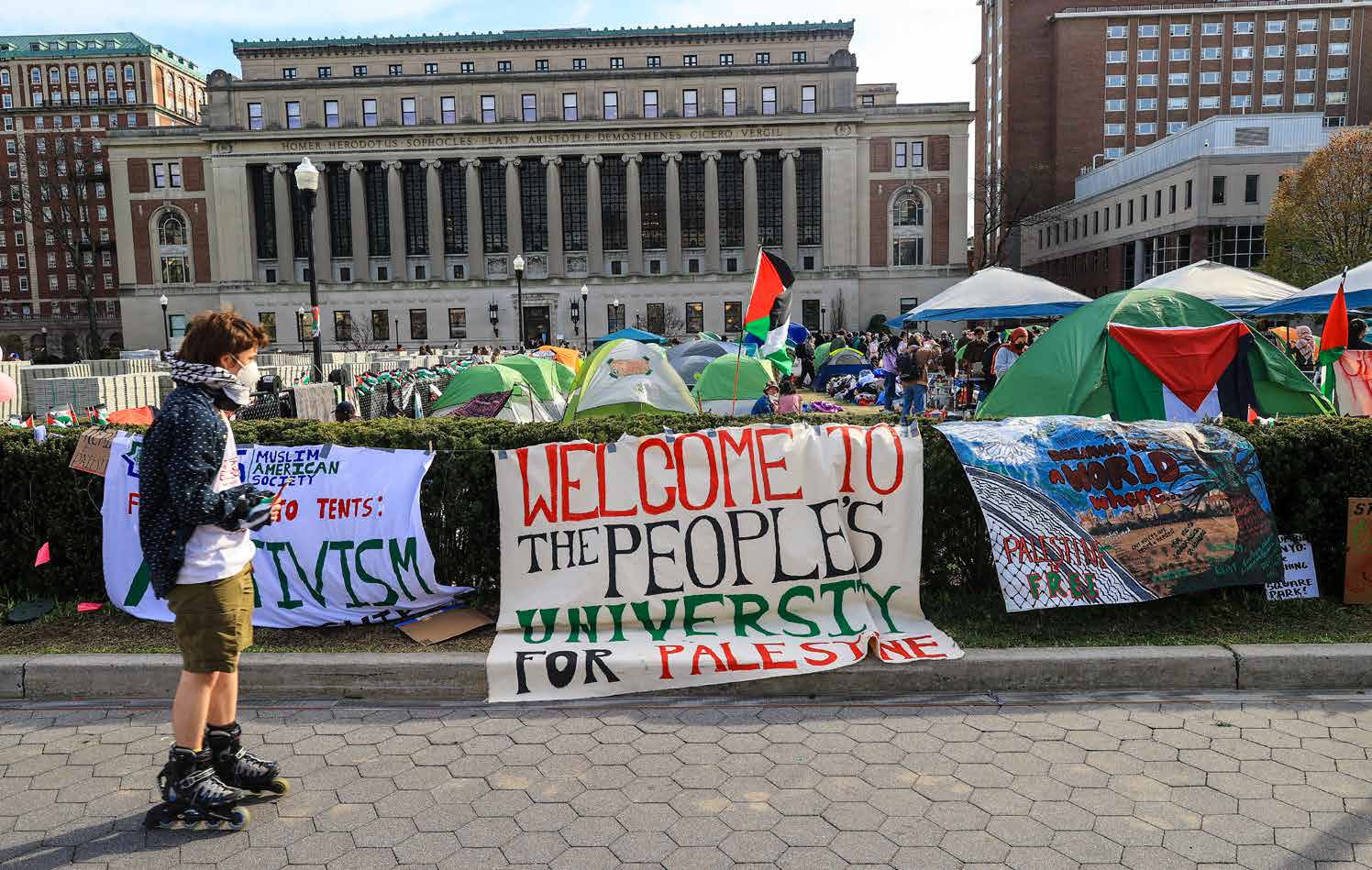
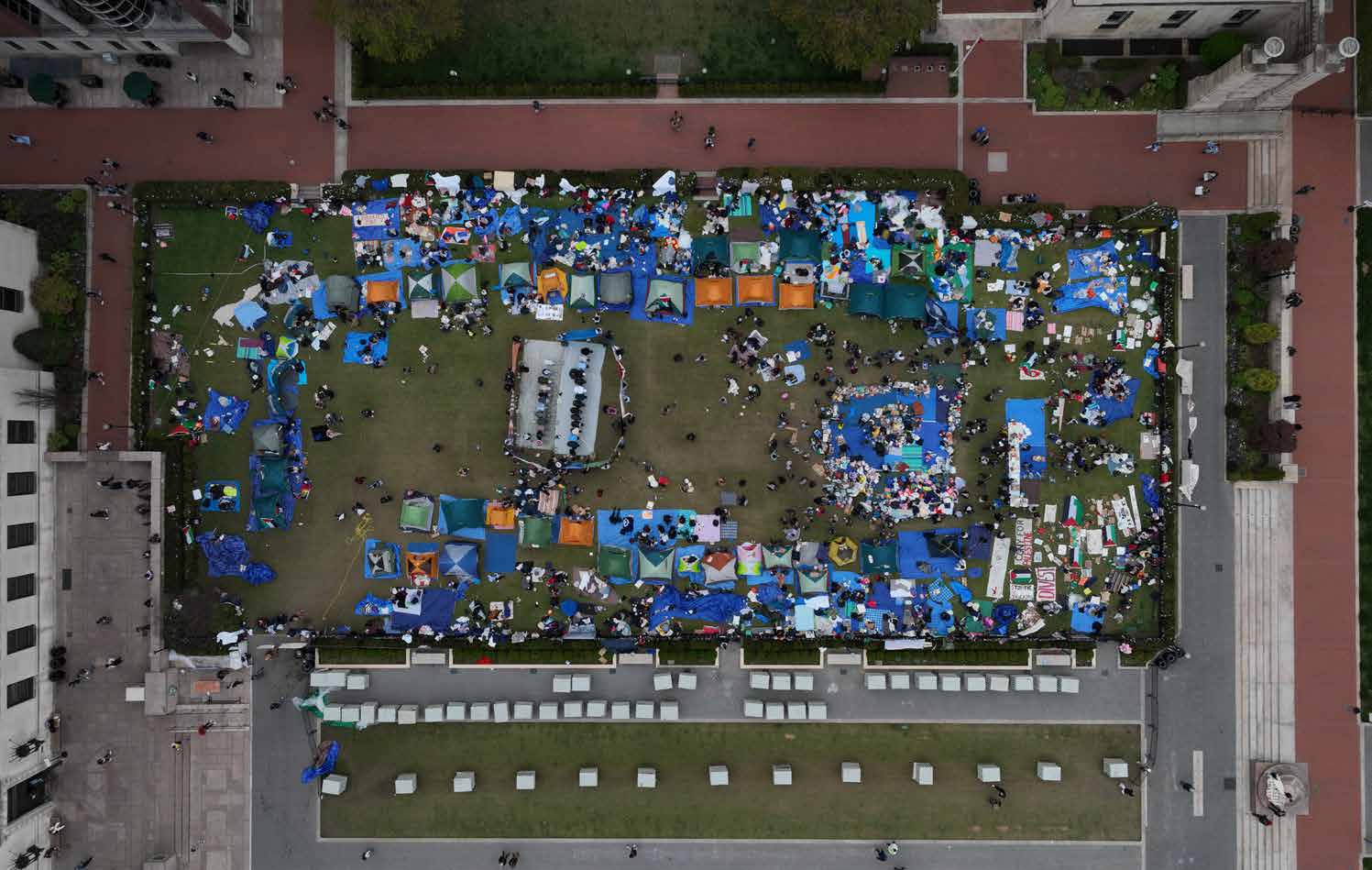
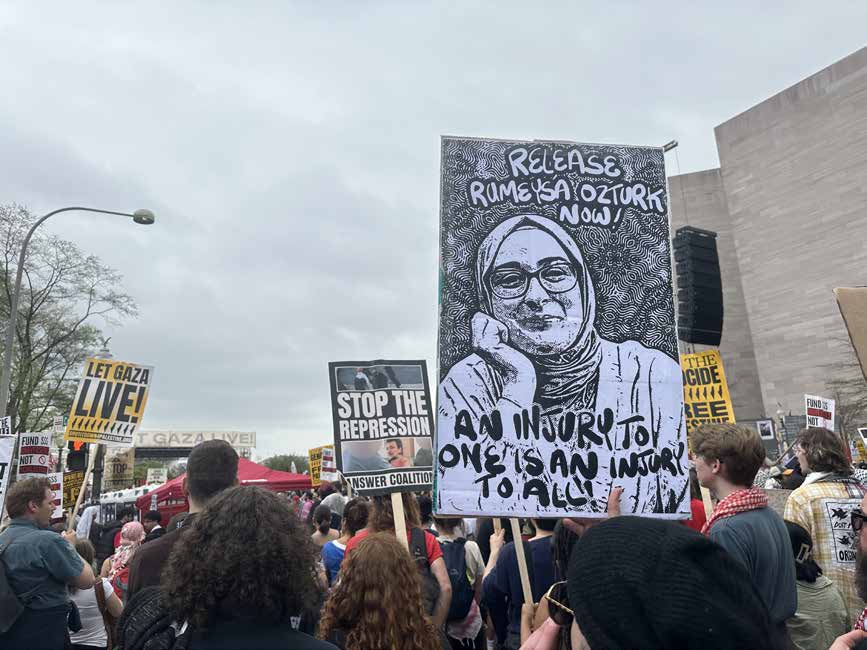
Participants in the pro-Palestinian solidarity protests that have spread across hundreds of campuses in the United States are not only rising up against their own universities’ complicity in the atrocities and massacres unfolding in Gaza and the indifference of their faculty members, but also striving to uphold the dignity of academia—and of humanity itself.
The hypocritical humanism of American academia
Following the events of October 7, American universities were quick to express their support for Israel and issued statements of solidarity with all Jewish students on their campuses. However, since that day, these same institutions have remained completely silent in the face of the massacres committed by the Israeli government against the Palestinian people. Not only have they failed to issue a single statement acknowledging the suffering in Gaza, but they have also neglected to offer any words of sympathy or condolences to their own Palestinian students who have lost family members and loved ones.
At the University of North Carolina at Chapel Hill, where I teach, the university administration has yet to acknowledge the pain of the Palestinian people in any of their statements. Instead, they have consistently displayed hostility toward student groups protesting the massacres in Gaza. This disgraceful and ruthless stance stems from the fact that the Democratic administration in the U.S. has unwaveringly supported Israel’s military aggression, providing both political and financial backing for these atrocities.
Additionally, the forced resignations of the presidents of Harvard and the University of Pennsylvania—simply because they did not expel or ban pro-Palestinian groups—have played a significant role in the shameful silence of both university administrators and faculty members. Just three years ago, during the “Black Lives Matter” movement, the liberal white intellectual elite in the U.S. and Europe vocally condemned racism against Black citizens. Yet now, under the guise of concerns about antisemitism, these same individuals are working to justify everything Israel does while denying the Palestinian people’s calls for justice and freedom. In essence, they have embraced a double standard: “Equality for everyone—except Palestinians.”
Remaining silent in the face of an indisputable massacre— documented almost daily by hundreds of videos and images—stands in stark contradiction to the efforts that American universities have pursued for the past forty years: to reckon with the legacies of slavery, colonialism, and racism, and to decolonize the social sciences from their Eurocentric foundations.
While universities have long offered courses on the crimes against humanity committed by the United States and Europe, they have also sought to confront the legacy of Western colonialism and symbolically remove its traces. The demand to take down the statue of Cecil Rhodes—a symbolic figure of the British Empire’s brutal and racist colonial rule in Africa—at Oxford University was part of a broader effort by universities across Europe and the U.S. to decolonize their curricula and purge them of a legacy rooted in white supremacy.
Professors who found it shameful that the History Department building—where my office is located—bore the name of J. G. de Roulhac Hamilton, a historian affiliated with the racist Ku Klux Klan in the United States, decided to rename it after Pauli Murray, a Black intellectual and legal scholar who had been denied admission to the university because of her African heritage. Today, universities across the United States continue to include the works of Edward Said in their curricula, as part of an ongoing process of decolonizing the humanities and social sciences from their Eurocentric, exclusionary, and colonial legacies.
Moreover, all U.S. universities offer courses not only on the Jewish Holocaust in Europe but also on genocides throughout world history. These courses encourage students to reflect on what must be done to prevent such atrocities from ever happening again.
Yet, when it comes to the Palestinian people and Gaza, a sudden exception is made—based on unfounded Zionist justifications. The universal principles of equal rights, human dignity, and the demand for justice, which should apply to all, are cast aside, and there is a disturbing silence in the face of atrocities in Gaza that mirror, one after another, the very horrors now remembered with shame in human history.
Repressive measures in universities
Even more disturbingly, those who dared to speak out faced brutal repression and systematic bans, turning American universities into a near-caricature of a dictatorship. At the University of Southern California (USC), for instance, a Bangladeshi Muslim student named Asna Tabassum, who had earned the right to deliver the commencement speech as valedictorian, was stripped of this honor simply because she had taken courses in “Genocide Studies”—and thus might have mentioned the atrocities in Palestine. The university administration took its hypocrisy and shamelessness to an even greater extreme when, fearing that other speakers might bring up the ban and mention Palestine, it decided to cancel the entire graduation ceremony altogether.
The boycotts and demonstrations erupting across American universities in support of Palestine must be seen as a rebellion against the intolerable hypocrisy and repressive culture that fosters hostility toward the Palestinian people. Students had expressed their concerns from the very beginning, but for six months, neither university administrators nor the supposedly liberal, anti-racist, and pro-freedom faculty members responded meaningfully to their calls for justice, rights, and humanity. As a result, students began voicing their protests with greater determination.
In the face of student-led protests emphasizing human dignity and justice, the attempt to silence their legitimate demands through lies and slander—by branding the demonstrators as antisemitic, despite the fact that a significant number of them are Jewish—and the continued U.S. support for the ongoing massacre have turned this protest wave into one of the most pivotal moments in the history of American higher education.
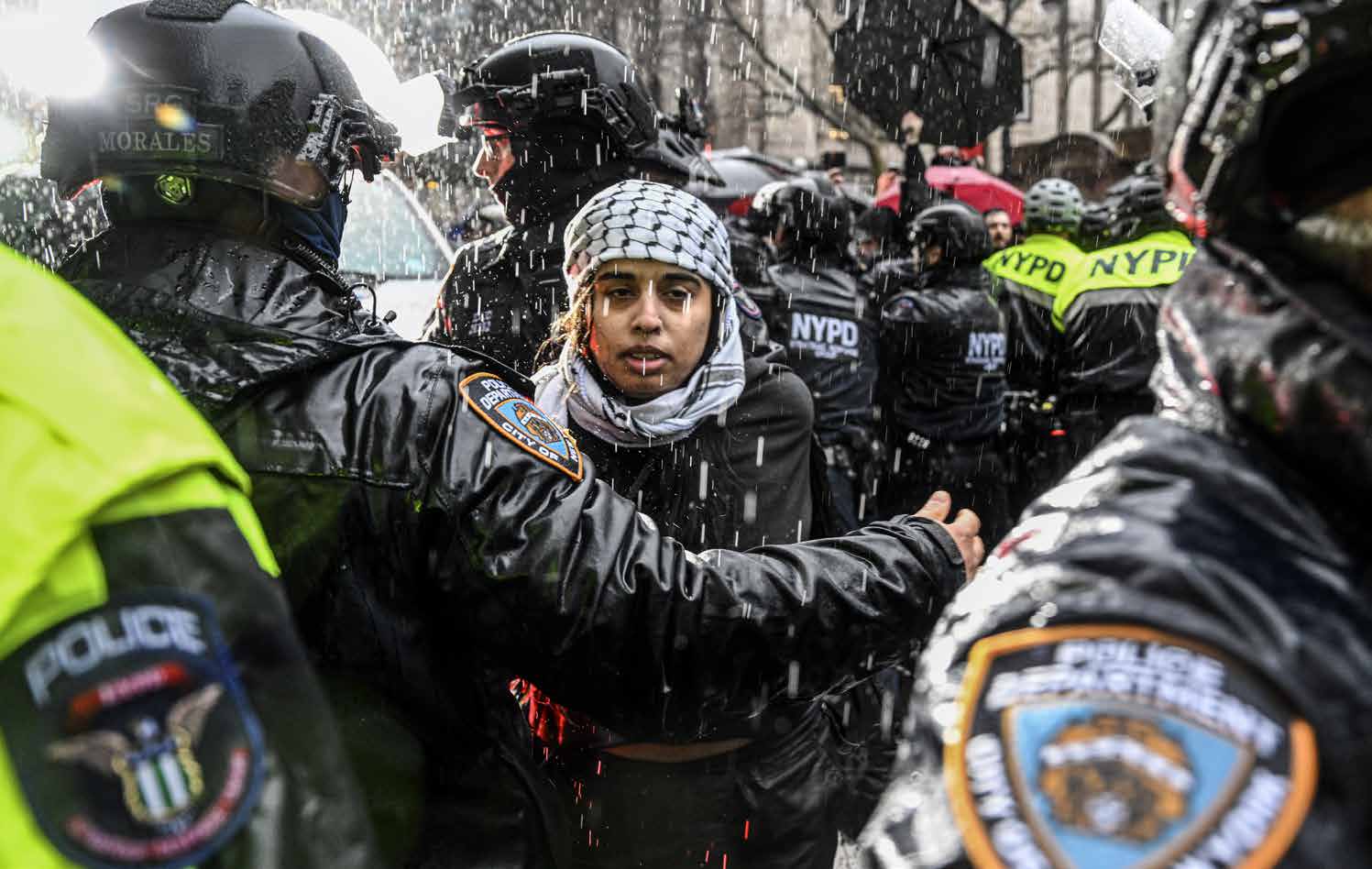
In this light, the choice of univ0ersity administrators not to thank these noble students—who have upheld the moral conscience of their institutions—but instead to escalate repression by sending in police and attempting to expel them, has only further exposed the contradictions at the heart of America’s liberal university culture and accelerated the spread of protests across other campuses. The moral authority and public standing of American universities now hinge on the success of this movement.